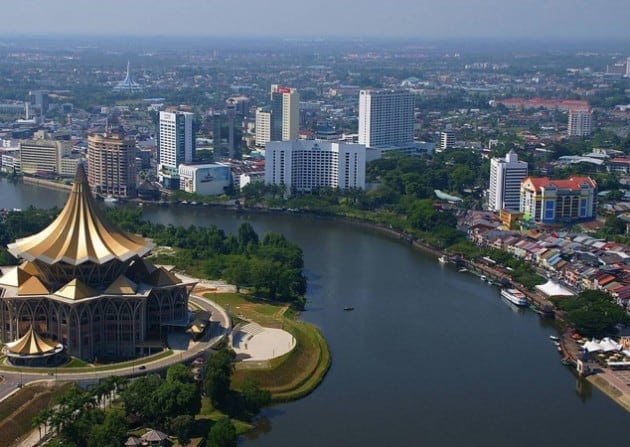
Kuching is the capital city of Sarawak on the island of Borneo, and the largest city in East Malaysia. It sits on the Sarawak River and serves as the political, commercial, and cultural centre of the state. The city is also the main gateway to much of western Sarawak, which makes it a practical base for artists, designers, builders, and traders working across the region.
- Capital of Sarawak, one of Malaysia’s two Borneo states
- Set along the Sarawak River, with a riverfront at the centre of public life
- Known for a mixed urban fabric shaped by Malay, Chinese, Indigenous, and colonial histories
- Important regional base for murals, craft, and contemporary street art
- Name commonly linked with cats, which appear throughout its civic imagery
Where is Kuching, and what kind of city is it?
Kuching lies in southwest Sarawak, on the northwestern edge of Borneo. The city proper forms part of the larger Kuching urban area, which includes nearby districts and suburbs that have grown around the old core. Its setting is tropical and river-based, with dense greenery, humid weather, and a city layout that still reflects the river’s importance for trade and movement.
Unlike a single-purpose capital built on a formal plan, Kuching grew through layered settlement. Malay kampung, Chinese commercial streets, government precincts, and newer housing areas sit beside one another. That mix gives the city a working, lived-in character rather than a monumental one.
How did Kuching develop?
Kuching developed as an administrative and trading centre under the Brooke administration in the 19th century, when Sarawak was ruled by the White Rajahs. The riverfront became the main corridor for goods, people, and governance. Warehouses, shophouses, clan associations, and later civic buildings formed the backbone of the city’s early urban fabric.
After Sarawak joined Malaysia in 1963, Kuching’s role expanded as the state capital. Public institutions, universities, hospitals, and transport infrastructure strengthened its position. The city now combines older riverfront and mercantile districts with newer suburbs, business centres, and industrial zones.
Why does Kuching matter in visual culture?
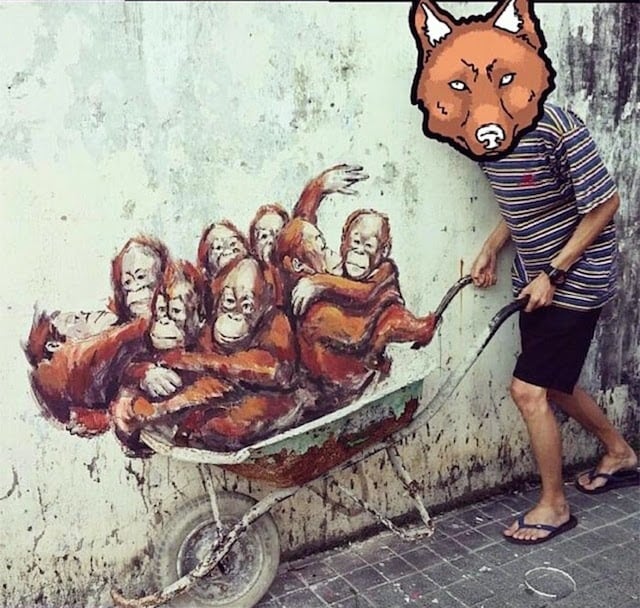
Kuching matters because it offers a distinct Southeast Asian urban surface: weathered walls, market streets, river promenades, and mixed colonial and postcolonial architecture. That texture has made it a useful site for public art. Murals and street interventions often sit comfortably within the city’s scale, where a painted wall can still feel tied to a neighbourhood rather than to a generic arts district.
FreeYork readers may encounter Kuching through work by artists such as Ernest Zacharevic, whose pieces often respond to local life, architecture, and street movement. In Kuching, art in public space is not only about image-making. It also depends on wall condition, surface scale, pedestrian routes, light, humidity, and the daily flow of commerce and traffic.
What does Kuching look and feel like on the ground?
The city’s visual character comes from contrasts. Concrete civic buildings stand near timber houses, modern shopping centres sit beside old shophouses, and the riverfront opens into public space after dense streets. Signage often appears in multiple languages, and the city’s everyday design mixes utility with ornament: shutters, tiled facades, arcades, painted signage, and improvised shade.
Public art in Kuching often interacts with these surfaces rather than overriding them. Murals may use cracked plaster, side walls, or narrow lanes as part of the composition. Because the city is humid and heavily trafficked, works in the street are exposed to quick wear, which makes maintenance, repainting, and documentation part of the work’s life.
Frequently Asked Questions
Is Kuching the same as Sarawak?
No. Kuching is a city, while Sarawak is the Malaysian state whose capital it is. Sarawak is much larger and includes rainforest, coastline, towns, and rural districts far beyond the city. Kuching is the administrative and cultural centre, but not the state itself.
Why is Kuching often associated with cats?
The association comes from the similarity between the city’s name and the Malay word for cat, kucing. That coincidence became a civic motif over time, and cat statues, logos, and souvenirs are now common in the city. The image has become part of Kuching’s identity, even though the historical origin of the name is debated.
Why do artists work in Kuching?
Kuching offers a city scale that supports street work without overwhelming it. Its older walls, riverfront routes, and mixed neighbourhoods give artists surfaces with history and public visibility. The city also sits within a region where local identity, tourism, and urban change all shape how public art is seen and used.
At a glance
- Address
- Kuching, Malaysia
- Coordinates
- 1.56, 110.345
Articles mentioning Kuching