Laetitia Casta is a French model and actress who became one of the defining fashion faces of the late 1990s and early 2000s. She moved from high-profile lingerie and beauty campaigns into editorial work, runway shows, and film roles, building a career that linked commercial fashion, luxury branding, and celebrity portraiture.
- Rose to prominence as a teenage model in the 1990s.
- Worked for major brands including GUESS?, Victoria’s Secret, and L’Oréal.
- Appeared frequently in international fashion magazines such as Vogue, Elle, and Cosmopolitan.
- Also developed a parallel career as an actress in French and international cinema.
- Known for a versatile image that could shift from commercial glamour to high-fashion editorial styling.
How did Laetitia Casta become famous?
Casta first gained wide attention after becoming a GUESS? model in 1993, when she was still a teenager. That campaign placed her in the same lineage as other globally recognizable fashion muses: a photographed body, a memorable face, and a repeatable image that could travel across billboards, magazines, and shop windows. Her visibility grew further when she became a Victoria’s Secret Angel from 1998 to 2000 and later served as a spokesperson for L’Oréal.
Those roles mattered because they sit at the junction of fashion photography and mass marketing. A model in that position does more than wear clothes or makeup; she helps define the look of a brand. Casta’s image was used to sell lingerie, cosmetics, and designer fashion, and that repetition made her one of the most recognizable French models of her generation.
What does her work look like in practice?
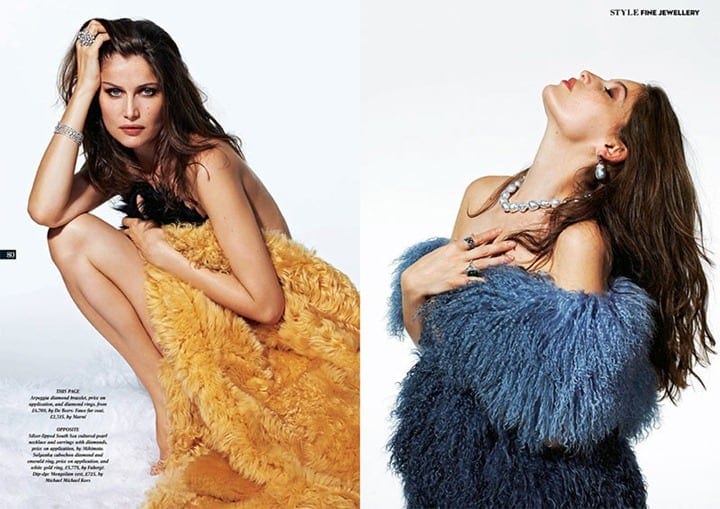
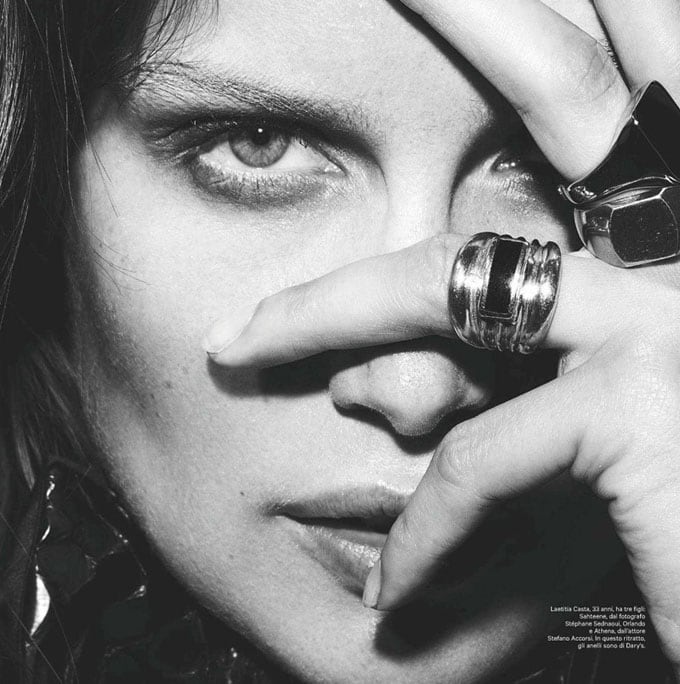
Casta’s career is easy to trace through magazines and campaigns. She appeared on more than 100 covers, including Cosmopolitan, Vogue, Rolling Stone, Elle, and Glamour, which shows how widely her image circulated across fashion, celebrity, and lifestyle publishing. She also modeled for designers such as Yves Saint Laurent, Jean-Paul Gaultier, Chanel, Ralph Lauren, and Tommy Hilfiger, moving between French luxury houses and international ready-to-wear brands.
In practice, that meant working in different modes of visual culture. A magazine cover asks for a face that can carry personality at a glance. A runway show asks for movement, posture, and the ability to make clothes read clearly in motion. A beauty campaign asks for polish and repeatability. Casta’s career depended on adapting to each format without losing the recognizability that made her marketable in the first place.
Why does she matter in fashion and visual culture?
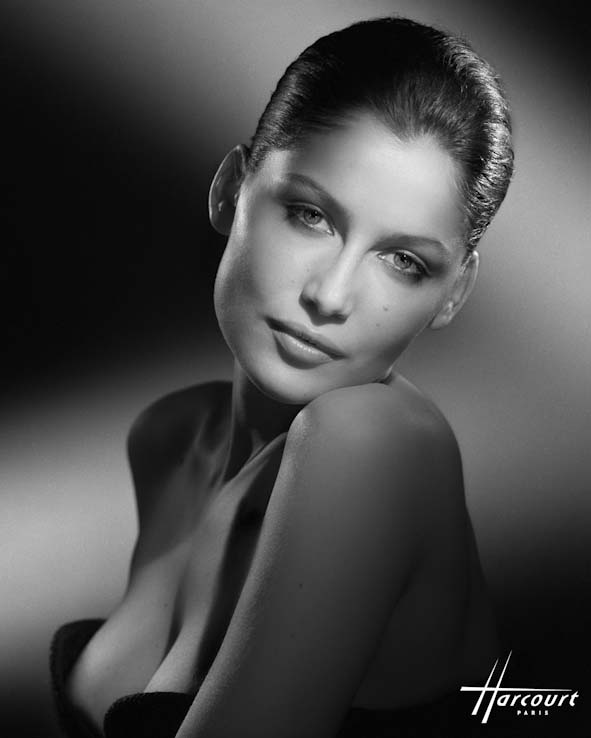
Casta matters because she belongs to the period when the fashion model became a global media figure, not just a runway presence. In the 1990s, fashion advertising relied on a small group of models whose faces became shorthand for an entire style of glamour. Casta was part of that shift, and her work helped shape how luxury brands, lingerie companies, and magazines presented femininity at the turn of the century.
She also bridges two systems that often sit apart: commercial modeling and serious fashion editorial. Her repeated presence in both kinds of image-making shows how a model can move between mass-market beauty culture and high-end fashion storytelling. For editors and photographers, she offered a face that could read as polished, sensual, modern, and French without being locked into a single role.
Did Laetitia Casta also act?
Yes. Alongside modeling, Casta built an acting career, especially in French cinema. That move was common for models who had become public figures in their own right, but it also changed how her image functioned. Film gave her a different kind of visibility: less controlled than a campaign photograph, more dependent on performance and character.
That crossover matters in visual culture because it shows how celebrity images circulate. A model’s face can begin in advertising, pass through magazine editorial, and then reappear in cinema with a new narrative frame. Casta’s career demonstrates how fashion fame can become broader cultural recognition.
Frequently Asked Questions
What made Laetitia Casta a major model?
Her career combined visibility, versatility, and timing. She appeared in major campaigns, walked for leading designers, and became a frequent magazine cover subject during a period when supermodels and fashion celebrities still shaped public taste. That combination gave her a level of recognition that extended far beyond the runway.
Which brands is she most associated with?
She is especially associated with GUESS?, Victoria’s Secret, and L’Oréal because those roles gave her international visibility. She also worked with Yves Saint Laurent, Jean-Paul Gaultier, Chanel, Ralph Lauren, and Tommy Hilfiger. Those names place her across both luxury fashion and mainstream beauty marketing.
Is Laetitia Casta known more as a model or an actress?
She is best known as a model, especially for her 1990s and early 2000s fashion work. Acting became an important second career, but it did not replace the scale of her modeling fame. In fashion history, she is primarily remembered as a prominent face of the era’s editorial and campaign imagery.
Articles mentioning Laetitia Casta