
Laura Loukaides is a British cake artist known for hyperrealistic sculpted cakes that imitate junk food, household objects, and other everyday forms. Based in Hertfordshire, she taught herself to decorate and sculpt cakes after making her first one in 2012, and quickly became one of the best-known names in contemporary cake art.
Stories from Laura Loukaides
1 story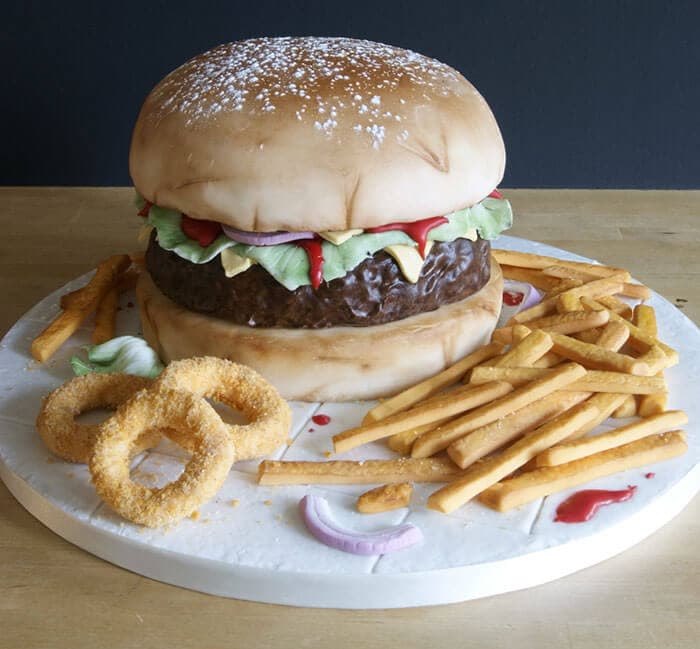
About Laura Loukaides
- Self-taught cake maker from Hertfordshire, UK
- Specialises in realistic sculpted cakes that mimic food and objects
- Won 12 gold awards at Cake International
- Named one of Cake Masters’ Top 10 Cake Artists in 2017
- Her work has appeared on the covers of major cake-decorating magazines
Read the full overviewHow did Laura Loukaides become known?, What makes her cakes distinctive?, Why does her work matter?, What does her practice look like in the studio?
How did Laura Loukaides become known?
Loukaides began making cakes as a teenager and turned a first birthday cake in 2012 into a career. Unlike many professional cake artists who train in pastry kitchens or confectionery schools, she built her practice through self-teaching, trial and error, and a close attention to surface detail. That makes her work part of a broader rise in online cake design, where technical skill is learned and shared through tutorials, social media, and specialist magazines rather than only through formal training.
Her rise was driven by photographs of cakes that were easy to mistake for the real thing. The more convincingly she could imitate bacon, burgers, takeaway boxes, sweets, and other familiar objects, the more widely her work circulated. Coverage in publications such as Cake Masters Magazine and American Cake Decorating Magazine helped turn those sculpted cakes into reference points for the current era of novelty cake design.
What makes her cakes distinctive?
Loukaides is best known for cakes that look like junk food at first glance but reveal their edible structure on closer inspection. That effect depends on more than decoration. It requires carving the sponge into precise forms, stacking and filling it so the shape holds, then covering it with sugar paste, modelling chocolate, or other edible materials that can take paint, airbrush shading, and fine texturing. The final illusion depends on colour control, edge softening, and careful imitation of packaging, grease, crumbs, and gloss.
Her cakes are not simply novelty objects. They sit at the intersection of sculptural modelling, food design, and photorealism. A convincing burger cake, for example, has to suggest seeded bun texture, melted cheese, and sauce without losing the structure that makes it sliceable. That balance between appearance and function is part of what makes her work notable in professional cake decorating.
Why does her work matter?
Loukaides matters because she helped popularise a style of cake that treats confectionery as an illusion medium. In that mode, a cake does more than taste good or decorate a table; it becomes a sculpted object that can be read visually before it is cut. This has influenced birthday cakes, display pieces, social-media cake content, and the expectations people now bring to custom cake commissions.
Her awards also place her work within the competitive world of cake shows, where technical finish, originality, and realism are judged closely. Winning multiple gold awards at Cake International signalled that her cakes were not just internet-friendly tricks but technically accomplished pieces within a demanding craft tradition. The repeated magazine covers and press coverage show how quickly a strong visual signature can move a maker from local practice into international recognition.
What does her practice look like in the studio?
A realistic sculpted cake usually begins with planning the object to be copied, then building its structure in layers. The cake may be supported with internal dowels, boards, and carved foam or rice-krispie elements when the final form needs angles or overhangs. After baking, stacking, and shaping, the surface is coated and refined with edible finishes that can be brushed, dusted, airbrushed, or painted to reproduce product labels, fried textures, or plastic wrapping.
Loukaides’ practice sits in the detail work. Realism in cake making comes from tiny decisions: the right shade of sesame seed, the slump of a melted ice cream scoop, the crisp edge of a cereal box, the shine on a glazed doughnut. Those small cues let a cake read as a familiar object before its material reality is revealed.
Frequently Asked Questions
Is Laura Loukaides a trained pastry chef?
No. She is widely described as self-taught rather than formally trained. Her reputation comes from personal experimentation, technical skill, and a strong visual style rather than a conventional culinary apprenticeship.
What kinds of cakes is she best known for?
She is best known for realistic novelty cakes, especially those that imitate junk food and packaged items. These include burgers, fries, sweets, takeaway foods, and other objects that invite a double take. The point is usually illusion rather than abstraction.
Why do her cakes get so much attention online?
They photograph well because they are immediately legible and surprising. A cake that looks like a box of takeaway food or a stack of snacks creates a quick visual joke, which makes it especially shareable on social media and in magazine features. The realism also rewards close viewing, where the work of carving, covering, and painting becomes clear.