
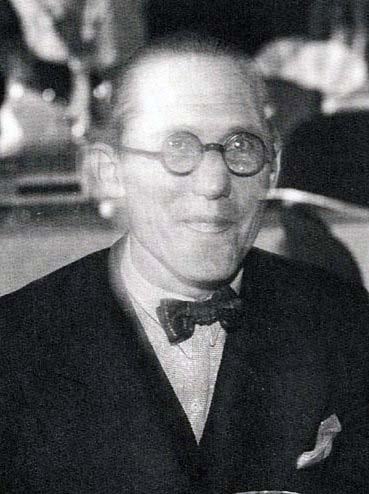
Le Corbusier was a Swiss-born French architect, designer, urban planner, and writer who became one of the central figures of modern architecture in the 20th century. He worked under his birth name, Charles-Édouard Jeanneret, early in his career and adopted the name Le Corbusier in the 1920s. His buildings, drawings, furniture, and urban schemes helped define the look and language of modernism across Europe, India, and the Americas.
- He helped shape modern architecture through white volumes, pilotis, roof terraces, ribbon windows, and open plans.
- He treated architecture as part of a larger system that included furniture, interiors, city planning, and written theory.
- His ideas were influential because they were both built and published: houses, housing blocks, and cities were paired with manifestos and essays.
- His work remains disputed as well as admired, especially for its strict planning and its effects on public housing and urban life.
What did Le Corbusier design?
Le Corbusier designed private houses, apartment blocks, civic buildings, urban plans, furniture, and exhibition pavilions. His best-known buildings include Villa Savoye near Paris, the Unité d’Habitation in Marseille, the Chapel of Notre Dame du Haut in Ronchamp, and the Chandigarh master plan in India. These projects vary widely in form, but they share a concern with structure, proportion, light, and the machine-age ideal of efficient living.
He also designed objects, most famously with Charlotte Perriand and Pierre Jeanneret. The tubular-steel furniture associated with his name, especially the chaise longue and lounge chair, translated his architectural ideas into domestic objects: clear frames, visible structure, and minimal ornament. That crossover between building and furnishing mattered to him. He wanted architecture to extend from the room to the city.
Why is Le Corbusier so important to modern architecture?
Le Corbusier gave modern architecture a forceful set of principles. His book Toward an Architecture argued for a new design language based on industrial production, standardization, and abstraction. He famously described houses as “machines for living in,” a phrase that captured his belief that design should serve modern life with precision rather than decoration.
His “Five Points of a New Architecture” became a compact summary of modernist form: pilotis, free plan, free façade, ribbon windows, and roof garden. These ideas appear throughout his early villas and were widely copied, taught, and debated. Even architects who rejected his conclusions had to respond to the scale of his influence.
How did he work in practice?
Le Corbusier worked through drawings, models, essays, and repeated formal experiments. He often used a disciplined palette of concrete, white plaster, glass, and steel, then adjusted composition with a sculptural eye. His buildings can look severe on paper, but in person they often rely on exact shifts in height, shadow, and circulation to shape experience.
Materially, his work helped legitimize reinforced concrete as a major modern medium. He used it for large structural spans, raised volumes, and expressive surfaces, especially in his later buildings. At the same time, he was not bound to one style: Ronchamp is thick, curved, and almost rough-hewn, while Chandigarh is monumental and grid-like. That range is part of his legacy and part of the controversy around him.
What is controversial about his legacy?
Le Corbusier’s urban theories drew criticism for their rigid zoning and top-down control. His plans often replaced existing street patterns with towers, roads, and open space organized from above. Later planners and historians argued that some of these ideas encouraged sterile housing estates and ignored the complexity of daily urban life.
His political views also complicate his reputation. He associated with authoritarian figures at different points in his life, and critics have questioned the social consequences of his planning ideals. Still, his work remains foundational because it forced architecture to confront industrialization, mass housing, and the scale of the modern city.
Frequently Asked Questions
Was Le Corbusier only an architect?
No. He wrote books and essays, designed furniture, made drawings and paintings, and shaped urban plans. That breadth is part of why his name appears across architecture, design, and visual culture. He treated these fields as connected rather than separate disciplines.
What buildings are most associated with him?
Villa Savoye, the Unité d’Habitation, Ronchamp, and the Chandigarh Capitol Complex are among the most cited examples. Each shows a different side of his practice, from the white pilotis of his early work to the rough concrete and sculptural massing of his later years. Together they show how his ideas changed without losing their core concern with order and form.
Why do designers still talk about him?
He still matters because modern architecture still works through problems he helped frame: standardization, density, housing, light, circulation, and the relation between architecture and the city. His projects offer a clear vocabulary that can be studied, adapted, or challenged. That makes him useful not only as a historical figure, but as a point of argument in contemporary design.
Articles mentioning Le Corbusier


