
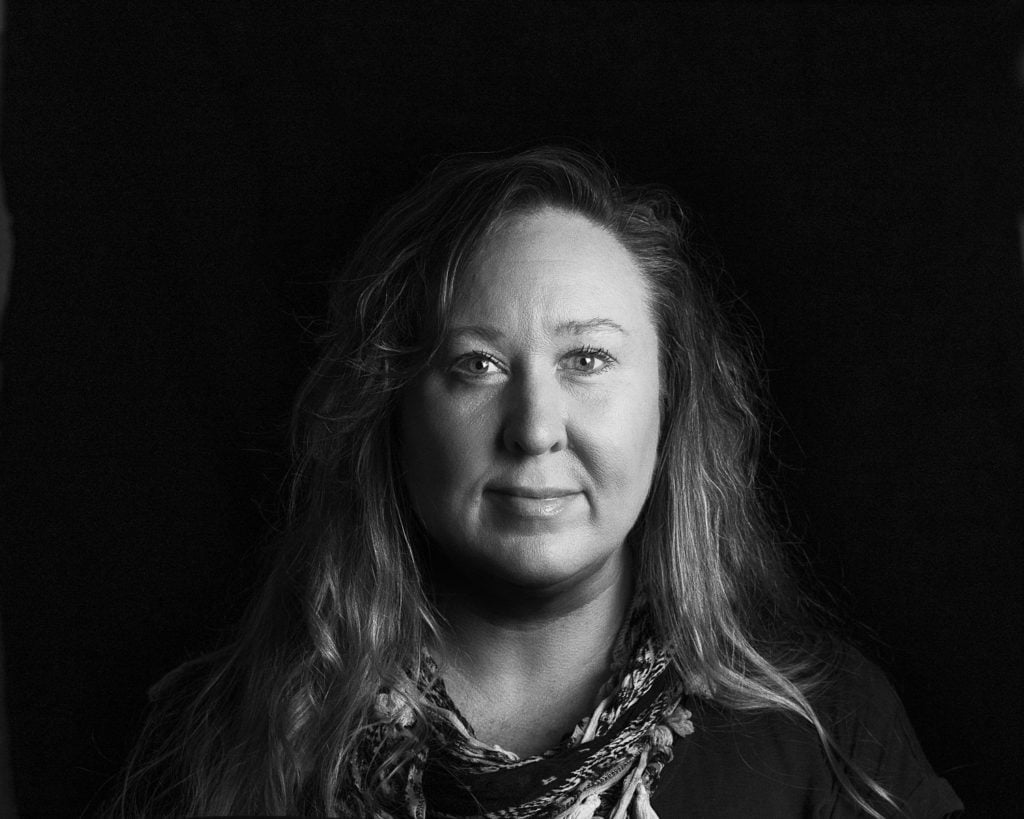
| Born | Perth, Australia |
|---|---|
| Based in | Australia |
| Field | Photography and visual art |
| Training | Bachelor of Arts – Fine Arts and Visual Culture, Curtin University |
| Previous work | Technical engineering environment |
| Known for | Minimalist and abstract images that question identity, globalization, and environmental concerns |
Leah Kennedy is an Australian photographer and visual artist whose work uses minimalism and abstraction to examine identity, globalization, and environmental pressure. Born and raised in Perth, she spent years in technical engineering before turning to photography as a creative career, bringing an eye for structure, systems, and surface into her image-making.
How did Leah Kennedy come to photography?
Kennedy lived in Cork, Ireland from 1999 to 2008, where she worked, travelled, and built a broader set of cultural experiences. After returning to Australia, she shifted toward photography as a way to make work that felt more responsive to personal change and social questions. She later studied for a Bachelor of Arts in Fine Arts and Visual Culture at Curtin University, which placed her practice in a more explicitly art-led context.
That background matters because her work does not come from a purely photographic or purely conceptual route. Technical engineering suggests precision, problem-solving, and attention to material conditions; her art reflects those habits through controlled compositions and a strong interest in how images hold tension between order and uncertainty.
What does her work look like?
Kennedy’s images often balance sparse visual fields with subtle disruptions. Minimalist framing strips away obvious narrative detail, while abstraction loosens the image enough to make the viewer notice shape, tone, texture, and spacing. The result is work that can feel restrained at first glance but becomes more layered the longer it is read.
Her subject matter is not only formal. Kennedy uses these visual strategies to ask how identity is shaped by place, movement, and social expectation, and how environmental concern enters everyday life. Personal experience sits at the centre of the work, but the themes are meant to travel beyond autobiography and connect with contemporary cultural conditions.
Why do minimalism and abstraction matter in her practice?
Minimalism reduces visual noise. In Kennedy’s work, that reduction gives room for ambiguity, which is one of her main tools. Rather than presenting a direct documentary claim, the images create space for questions about how people read themselves and the world around them.
Abstraction adds another layer by refusing a simple, fixed reading. Forms can stand in for broader systems: migration, environmental strain, social belonging, or the experience of living between places and identities. Because the work stays visually quiet, small shifts in tone or composition can carry real weight.
What is the wider context for her work?
Kennedy works within a contemporary art field where photography often moves beyond description and into analysis. Her practice sits close to that conversation, using the medium not to record events in a straightforward way but to think through cultural conditions. That places her among artists who treat the photograph as a constructed object, shaped by editing, framing, and concept as much as by camera use.
Her interest in environmental concerns also links the work to a broader visual culture of uncertainty about land, resource use, and modern life. The engineering background, the time spent in Ireland, and the return to Australia all feed into a practice concerned with movement and transition. That gives the work a grounded, lived quality even when the images themselves are abstract.
Frequently Asked Questions
Is Leah Kennedy primarily a photographer or a visual artist?
She is both. Photography is the main medium named in her profile, but her studies in fine arts and visual culture point to a broader artistic practice. Her work should be understood as image-based contemporary art rather than as photography alone.
What themes does her work address?
Her work explores identity, globalization, environmental concerns, and the tension between personal experience and social structure. These themes appear through minimal and abstract visual language rather than through direct illustration. The images ask viewers to consider how large cultural issues enter ordinary life.
Why does her engineering background matter?
It helps explain the precision and structure in her practice. Technical engineering often trains a person to notice systems, surfaces, and how parts relate to one another, and those habits can carry into image-making. In Kennedy’s case, that background seems to support the controlled and considered feel of her work.