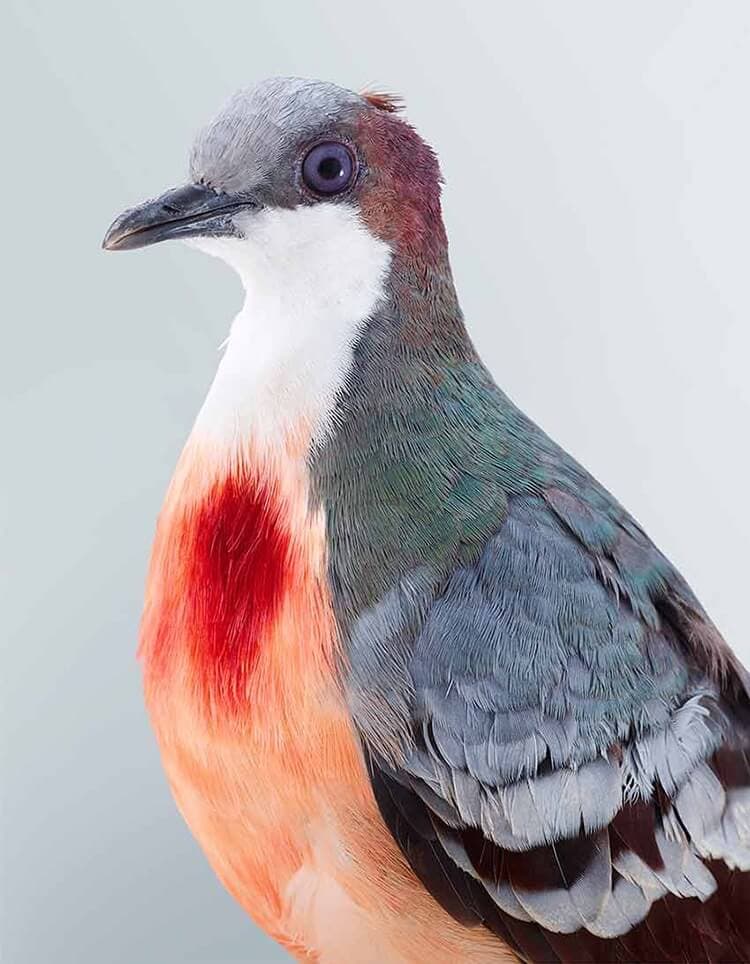
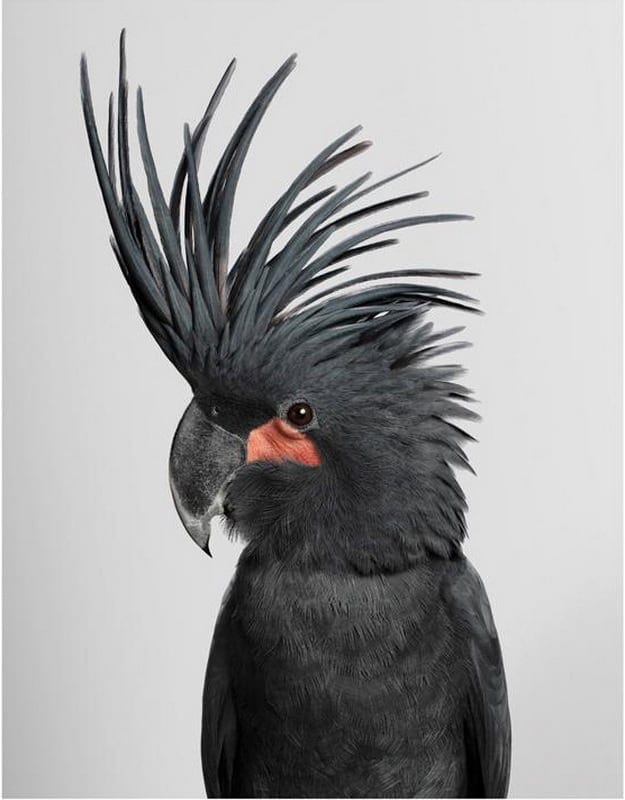
Leila Jeffreys is an Australian photographic artist known for large-format portraits of birds. Her work combines careful studio photography, conservation-minded subject matter, and a direct, almost formal approach to animal portraiture.
- She photographs birds as individuals rather than as background wildlife.
- Her pictures often use plain settings, controlled light, and close framing to emphasize plumage, posture, and expression.
- Early projects focused on budgies and cockatoos, then expanded to raptors and other species.
- Her practice is shaped by environmental concern as much as by visual design.
- She works with wildlife carers and other specialists when photographing birds that need handling or rehabilitation.
How did Leila Jeffreys develop her style?
Jeffreys grew up around birds and environmental thinking, and those influences became the basis of her practice. Rather than treating birds as incidental nature subjects, she made them the focus of portrait sessions. That shift matters: the camera does not simply record an animal in motion, but isolates a single bird and asks the viewer to read it as a subject with presence, character, and surface detail.
Her portraits tend to feel orderly and deliberate. Feathers, beaks, claws, and eye lines become the main visual elements. The result is closer to studio portraiture than wildlife reportage, even when the bird comes from a wild or rescue context.
What does her bird photography look like in practice?
Jeffreys often uses restrained backgrounds and even lighting so the bird remains the visual centre. That approach lets colour and texture carry the image: budgerigars become fields of pattern, cockatoos read as sculptural white forms with sharp crests, and birds of prey gain a severe, almost classical intensity. Composition matters as much as species selection; she frequently positions the bird against negative space so the body’s outline and plumage can be read clearly.
The photographs also depend on handling and patience. When birds are photographed for portrait sessions, especially in collaboration with carers, the process must respect stress, safety, and timing. That practical care is part of the work’s meaning. The images are polished, but they are not detached from the conditions that make them possible.
Why have budgies and cockatoos mattered so much in her work?
Jeffreys’ early solo exhibition centred on budgies, one of the most familiar pet birds in Australian homes. That choice was smart as well as accessible: a bird that many people know casually becomes worth looking at closely. By enlarging and isolating the budgie, she turns an everyday companion animal into a subject for formal attention.
Her cockatoo series brought a different register. Working with wildlife carers, she photographed wild cockatoos in ways that emphasized their force and eccentricity rather than their status as symbols or pests. Later projects such as Prey widened the field again, focusing on birds of hunting species. Across these series, the repeated strategy is the same: make the bird singular, then use portraiture to produce attention.
Why does Leila Jeffreys matter?
Jeffreys matters because she uses the language of fine-art portraiture to change how birds are seen. Bird photography often slips toward field guide illustration, documentary science, or decorative nature imagery. Her work sits differently. It is made to be looked at slowly and to hold a bird’s body, colour, and temperament in the same frame as aesthetic pleasure and conservation concern.
That combination has helped her work circulate widely in exhibitions. It also gives her images an unusual position within visual culture: the photographs are beautiful, but not neutral. They insist that beauty can be a route into care, and that close looking at birds can sharpen attention to the habitats and human systems around them.
Frequently Asked Questions
Is Leila Jeffreys mainly a wildlife photographer or a fine-art photographer?
She works in a space between the two. The subject is wildlife, but the presentation is controlled, stylised, and exhibition-oriented, which places the work within fine-art photography. The distinction matters because her images are designed not just to document birds, but to frame them as portrait subjects.
Why are her bird portraits often so simple in composition?
Simplicity keeps attention on the bird’s form, colour, and expression. Plain backgrounds and uncluttered framing remove visual noise and make feather pattern, stance, and gaze feel more immediate. The restraint also gives the images a studio quality, even when they involve live animals.
Does her work have an environmental message?
Yes, but it is usually delivered through attention rather than slogan. Jeffreys photographs birds in a way that encourages viewers to notice them more carefully and value their diversity. That visual strategy supports conservation awareness without turning the work into straightforward advocacy poster art.
Articles mentioning Leila Jeffreys