
Lewis Carroll was the pen name of Charles Lutwidge Dodgson, an English writer, mathematician, logician, Anglican deacon, and photographer best known for Alice’s Adventures in Wonderland and Through the Looking-Glass. He wrote some of the best-known works of literary nonsense in English, including the poems “Jabberwocky” and “The Hunting of the Snark.” His books turned dream logic, verbal play, and visual strangeness into a durable modern style that artists, designers, and illustrators still return to.
Stories from Lewis Carroll
1 story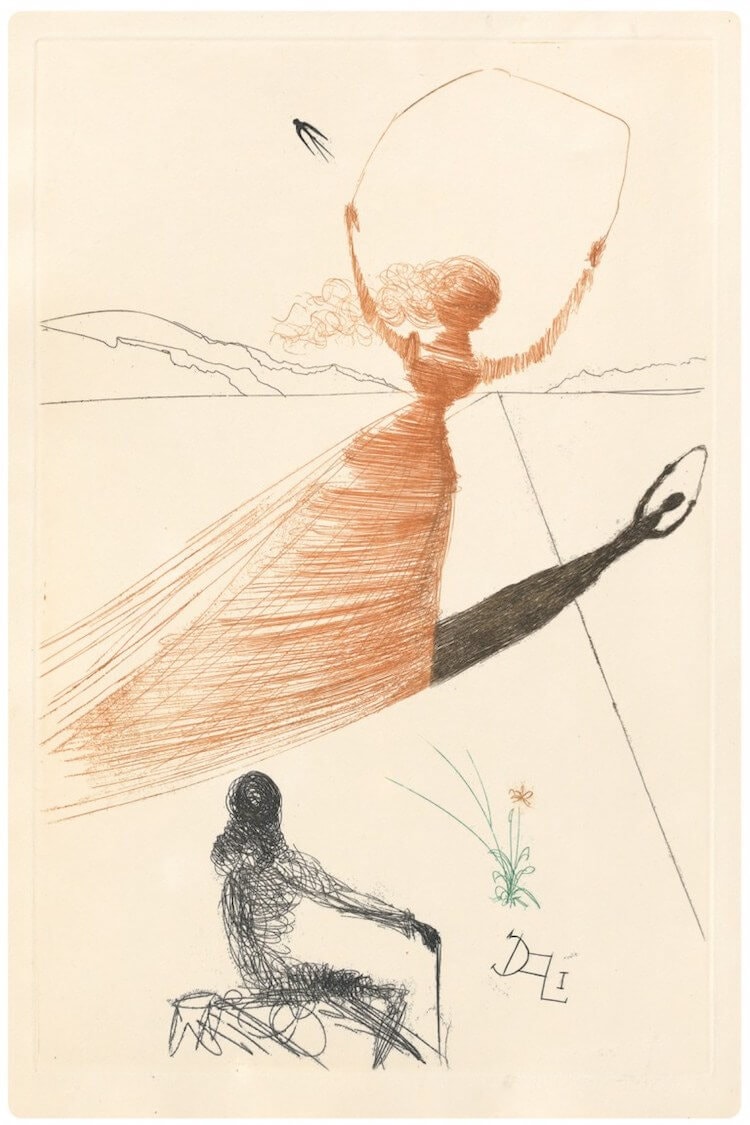
About Lewis Carroll
- Real name: Charles Lutwidge Dodgson
- Born: 1832; died: 1898
- Nationality: English
- Best-known works: Alice’s Adventures in Wonderland, Through the Looking-Glass, “Jabberwocky,” The Hunting of the Snark
- Known for: literary nonsense, wordplay, invented logic, and the Alice illustrations and imagery that followed
Read the full overviewWhy Lewis Carroll matters, What did Carroll actually write?, How does his style work?, Why do artists keep returning to Alice?
Why Lewis Carroll matters
Carroll mattered because he made nonsense feel exact. His writing does not simply abandon logic; it builds a parallel logic out of puns, riddles, reversals, and unstable rules. That approach gave later artists a model for showing a world that is recognisable in outline but unnerving in detail, a method that has proved useful in illustration, graphic design, theatre, film, and surrealist art.
The Alice books also helped fix a visual language for childhood that was not sentimental or neat. They are full of abrupt scale changes, crowded interiors, talking animals, cards, crockery, clocks, and chessboards. Those recurring objects made the stories easy to adapt into prints, stage sets, animation, fashion imagery, and fine art, because the books already think in images as much as in sentences.
What did Carroll actually write?
Alice’s Adventures in Wonderland appeared in 1865, followed by Through the Looking-Glass in 1871. Together they follow Alice through spaces governed by unstable language, arbitrary authority, and rules that keep changing. The books are not plot-heavy; they move by encounter, with each scene built around a game, a rhyme, a misunderstanding, or a joke that produces a visual situation.
His other major works extend the same method. “Jabberwocky” uses invented words and mock-heroic rhythm to create a creature that feels vivid before it is understood. The Hunting of the Snark pushes absurdity toward expedition narrative and diagrammed obsession. Carroll also wrote mathematical puzzles, logical problems, and the long prose discussion Symbolic Logic, which shows how closely his fiction and formal thinking were linked.
How does his style work?
Carroll’s style depends on precision at the sentence level. He often starts with ordinary grammar, then inserts a mismatch: an answer that dodges the question, a literal reading of a metaphor, or a formal conversation that collapses into nonsense. That method produces comedy, but it also creates a strong graphic sense, because the reader keeps translating language into image and then watching that image fail or mutate.
As a maker, Carroll worked across writing, logic, drawing, and photography. He photographed children and adults in carefully posed studio arrangements, and he made illustrations for some of his own work. The photography matters because it shows the same interest in staging, framing, and controlled oddity that appears in the books. Even when the medium changes, the underlying structure stays the same: a composed scene disturbed by a small but decisive shift.
Why do artists keep returning to Alice?
Artists return to Carroll because his books are unusually open to reinterpretation. A white rabbit, a teacup, a key, a caterpillar, a grin, a playing card, a mirror: these are simple objects, but in Carroll they become symbols with no single fixed meaning. That makes them easy to reuse in illustration and painting, where an image can remain recognisable while changing tone completely.
Salvador Dalí’s Alice-related work is a clear example of that afterlife. Surrealist artists found in Carroll a writer who had already treated language as a material that could be bent, broken, and reassembled. Designers and illustrators continue to borrow his visual cues because they carry instant narrative charge without needing explanation.
Frequently Asked Questions
Was Lewis Carroll only a children’s author?
No. The Alice books became children’s classics, but Carroll also wrote mathematical texts, puzzles, logic manuals, poems, and satirical verse. His reputation as a children’s author hides the fact that he was deeply interested in formal systems and paradox.
What is literary nonsense?
Literary nonsense uses language that follows its own internal rules rather than ordinary sense. It is not random; it depends on rhythm, grammar, and exact wording to make absurdity feel coherent. Carroll is one of the main writers associated with the form.
Why is Carroll important for visual culture?
He supplied a set of images and situations that translate easily into art and design: mirrors, cards, clocks, scale shifts, and unstable interiors. His work also gave later artists a way to represent dream logic without losing structure. That combination made him especially useful to illustrators, surrealists, and stage designers.