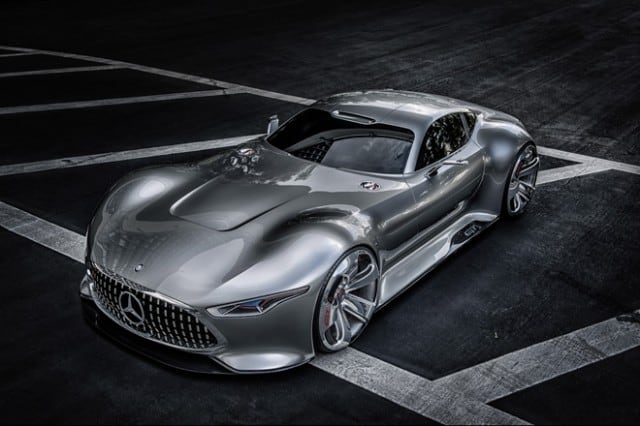
Mercedes-AMG is Mercedes-Benz’s performance division, responsible for high-output road cars, motorsport-derived engineering, and factory-tuned versions of Mercedes vehicles. It began as an independent tuning and testing firm before becoming part of Daimler, and today it builds cars that pair luxury bodywork with more aggressive engines, suspensions, brakes, and visual details.
- Founded in 1967 by former Mercedes engineers Hans Werner Aufrecht and Erhard Melcher, with the “G” from Aufrecht’s hometown, Großaspach.
- Started as an outside specialist making performance upgrades for Mercedes cars and racing machines.
- Became tied to Daimler through a controlling stake in 1990 and full ownership in 2005.
- Known for hand-built or heavily revised engines, especially the “one man, one engine” approach on many models.
- Its products range from discreet saloons and SUVs to overtly track-focused sports cars and concept vehicles.
Where AMG came from
AMG grew out of the postwar German tuning and motorsport scene, when engineers often worked outside major manufacturers to make production cars faster and more durable. Hans Werner Aufrecht and Erhard Melcher left Mercedes-Benz and formed a workshop in the late 1960s to develop racing engines and performance parts. Their first reputation came from competition cars, especially the Mercedes 300 SEL 6.8, nicknamed the “Red Pig,” which shocked rivals at the 1971 24 Hours of Spa by turning a heavy sedan into a winning endurance racer.
That success gave AMG a clear identity: not simply cosmetic tuning, but engineering that altered the character of a car. The company built its name on stronger camshafts, revised cylinder heads, freer-flowing exhausts, suspension changes, and later complete engine programs. Long before AMG became a corporate division, it stood for a distinctly German form of modification: technical, severe, and closely tied to racing credibility.
What does AMG do?
AMG turns standard Mercedes-Benz models into higher-performance variants. In practice, that can mean a larger turbocharged V8, reworked cooling, upgraded transmissions, stiffer chassis calibration, larger brakes, and more assertive aero parts. The effect is not only more speed. AMG cars usually feel sharper in throttle response, louder in character, and more purposeful in stance than their regular Mercedes counterparts.
The division also shapes how those cars look. Typical AMG cues include larger intakes, deeper front splitters, quad exhaust outlets on many V8 models, wider wheels, and discreet badging that signals performance without fully abandoning Mercedes luxury. Some versions keep a restrained appearance, while others, such as black-series or track-oriented models, use visible vents, wings, and lightweight components to telegraph intent.
Why does AMG matter in car culture?
AMG matters because it helped make factory performance credible. Before large manufacturers routinely sold high-performance variants from the showroom, tuning was often an aftermarket activity with uneven quality. AMG showed that a performance car could come from the same marque as the luxury sedan, with warranty support, integrated engineering, and a clear brand identity. That model influenced rival performance divisions across the industry.
It also matters in visual culture because AMG cars operate as symbols of status, speed, and technical excess. They appear in music videos, street photography, motorsport imagery, and custom-car culture because they already carry strong visual codes: wide stance, glossy paint, aggressive grilles, and expensive hardware. Designers and artists often use AMG-badged cars to signal not just wealth, but a specific idea of German performance modernity.
How AMG appears in practice
In production, AMG ranges from subtle engine and chassis packages to fully developed models built around a performance brief. A standard Mercedes sedan might receive an AMG Line trim with styling cues only, while an AMG-badged car can have a bespoke powertrain and unique chassis tuning. The naming system can be confusing because not every AMG model is equivalent: some are appearance packages, some are full performance cars, and some are among the fastest vehicles Mercedes sells.
AMG also works as a design language. In concept cars and promotional builds, such as the Mercedes-AMG Vision Gran Turismo, the division can push proportions far beyond road legality, exaggerating vents, surfaces, and lighting to project speed. In custom or art-car contexts, AMG vehicles often serve as a base for paintwork, wrapping, and body modification precisely because their factory identity is so recognisable. That recognisability makes them useful both to marketers and to artists working with car form as a visual object.
Frequently Asked Questions
Is AMG a separate car brand?
AMG began as a separate engineering company, but it is now Mercedes-Benz’s in-house performance division. The badge still functions like a sub-brand, because it carries its own product line, visual identity, and enthusiast following. Legally and corporately, though, it sits inside Mercedes-Benz Group.
What does AMG stand for?
AMG comes from the surnames of its founders, Aufrecht and Melcher, plus Großaspach, the hometown of Hans Werner Aufrecht. The name reflects its origins as a small engineering operation rather than a marketing department. That origin still matters because the brand’s legitimacy comes from engineering and racing, not only styling.
Are all Mercedes-AMG cars equally powerful?
No. Some AMG models are full performance cars with major engine and chassis changes, while others are lighter-touch packages that mostly alter appearance and trim. The badge signals a performance orientation, but the actual hardware varies widely across the range. The model designation usually matters more than the badge alone.
At a glance
- Founded
- June 1, 1812
- Address
- Großaspach, Germany
Articles mentioning Mercedes-AMG