
Michael Jordan is an American former professional basketball player whose global fame turned him into a lasting reference point in sport, fashion, product design, and celebrity branding. Born in 1963, he built his reputation with the Chicago Bulls, then extended it through business ventures, ownership stakes, and an image that still shapes how companies package athletic excellence.
Stories from Michael Jordan
5 stories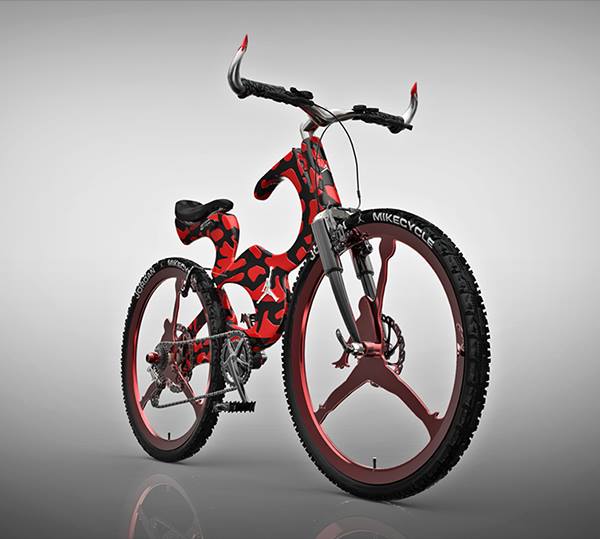


About Michael Jordan
| Field | Detail |
|---|---|
| Full name | Michael Jeffrey Jordan |
| Born | February 17, 1963 |
| Nationality | American |
| Known for | Professional basketball, sports marketing, entrepreneurship |
| Associated teams | Chicago Bulls, Washington Wizards, Charlotte Bobcats/Hornets ownership |
| Public image | Elite performance, competitive discipline, luxury branding |
Read the full overviewWhy Michael Jordan matters, How did he become such a strong cultural reference?, What does Michael Jordan look like in design and products?, Why does he keep appearing in art, fashion, and collecting?
Why Michael Jordan matters
Jordan matters because his name became more than a sports biography. He helped define the modern athlete as a global brand, appearing in advertising, footwear, collectibles, and lifestyle products in ways that changed how design firms and manufacturers think about celebrity influence. His partnership with Nike, especially the Air Jordan line, set a template for athlete-led product design that still dominates sportswear.
His influence also reaches beyond apparel. Jordan’s image appears in posters, toys, sculptures, interior schemes, and custom objects because it signals status, speed, control, and technical mastery. In visual culture, he functions as a shorthand for peak performance and 1990s aspirational style.
How did he become such a strong cultural reference?
Jordan rose to prominence through the NBA, first at the University of North Carolina and then with the Chicago Bulls, where his scoring, athleticism, and repeated championships made him one of the most visible athletes of his era. Television, print media, and sponsored product campaigns amplified that visibility. By the time he retired from basketball, his face and silhouette were already familiar far beyond sports audiences.
That recognition was reinforced by a highly controlled public image. Jordan projected discipline and competitiveness, and brands used those qualities to attach meaning to shoes, clothing, and consumer goods. The result is a reference figure who can stand for performance without needing explanation.
What does Michael Jordan look like in design and products?
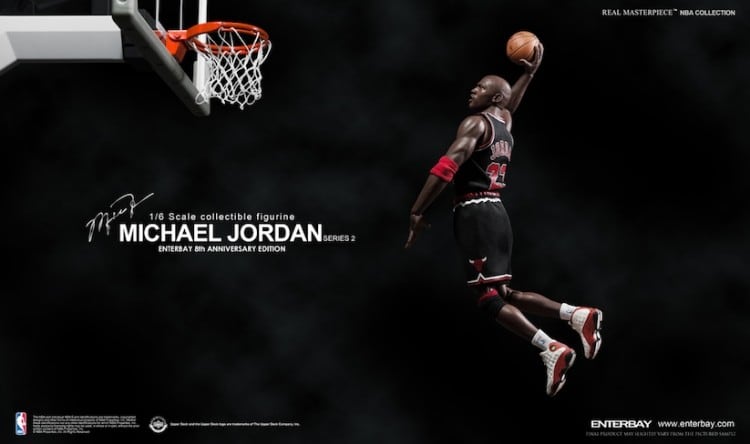
In practice, Jordan appears through specific visual cues: the Jumpman logo, Bulls red and black, numbered jerseys, and poses that emphasize height, hang time, and motion. Designers often borrow these elements when creating tribute objects or licensed merchandise. A collectible figure, for example, may focus on muscle definition, airborne posture, and exact uniform details to make the athlete instantly readable.
His influence is especially visible in objects that fuse sport and luxury. Custom bicycles, furniture, watches, and interiors may use Jordan as a theme to communicate ambition and high value. These pieces rarely rely on portrait likeness alone; they usually combine materials, color, and finish to echo the polished commercial world built around his image.
Why does he keep appearing in art, fashion, and collecting?
Jordan remains useful because his image carries layered meaning. For some makers, he represents excellence and technical discipline. For others, he marks a specific cultural moment when basketball, streetwear, and global marketing became tightly linked. That makes him easy to remix in fashion editorials, gallery objects, and collector editions.
Collectibles and fan objects often use Jordan to test realism, nostalgia, and craftsmanship. A scale figure or display object has to capture proportion, stance, and likeness with enough precision to satisfy collectors who know the source material well. In that sense, Jordan is not only a subject but also a standard for how detailed a commercial tribute must be.
Frequently Asked Questions
Was Michael Jordan only important because of basketball?
No. Basketball made him famous, but his wider importance comes from how that fame moved into branding, fashion, and consumer culture. His public image became one of the most durable symbols in modern sports marketing.
Why is he often used in design objects and collectibles?
Jordan’s profile is instantly recognizable, and recognition is valuable in design. Makers use his likeness, jersey numbers, and signature poses to create objects that signal excellence, nostalgia, and exclusivity. These cues work quickly, even at small scale.
What is the visual shorthand for Michael Jordan?
The strongest shorthand includes the Jumpman silhouette, Bulls colors, and the airborne basketball pose associated with his playing style. Even without a face, those elements usually identify him. That visual economy is part of why his image is so widely reused.