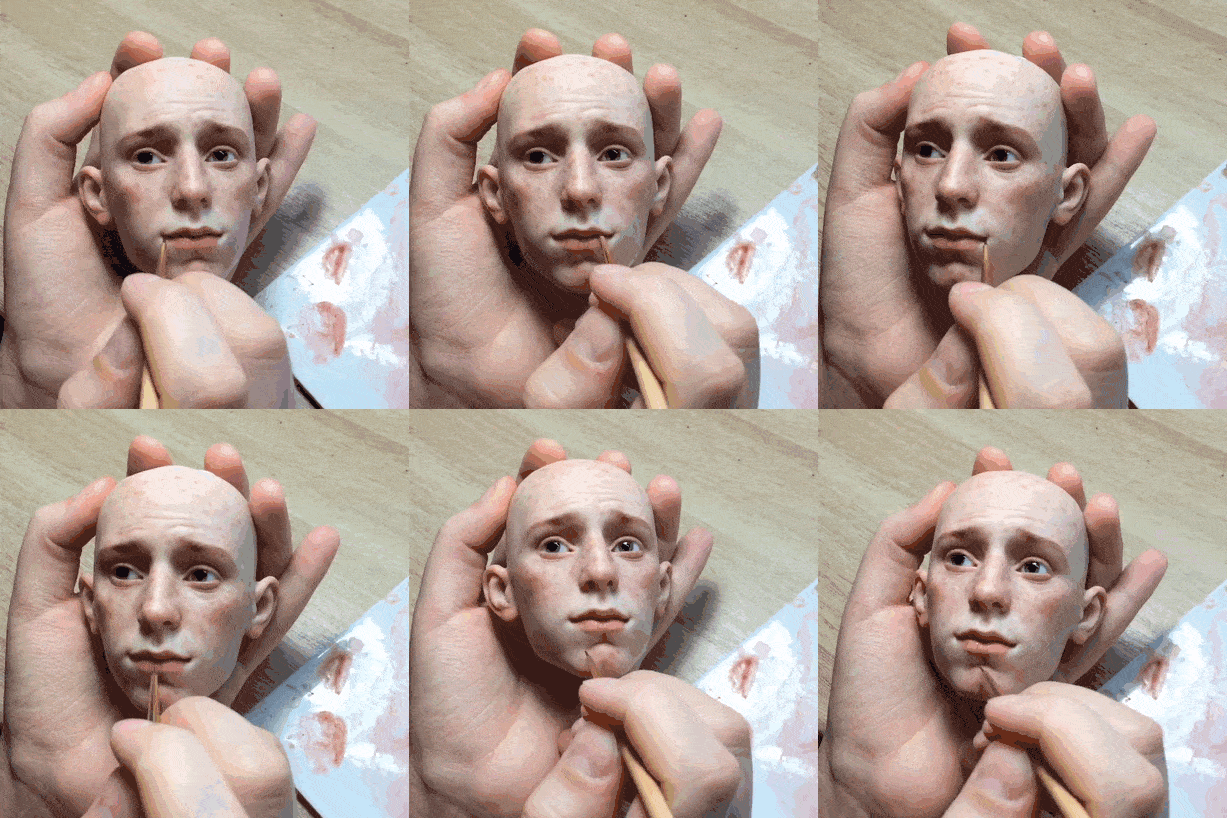
Michael Zajkov is a doll artist known for highly realistic sculpted faces, especially unsettling baby and child dolls that combine fine anatomy, hand-painting, and elaborate finishing. His work sits at the intersection of sculpture, craft doll making, and collectible art objects, where expression, skin texture, and lifelike proportion matter as much as construction.
| Field | Doll art, sculpture, collectible figures |
|---|---|
| Known for | Realistic doll faces and eerily natural expressions |
| Materials | Polymer clay, resin, painted surfaces, textile and fiber details |
| Working method | Hand-sculpting, molding, painting, assembling, and finishing by hand |
| Public profile | Contemporary artist with work circulated online and through collector culture |
What makes Michael Zajkov’s dolls distinctive?
Zajkov’s dolls are defined by realism pushed into discomfort. He models faces with careful attention to eyelids, lips, cheeks, pores, and the slight asymmetries that make a face feel alive. The result is not the smooth idealization associated with fashion dolls or the simplified cuteness of toy figures, but something closer to a sculpted portrait that carries mood, age, and fragility.
That effect depends on finish as much as form. Subtle paint layers, glass or synthetic eyes, rooted hair or fiber work, and carefully chosen fabrics all contribute to the illusion of skin and presence. Even when the figure remains obviously handmade, the details ask the viewer to read it as bodily, not symbolic.
How are these dolls made?
Realistic art dolls usually begin with a sculpted head, often in polymer clay or another modelable material that can hold fine detail. From there, the artist may create a mold for casting in resin or continue with direct hand-building, then sand, paint, assemble, and dress the figure. The face receives the most labor: shading around the nose and mouth, glazing the lips, and building up tone so the skin does not flatten into a single color.
Zajkov’s work belongs to a tradition where anatomy is studied closely but not copied mechanically. The maker must decide how much realism to preserve and how much to exaggerate for emotional effect. A tiny tilt of the mouth or a slightly overlarge eye can shift a doll from sweet to eerie, which is part of the visual language his work uses so strongly.
Why do his dolls feel so unsettling?
Uncanny feeling appears when a figure is almost human but not quite. Zajkov’s dolls often intensify that sensation by making the face appear tender, vulnerable, or newborn while keeping the surface too still, too perfect, or too carefully composed. The viewer registers the human signals immediately, then notices the artifice a moment later.
This tension has helped make his work memorable in online visual culture. Images of the dolls circulate because they are technically impressive and emotionally provocative at once. They appeal to collectors of contemporary art dolls, but they also reach a broader audience that responds to the mix of craftsmanship and unease.
Where does his work sit in doll-making culture?
Art dolls differ from mass-produced toys because they are treated as sculptural objects rather than standard products. Artists in this field often work in small editions or as one-off pieces, and value comes from handwork, originality, and material finish. Zajkov’s practice fits this model: the doll is not just a plaything, but a crafted object meant to be looked at closely.
His work also connects to a long history of dolls used for display, study, and collecting. Portrait dolls, reborn dolls, and fantasy art dolls all share an interest in lifelike presence, but each uses that lifeness differently. Zajkov’s figures lean toward the theatrical and the uncanny, which places them closer to contemporary sculpture than to nursery play.
Frequently Asked Questions
Is Michael Zajkov a toy maker or a sculptor?
He is best understood as an art doll sculptor. The final objects may look like dolls, but the emphasis is on sculptural form, surface treatment, and visual impact rather than play value or industrial production. That distinction matters because the work is judged by artistic finish, not by durability alone.
What materials are usually involved in his dolls?
His dolls are typically made from sculptable and paintable materials such as polymer clay or resin, then finished with paint, hair, eyes, textiles, and accessory elements. The exact material mix can vary from piece to piece. What remains consistent is the layered hand-finishing needed to create convincing skin and expression.
Why are his dolls so widely shared online?
They are immediately legible in a feed: the face reads in a second, and the emotional response arrives just as quickly. The combination of technical skill and slight discomfort makes the images easy to remember and hard to ignore. That visual force helps them travel well across social platforms and image-driven articles.
Articles mentioning Michael Zajkov