
The Middle Ages were the long period of European history between the collapse of the Western Roman Empire in the 5th century and the beginnings of the Renaissance and Age of Discovery in the 15th. Historians use the term to describe a broad era rather than a single culture or style, and the period is usually divided into the Early, High, and Late Middle Ages. It shaped the institutions, materials, imagery, and building practices that later European art and design inherited.
Stories from Middle Ages
7 stories


About Middle Ages
- Begins after the fall of the Western Roman Empire and ends around the 15th century.
- Usually split into Early, High, and Late Middle Ages.
- Not a uniform age: conditions differed sharply by region, century, and social class.
- Important for the development of castles, cathedrals, manuscripts, metalwork, textiles, and guild production.
- The term itself is a later historical label, not one used by most people living in the period.
Read the full overviewWhat does “Middle Ages” actually mean?, What did medieval making look like?, Why does the Middle Ages matter for design and visual culture?, How should the period be understood today?
What does “Middle Ages” actually mean?
The phrase “Middle Ages” was coined by later writers who saw European history as three broad ages: Classical antiquity, a middle interval, and the modern world. That framing is tidy, but it can flatten a very uneven span of nearly a thousand years. Early medieval Europe inherited Roman infrastructure, law, and Christianity in altered forms; high medieval society saw population growth, urban expansion, and major investment in churches and trade; late medieval life included crisis, war, plague, and new forms of artistic and technical experimentation.
Because the term comes from a later period, it often implies delay or decline. That is misleading. The Middle Ages produced some of Europe’s most ambitious architecture, most refined manuscript illumination, and most complex craft traditions. It also saw the spread of watermills, windmills, paper, glassmaking, ironworking, and new textile techniques that changed how objects were made and circulated.
What did medieval making look like?
Medieval production depended on workshops, monasteries, estates, and later towns and guilds. Materials were local and labor-intensive: oak for timber-framed buildings, limestone and marble for churches, wool for clothing, parchment for books, iron for tools and fittings, and pigments ground from minerals, plants, and metals. Craft knowledge moved by apprenticeship and imitation, not by modern industrial standards. The result was highly varied: a manuscript page might combine gold leaf, ink, and painted vermilion; a suit of armor might join forged plates, leather straps, and rivets; a palace or cathedral might mix stone, plaster, glazed tile, and carved wood.
Medieval objects often reveal the pressure of function and belief at the same time. A chalice was a vessel, but also a liturgical object made to signify sacred authority. A castle was a defensive structure, but also a stage for power. Astrolabes, calendars, and astronomical diagrams show the period’s close link between craft and knowledge. Even practical tools were frequently decorated, because skilled making was not separated from status or meaning.
Why does the Middle Ages matter for design and visual culture?
The period established many of the forms that later European design history treated as foundations: the Gothic cathedral, heraldry, illuminated initials, carved altarpieces, stained glass, and stone fortification. These were not isolated masterpieces. They belonged to systems of patronage, religious practice, trade, and labor that tied makers to bishops, princes, merchants, and institutions. Visual culture in the Middle Ages was therefore social as much as aesthetic.
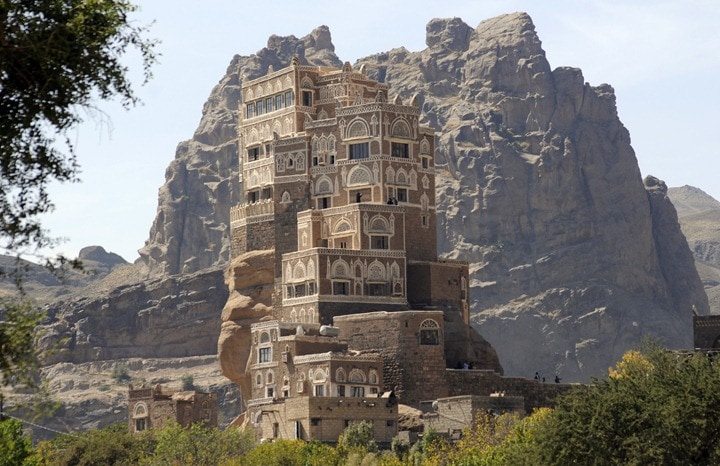
For FreeYork readers, the Middle Ages matters because it shows how making worked before industrial standardization. Materials were costly, reuse was normal, and technique carried authority. A painted panel, a mosque-like palace with dense ornament, a bronze bell, or a manuscript astrolabe all depended on collaboration among draftsmen, masons, founders, illuminators, carpenters, and clients. The period also complicates the idea that technical and decorative work are separate: medieval makers often treated structure, surface, and symbolism as one problem.
How should the period be understood today?
Modern historians avoid treating the Middle Ages as a single dark or static block. The term covers regions far beyond western Europe in its contacts with Byzantium, the Islamic world, and parts of Africa and Asia through trade, translation, war, and pilgrimage. Paper, numerical systems, scientific texts, and luxury goods moved across those networks, changing European craft and scholarship. What appears “medieval” in a museum is often the result of exchange, adaptation, and regional variation rather than pure isolation.
The best way to use the term is as a useful but imperfect map. It helps place a manuscript, a fortress, a devotional object, or a palace within a historical frame. It becomes misleading when it is used to suggest ignorance, simplicity, or uniformity. The Middle Ages were visually rich, technically inventive, and materially demanding, even when the surviving objects were made for worship, defense, or elite display rather than for lasting beauty.
Frequently Asked Questions
Was the Middle Ages really a “dark age”?
Not in any simple sense. The phrase “dark age” reflects older prejudice more than historical fact. Medieval Europe experienced loss and instability in some regions, but it also saw new forms of scholarship, architecture, craft, and trade.
What are the main divisions of the Middle Ages?
Historians usually divide the period into the Early Middle Ages, High Middle Ages, and Late Middle Ages. These labels help organize changes in politics, population, religion, and material culture, but they do not mark clean breaks. Different regions moved through these shifts at different speeds.
Why do art historians care about this period?
The Middle Ages produced key visual languages for books, buildings, sculpture, textiles, and devotional objects. It also preserved workshop methods that later periods inherited and transformed. Many techniques associated with manuscript illumination, stained glass, metalwork, and stone carving reached high levels of refinement in this era.