Minneapolis is the largest city in Minnesota and the county seat of Hennepin County. It sits on the Mississippi River, across from Saint Paul, and is known for a dense system of lakes, parks, and industrial riverfronts. Its name combines a Dakota word for water, mni, with the Greek polis, meaning city. That layered origin reflects the city’s Indigenous past, settler history, and ongoing role as a Midwestern cultural and design center.
- Minneapolis grew around water, milling, and rail, which shaped its street grid, economy, and neighborhoods.
- The city’s “Mill City” identity comes from flour milling powered by the Saint Anthony Falls on the Mississippi River.
- Its lakes, parkways, and riverbanks make landscape a defining part of the city’s built environment.
- Minneapolis is a major site for contemporary art, public art, design firms, and experimental making.
- The city’s name comes from a Dakota and Greek hybrid, a reminder of the region’s mixed linguistic and colonial history.
Why Minneapolis became a major city
Minneapolis grew where water could be harnessed. Saint Anthony Falls, the only major waterfall on the Mississippi, gave 19th-century mills the power to grind grain at industrial scale. That made the city a center of flour production, grain trade, and machine manufacturing, and the old mill district still marks that history in brick warehouses, grain elevators, and repurposed industrial buildings.
Rail lines, bridges, and river infrastructure later expanded the city’s reach. As industry diversified, Minneapolis became a place where manufacturing, finance, healthcare, education, and the creative economy all took root. The built result is a city of strong utilitarian bones: warehouses adapted into studios and apartments, commercial corridors threaded into neighborhood grids, and repeated encounters with water and open space.
What does Minneapolis look like on the ground?
Minneapolis is often read through two visual systems: the urban grid and the park-lake landscape. The city’s neighborhoods range from tightly packed blocks of late-19th- and early-20th-century houses to postwar ranches, apartment towers, and contemporary infill. Many residential streets are lined with mature trees, wood-frame homes, and front porches, giving the city a domestic, layered texture rather than a single monumental skyline.
Water shapes daily movement. Lakes such as Bde Maka Ska, Lake Harriet, and Lake of the Isles are ringed by paths, bike routes, and public parkland. The Chain of Lakes, the riverfront, and the city’s parkway system make landscape part of the urban fabric instead of an edge condition. For artists and designers, that means Minneapolis offers both industrial surfaces and soft ecological ones: concrete and brick, ice and reeds, grain silos and open water.
How did the city’s art and design scene take shape?
Minneapolis has long supported a practical, civic-minded visual culture. Its museums, universities, nonprofit spaces, and local studios have helped sustain work in architecture, public art, graphic design, craft, and installation. The city also has a strong tradition of community art tied to neighborhoods, labor histories, and social movements, which gives it a different profile from cities built mainly around entertainment or fashion.
Public art is especially visible here. Large-scale murals, sculptures, and temporary interventions often use the city itself as a canvas, from riverfront installations to works placed in parks, plazas, and commercial streets. That civic scale matters: Minneapolis tends to treat art as part of public life, not a separate luxury object. The result is a city where design appears in transit, streetscape, housing, and signage as much as in galleries.
Why does Minneapolis matter in contemporary culture?
Minneapolis matters because it is both regional and outward-facing. It is a Midwestern city with a strong local identity, but it also produces work that circulates nationally and internationally, especially in architecture, product design, public art, and socially engaged practice. Its institutions and neighborhoods have supported artists and makers who work across media and often engage directly with civic questions.
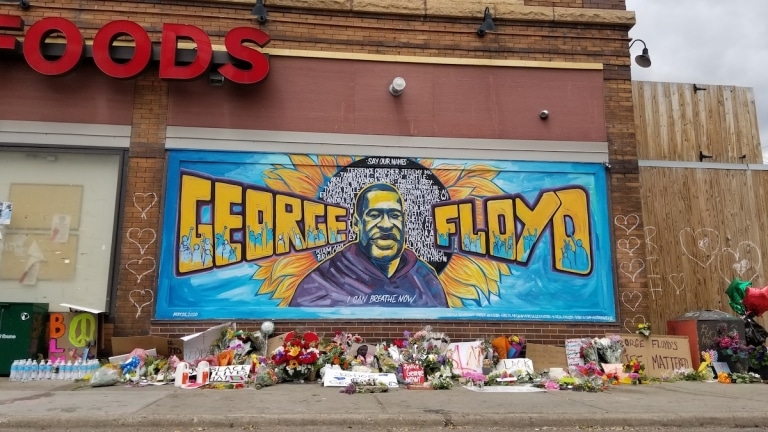
The city also carries heavy political and cultural resonance. The murder of George Floyd in Minneapolis in 2020 made the city a global reference point in conversations about racial violence, protest imagery, memorials, and public accountability. Since then, Minneapolis has remained closely associated with street art, activism, and the visual language of grief and resistance. That history sits alongside the older stories of milling, migration, and lakefront leisure, making the city’s image complex rather than single-note.
Frequently Asked Questions
Why is Minneapolis called the Mill City?
The nickname comes from the city’s role in industrial flour milling during the 19th and early 20th centuries. Saint Anthony Falls supplied water power that drove mills, and Minneapolis became a major center for processing wheat from the Upper Midwest. Grain elevators, mill ruins, and warehouse districts still preserve that history.
What is the origin of the name Minneapolis?
The name is usually credited to the city’s first schoolteacher, who combined mni, a Dakota word for water, with polis, the Greek word for city. That makes the name a hybrid of Indigenous and classical language. It reflects both the geography of the place and the layered histories attached to it.
What makes Minneapolis important for artists and designers?
Minneapolis offers a strong infrastructure of museums, universities, public art, and neighborhood-based creative spaces. It also has a built environment that gives artists useful material: industrial structures, extensive parkland, and a culture of civic investment. That combination supports work that is both highly local and easily legible beyond the city.
At a glance
- Address
- Hennepin County, United States
- Coordinates
- 44.983334, -93.26667
Articles mentioning Minneapolis