Montana is a state in the western United States, known for its broad plains, high valleys, and the Rocky Mountain ranges that cut across its western side. Its name comes from the Spanish montaña, meaning mountain, a reference to the terrain that shapes much of the state’s identity and visual character.
- A western U.S. state with a strong mountain landscape.
- The western third contains numerous ranges; smaller island ranges rise elsewhere across the state.
- Montana has 77 named ranges that belong to the Rocky Mountains.
- The state’s name comes from Spanish, not an Indigenous language.
- In visual culture, Montana often stands for open space, weathered building, ranch land, and alpine distance.
What makes Montana distinct?
Montana is defined by contrast. The eastern part of the state opens into prairie, crop land, and long horizons, while the west lifts into dense mountain country with forests, rivers, and sharp seasonal changes. That split matters because the state is not simply “mountainous”; it contains several different landscapes that shape how people build, travel, and work there.
The mountain ranges themselves are not a single continuous wall. Instead, Montana has large mountain systems in the west and scattered smaller “island ranges” elsewhere, including isolated peaks that rise abruptly from surrounding plains. This varied topography gives the state a strong profile in photography and film: big sky, hard light, long roads, weathered timber, stone, and structures that sit visibly against the land.
Why does Montana appear so often in art and design?
Montana has become shorthand for space, solitude, and material endurance. Photographers and filmmakers often use it to stage scenes of remoteness or exposure, where buildings, vehicles, and human figures are measured against land that seems larger than they are. That visual language is especially clear in work about the American West, where Montana can suggest both romance and fatigue.
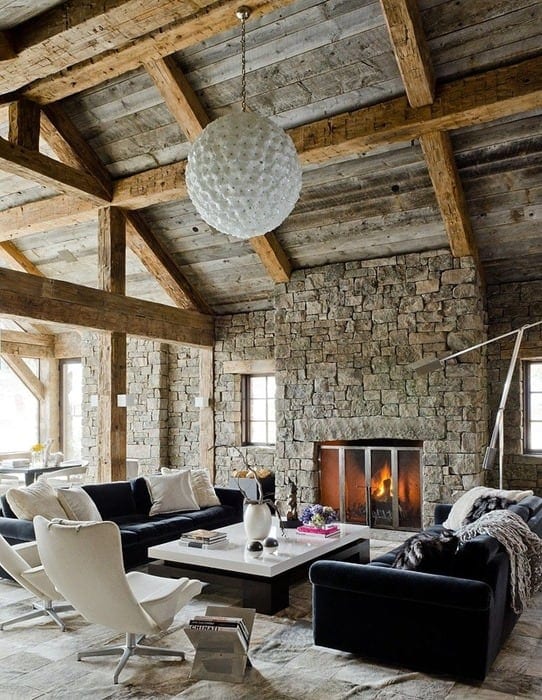
Designers and architects also draw on the state’s setting because the climate and terrain reward direct, durable construction. Timber, stone, steel, and exposed joinery often appear in buildings and outdoor works made for Montana, where wind, snow, sun, and distance all influence form. Even when the subject is not architecture, the state’s surfaces and atmosphere encourage a restrained palette: muted browns, greyed wood, rusted metal, pale grass, and cold blue shadow.
What does “Montana” mean in practice?
As a place, Montana shapes how things are made. Rural buildings often respond to wide temperature swings and heavy snowfall, so roofs pitch steeply, walls stay simple, and materials are chosen for repairability rather than polish. In contemporary projects, artists and architects working in Montana frequently treat the site as active material, using local timber, weathering steel, or earth-colored finishes to keep a work visually tied to its surroundings.
The state also carries a strong cultural image in branding and storytelling. “Montana” can signal rural independence, outdoor life, and a particular kind of Western authenticity. That image is useful in magazines, interiors, product names, and travel writing, but it can flatten a complex place into a mood. The reality includes Indigenous homelands, working towns, energy extraction, agriculture, tourism, and fast-changing land use.
How should Montana be understood as a reference term?
When Montana appears in a visual culture context, it usually points to more than geography. It can mean a location, a set of landscape cues, or a cultural code built around openness and ruggedness. That ambiguity is part of its value: a single word can invoke a state, a mountain setting, or an entire visual register associated with the American West.
For a reader coming across the term in an article, the key point is that Montana is both a real place and a shorthand. Its landforms are concrete, but its image has been heavily edited by photography, architecture, film, and tourism. The result is a state that functions as material fact and aesthetic symbol at the same time.
Frequently Asked Questions
Is Montana just mountains?
No. The western third of the state is heavily mountainous, but much of Montana is open plains, rolling grassland, and river country. The state’s identity comes from the tension between those regions, not from mountains alone.
Why do artists and photographers use Montana so often?
Montana offers clear visual contrasts: vast horizons, sharp weather, isolated buildings, and strong seasonal light. Those conditions make it useful for work about solitude, memory, labor, and the American West. It also carries a recognizable cultural meaning that audiences read quickly.
What kind of materials are associated with buildings in Montana?
Common materials include timber, stone, concrete, steel, and weather-resistant cladding. These choices respond to climate and distance, since buildings often need to handle cold, wind, snow, and long-term exposure. In art and architecture, these materials also help a project sit naturally within the landscape.
At a glance
- Coordinates
- 46.879682, -110.362566
Articles mentioning Montana