Museo Nacional Centro de Arte Reina Sofía is Spain’s national museum of modern and contemporary art, based in Madrid and best known for its holdings of 20th-century Spanish and international art. It opened as a museum in 1992, after a longer institutional history as a hospital and then as a cultural center, and it takes its name from Queen Sofía of Spain.
- It focuses on art from the 20th century onward, with a strong emphasis on Spanish artists and political history.
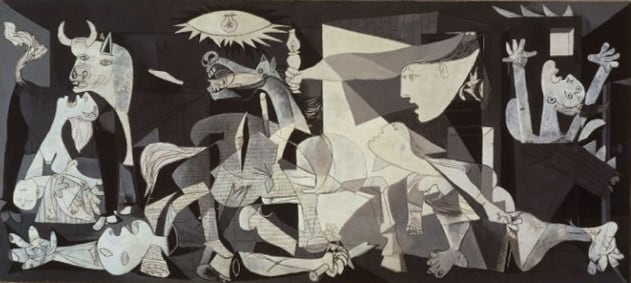
- Its best-known work is Pablo Picasso’s Guernica, displayed as a central civic and historical object rather than just a painting.
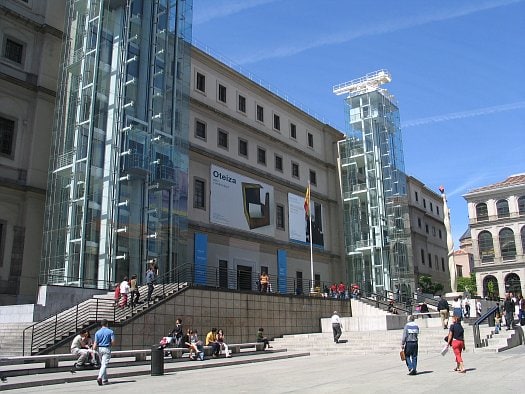
- The museum sits in a converted building that combines neoclassical architecture with modern additions by Jean Nouvel.
- Its collection includes painting, sculpture, photography, film, sound, and archival material.
- It matters because it helps define how Spain presents modern art, memory, and public culture.
What kind of museum is it?
The Reina Sofía is a national art museum, not a broad encyclopedic collection. Its core mission is to collect, preserve, research, and display modern and contemporary art, especially work connected to Spain and to the political ruptures of the 20th century. That gives the museum a different character from a royal gallery or a decorative-arts museum: it deals in modernism, civil war, dictatorship, exile, and the later avant-gardes that followed.
Its collection is not limited to paintings. It includes sculpture, drawings, photographs, films, installations, sound works, documents, and artists’ archives. That wider remit reflects how modern art is often made and encountered: not only as finished objects on walls, but as moving images, printed matter, and record of process.
Why is Guernica so important here?
The museum is inseparable from Pablo Picasso’s Guernica, the large 1937 anti-war painting about the bombing of the Basque town during the Spanish Civil War. When the work came to Madrid in 1992, it became the symbolic center of the museum’s identity. It is installed with unusual seriousness: not as a decorative masterpiece, but as a historical image that anchors the institution’s account of violence, exile, and memory.
That placement changed how the public read both the painting and the museum. The Reina Sofía is now one of the main places where modern Spanish identity is staged through art. Alongside Picasso, the collection includes key figures such as Salvador Dalí, Joan Miró, and Juan Gris, as well as later artists who worked with political dissent, conceptual methods, and new media.
How did the museum come to be?
The building began as the Hospital General de Madrid, an 18th-century institution designed in the neoclassical style. For decades it sat in varying states of use and neglect before being adapted for cultural purposes. The state later transformed it into the national museum for modern art, and the museum opened officially in 1992, the same year as the Barcelona Olympics and the Seville Expo, both part of Spain’s international cultural self-presentation.
Architecturally, the site is a hybrid. The original building was restored and expanded, and Jean Nouvel added a major contemporary extension in 2005. That combination suits the museum’s purpose: old civic architecture made to hold newer forms of art, with long galleries, open courtyards, and spaces that can accommodate large-scale installation, moving image, and temporary exhibitions.
What does it look like in practice?
Inside the museum, presentation matters as much as collection. Works are often arranged to foreground historical context, chronology, and artistic groups rather than isolated masterpieces. A room might combine painting with posters, photographs, journals, film stills, or documentary material, making visible the networks around an artwork: political events, publishing, and exhibition history.
The museum also runs temporary exhibitions, research programs, a library and archive, and public programming. That makes it more than a gallery of famous objects. It functions as an institution for modern art scholarship and for the curation of Spain’s recent cultural memory, where the material life of art includes paper, celluloid, canvas, sound, and the record of public debate.
Frequently Asked Questions
Is the Museo Reina Sofía only about Spanish art?
No. Spanish art is central, but the museum also collects and exhibits international modern and contemporary art. Its strongest narrative links Spanish artists to broader European and global movements such as Cubism, Surrealism, conceptual art, and postwar experimental practice.
Where is the museum located?
The museum is in Madrid, in the area around Atocha. Its main building is a former hospital, and the site has become one of the city’s major cultural landmarks. The location places it within a dense museum district, close to other major public collections.
Why is the museum important beyond tourism?
The Reina Sofía shapes how modern Spanish art is taught, researched, and publicly understood. It preserves works tied to war, dictatorship, exile, and democratic transition, so it also functions as a civic institution of memory. Its influence extends through scholarship, exhibitions, and the public meaning of works like Guernica.
At a glance
- Founded
- 1992
- Address
- Madrid, Spain
- Coordinates
- 40.40889, -3.694444
Articles mentioning Museo Nacional Centro de Arte Reina Sofía