
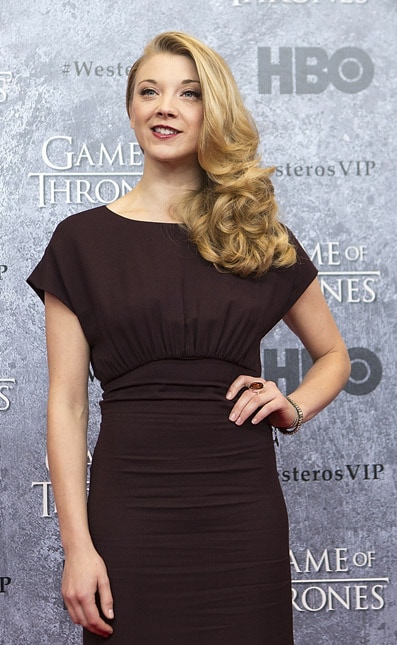
Natalie Dormer is an English actor known for screen and stage roles that combine period drama with sharp, controlled performance. She came to wide attention as Anne Boleyn in The Tudors and later reached a larger global audience as Margaery Tyrell in Game of Thrones. Her work has also included theatre, independent film, and fashion-facing editorial projects that rely on image-making as much as dialogue.
| Born | 11 February 1982, Reading, England |
|---|---|
| Field | Acting |
| Known for | Television drama, historical roles, stage work, fashion and editorial appearances |
| Notable roles | Anne Boleyn, Margaery Tyrell |
Why did Natalie Dormer become widely known?
Dormer’s breakthrough came through historical television drama, where performance depends on posture, costume, and measured speech as much as line delivery. As Anne Boleyn, she played a figure whose public image is already heavily coded in visual culture: vulnerable, political, ambitious, and constantly watched. The role made her a recognisable screen presence and established the qualities that have followed her career: composure, precision, and an ability to carry status without overt display.
Her later role as Margaery Tyrell in Game of Thrones extended that reputation. The character is built around soft power, court dress, and the management of public image, so Dormer’s performance had to work through expression, timing, and costume rather than physical force. That made her especially visible in a series where clothing, hair, and gesture function as narrative tools.
What kind of performer is she?
Dormer tends to play characters with intelligence, self-awareness, and a strong sense of the room they are in. Her performances often depend on stillness and control, with brief shifts in tone doing more work than overt emotional release. That style suits roles set in hierarchical worlds, where power is often indirect and negotiated through appearance.
She has also worked in theatre, where the demands are different: live timing, sustained concentration, and a closer relationship to voice and movement. Stage work matters in understanding her as an actor because it shows that her screen image is not only built for camera close-up. It also comes from training in performance as a physical and spatial craft.
How does Natalie Dormer fit into fashion and visual culture?
Dormer has often been photographed and styled in ways that emphasise structure, contrast, and a clean silhouette. In editorial contexts, this makes her useful for fashion images that want classical authority rather than overt glamour. Her face and bearing read well in fashion publishing because they carry a slightly austere clarity that can be adjusted by styling into period, romantic, or severe registers.
That visual adaptability helps explain why she appears in magazines such as Zink. Editorial portraiture depends on the collaboration between photographer, stylist, hair, makeup, and subject, and Dormer’s screen persona translates well into that environment. She can stand for a kind of modern historical elegance that fashion images often borrow when they want seriousness without stiffness.
What has made her roles memorable?
Dormer’s best-known roles are memorable because they combine power with restraint. Anne Boleyn and Margaery Tyrell are both figures whose influence depends on how they are seen, and Dormer plays that visibility as part of the character rather than as decoration. She often uses eye contact, composure, and strategic warmth to suggest intelligence beneath a controlled surface.
This makes her particularly effective in productions where costume and setting are not background details but part of the acting language. A Tudor gown, a court hairstyle, or a deliberately composed pose can become part of the performance. Dormer works well in that environment because she understands how image can carry narrative weight.
Frequently Asked Questions
Is Natalie Dormer mainly a film actor or a television actor?
She is best known for television, especially for The Tudors and Game of Thrones. She has also worked in film and theatre, so her career is not limited to one medium. Television gave her the widest visibility, but it is not the full shape of her work.
Why do period roles suit her so well?
Period drama often rewards discipline, precision, and a strong sense of posture, all of which fit Dormer’s screen style. Her performances can suggest power without excess, which is useful in stories about courts, succession, and display. Costume and setting also support the kind of controlled presence she brings to a role.
What makes her relevant to a visual culture publication?
Her career sits at the meeting point of acting, styling, and image-making. She is not only a performer of dialogue but also a figure shaped through costume, photography, and editorial presentation. That makes her relevant wherever fashion, screen persona, and historical imagery overlap.