
Neil Simone on FreeYork
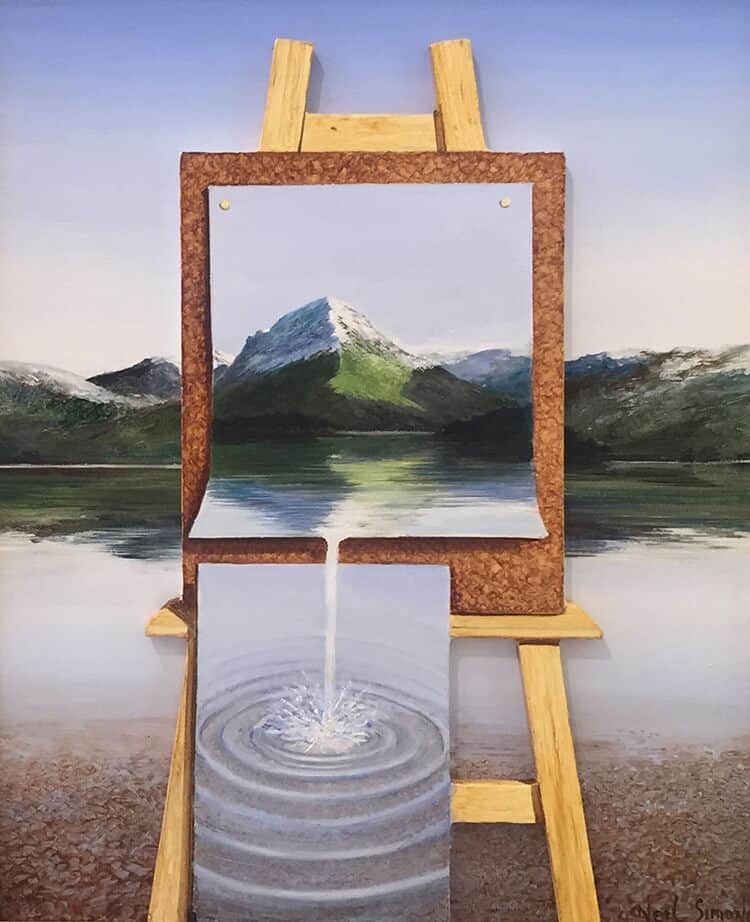
About Neil Simone
| Field | Detail |
|---|---|
| Who | Neil Simone, a painter known for surreal, illusion-filled oil paintings. |
| Medium | Oil paint on canvas and related supports. |
| Style | Figurative painting that blends observed detail with fantasy, ambiguity, and visual puzzles. |
| Origin story | A 1969 visit to Harrogate and North Yorkshire helped shape the scenic imagination that runs through his work. |
| Notable quality | Images are designed to be read in more than one way, often shifting between realism and invention. |
What kind of painter is Neil Simone?
Neil Simone is a contemporary oil painter whose work combines recognisable places, objects, and figures with surreal additions that change what the image means at first glance. His paintings rely on careful draftsmanship and a polished finish, but they are not straightforward views of the world. They place ordinary subjects inside scenes that feel unstable, theatrical, or dreamlike.
That ambiguity is central to his appeal. Simone does not present a single fixed reading of a painting; instead, he builds images that can hold more than one interpretation at once. The result is work that feels accessible because it uses familiar visual cues, yet unusual enough to keep revealing new details.
How did his style develop?
According to the account attached to his work, Simone’s direction shifted after a 1969 visit to Harrogate, when he encountered the landscape of North Yorkshire. That landscape appears to have given him a lasting visual reference point: wide scenery, strong atmosphere, and a sense of place that can be translated into invention. From that point onward, he developed a practice that joined observed environment with imaginative construction.
His paintings are often described as non-destructive, meaning they do not simply deform reality for shock value. Instead, they preserve enough recognisable structure for the viewer to locate the scene, then alter it through unlikely juxtapositions and conceptual twists. That approach keeps the work grounded even when the content becomes strange.
What do the paintings look like in practice?
Simone’s paintings tend to be highly finished oil works with strong surface control, detailed modelling, and a visual clarity that supports illusion. The imagery is usually composed so that the eye moves between literal representation and conceptual surprise. A painting may seem to present a normal landscape, interior, or figure, then reveal a second reading through scale, placement, or unexpected narrative clues.
This method gives the work an almost cinematic quality. The viewer is not simply looking at a scene but decoding it, noticing how realism is being used as a support for fantasy. Because of that, the paintings often feel both decorative and puzzling: finished enough for a domestic wall or gallery space, but layered enough to reward repeated viewing.
Why does Neil Simone matter?
Simone matters because he shows how contemporary figurative painting can stay legible without becoming ordinary. His work sits between traditional craft and imaginative disruption, using oil paint’s capacity for depth, sheen, and detail to make impossible or uncertain images convincing. That is a demanding balance, and it depends on control rather than looseness.
He also belongs to a long tradition of artists who use ambiguity as a subject in itself. Instead of treating fantasy as escape, his paintings use it to complicate how scenes are read. That is one reason they have found collectors and private homes as well as galleries: they invite looking, then keep changing under sustained attention.
Questions
Is Neil Simone a surrealist?
His paintings share traits with surrealism, especially dreamlike imagery, unexpected combinations, and a sense that the scene is just slightly out of alignment. But the work also keeps a strong hold on realistic structure and finish. It is better described as surreal-influenced figurative painting than as a strict historical surrealist practice.
What medium does he use?
Simone is identified with oil painting. Oil paint suits his method because it allows layered colour, precise edges, subtle transitions, and a glossy surface that can support illusion. Those qualities matter in work that depends on convincing detail and visual ambiguity.
Why is Harrogate important in his story?
Harrogate appears as a turning point in his biography. A visit there in 1969 led him to the scenery of North Yorkshire, which became a catalyst for decades of further work. In reference terms, it marks the moment when place moved from background to source material.