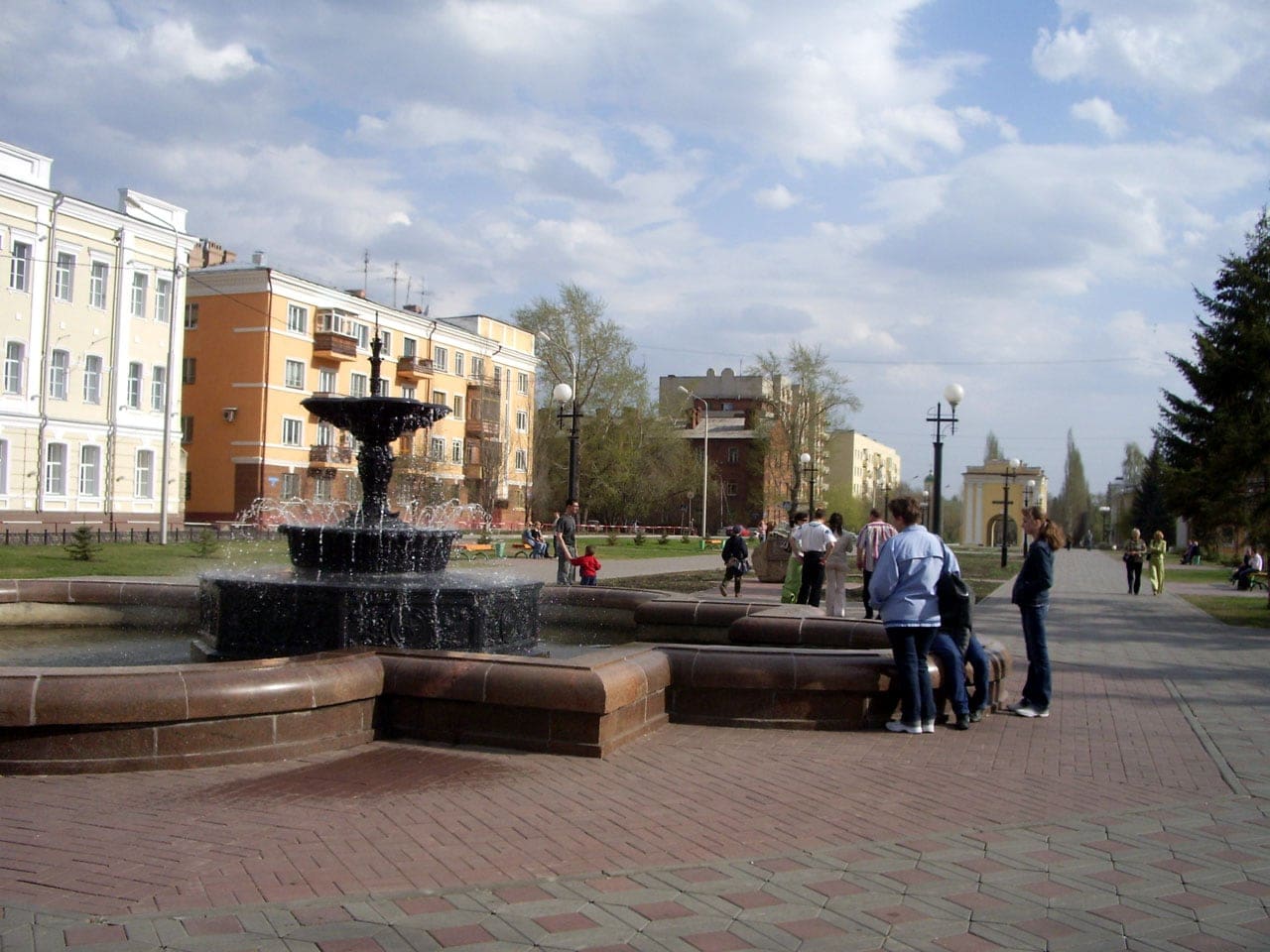
Omsk is a major city in southwestern Siberia and the administrative center of Omsk Oblast, in Russia. It sits on the Irtysh River and near the mouth of the Om, from which it takes its name. Founded as a fortress in the early 18th century, Omsk grew into a regional capital, a transport hub, and one of the largest cities in Russia beyond the Urals.
| Country | Russia |
|---|---|
| Region | Southwestern Siberia |
| Oblast | Omsk Oblast |
| Founded | 1716 |
| River | Irtysh River |
| Population | About 1.1 million |
How did Omsk begin?
Omsk began as a fortified settlement in 1716, built by the Russian Empire to secure its expanding frontier in Siberia. Its position at the meeting of river routes made it strategically useful for military control, trade, and later administration. The fortress was not the city’s final shape, but it set the pattern for Omsk’s early growth: state power first, urban life second.
That origin still matters because Omsk developed less as a planned cultural capital than as a service and command center for a wide territory. In the imperial period it served as the seat of the Governor General of Western Siberia, and later the Governor General of the Steppes. That bureaucratic role gave it buildings, institutions, and a larger civic footprint than many Siberian cities of similar age.
What does Omsk look like on the map?
Omsk lies far from European Russia, more than 2,000 kilometers east of Moscow, in a part of the country that is flat, river-crossed, and built around long distances. The Irtysh gives the city a clear geographic spine. As in many Siberian cities, waterway access shaped settlement first, then rail and road networks expanded the city into a broader industrial and administrative center.
Its scale also sets it apart. Omsk is one of Russia’s largest cities east of the Ural Mountains, second only to Novosibirsk by population in that zone. That size gives it the institutions of a large urban center—universities, factories, archives, theaters, and museums—while its location keeps it tied to the logistics and weather realities of Siberia.
Why does Omsk matter in Russian history and culture?
Omsk matters because it shows how imperial administration and frontier settlement turned a military outpost into a permanent city. In the 19th and early 20th centuries, it became an important center for governing Siberia and the steppe regions. Its built environment reflects that past: official buildings, Orthodox churches, Soviet-era housing, and industrial districts sit alongside newer commercial development.
The city also appears in Russian literary and visual culture as a place of distance, confinement, and transit. Omsk has figured in accounts of exile and provincial life, and its image often carries the atmosphere of inland Siberia: cold winters, heavy infrastructure, broad streets, and a sense of scale that can feel both expansive and enclosed. For photographers and filmmakers, that contrast makes it visually distinct.
What does Omsk mean in contemporary practice?
Today Omsk functions as a regional capital, an industrial city, and a transport node. It supports petrochemical production, machinery, food processing, and other heavy urban industries, while also serving as a center for education and public administration. Its economy depends on manufacturing, river and rail links, and the wider Siberian market.
In visual terms, Omsk often presents the layered look of a city that has been repeatedly rebuilt: imperial fragments, Soviet planning, and contemporary glass or concrete additions. That mix is useful for photographers because it reveals how urban identity forms through materials, not just monuments. Brick, plaster, prefabricated panels, metal, snow, and river light all shape how the city reads in images.
Frequently Asked Questions
Is Omsk in Asia or Europe?
Omsk is in Asia, in the Siberian part of Russia east of the Ural Mountains. The Ural range is the usual boundary used to separate European Russia from Asian Russia. Omsk sits well inside that Asian side, in southwestern Siberia.
Why is Omsk important?
Omsk matters as a historical administrative center and as one of the largest cities in Siberia. It helped govern a vast imperial frontier and later became a major regional capital. That history left it with a strong civic and infrastructural role that still shapes the city today.
What kind of city is Omsk today?
Today Omsk is a large industrial and administrative city with universities, cultural institutions, and heavy transport links. It is not a tourist showcase city, but a working regional center where everyday urban life, industry, and state administration overlap. That practical role is central to its character.
At a glance
- Address
- Omsk Oblast, Russia
- Coordinates
- 54.983334, 73.36667
Articles mentioning Omsk