
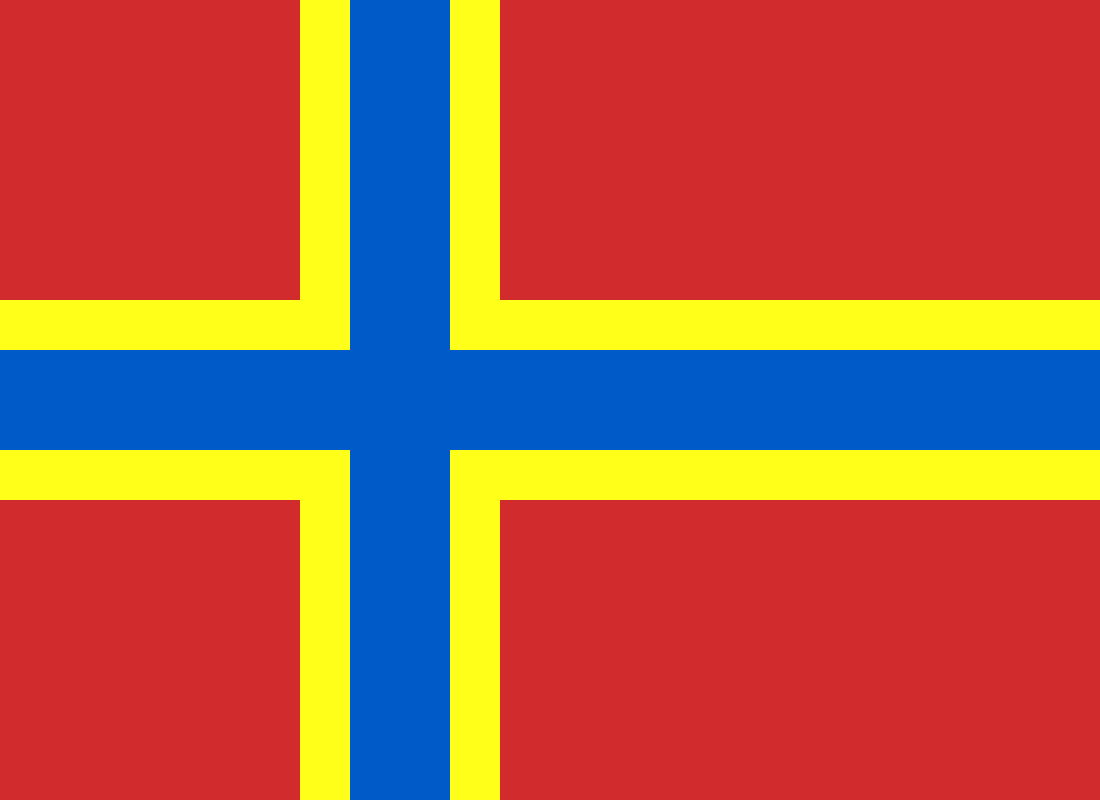
Orkney is an archipelago in northern Scotland, just north of Caithness, made up of about 70 islands, around 20 of them inhabited. Its largest island, called the Mainland, holds the administrative centre at Kirkwall and most of the population. Orkney matters for its long human history, exposed coastal landscape, and well-preserved stone-built heritage, all shaped by wind, sea, and a sparse treeless environment.
| Fact | Detail |
|---|---|
| Location | North of mainland Scotland, off the coast of Caithness |
| Type | Archipelago |
| Number of islands | About 70 |
| Inhabited islands | About 20 |
| Largest island | Mainland |
| Main settlement | Kirkwall |
Why Orkney stands out
Orkney’s geography gives it a distinct visual character. Low hills, broad skies, sea cliffs, and shallow bays dominate the islands, while strong light and weather change the look of the coast from hour to hour. The landscape feels open rather than rugged in the Alpine sense; the drama comes from exposure, not height.
That exposure has also shaped settlement and building. Historic structures in Orkney often use local stone, with thick walls and low profiles that resist wind and salt spray. The islands’ archaeological record includes Neolithic sites built from carefully cut and fitted stone, showing an early and sustained skill with masonry.
What does Orkney look like in practice?
Orkney is defined by a close relationship between land, sea, and human use. Crofting fields, harbours, shore roads, and wind-battered farms sit beside wide empty stretches of grass and heather. On the coasts, cliffs and rock shelves are broken by caves, stacks, and inlets that make the shoreline feel highly articulated.
In built terms, the islands often present a restrained palette: grey sandstone, flagstone roofs, turf in older rural structures, and whitewashed or muted façades in towns. Kirkwall adds a small-centre urban layer, with streets, civic buildings, and the cathedral making a compact focus within an otherwise dispersed island system.
Why do artists, photographers, and designers care about Orkney?
Orkney offers a clear study in how place shapes form. The islands show how severe weather, limited timber, and a maritime economy influence architecture, material choice, and settlement pattern. For visual culture, that makes Orkney useful not just as scenery but as evidence of design under constraint.
Its ancient monuments also matter. Sites such as chambered cairns, stone circles, and prehistoric settlements have become central references for discussions of early architecture and monumentality in Britain. They show precision, endurance, and a strong sense of place made from local stone rather than imported display.
Frequently Asked Questions
Is Orkney part of Scotland?
Yes. Orkney is a Scottish archipelago and one of Scotland’s island council areas. It sits well north of the mainland, separated from Caithness by the Pentland Firth and surrounding waters.
What is the largest town in Orkney?
Kirkwall is the largest settlement and the administrative centre. It functions as the main hub for services, transport, and public life across the islands. The town also gives Orkney a compact civic core within a largely rural setting.
Why is Orkney important in archaeology?
Orkney contains some of the most significant Neolithic sites in northern Europe. These include monumental stone structures built with great precision and long-term durability. They matter because they show an advanced prehistoric building culture using local materials and careful planning.
At a glance
- Address
- Highlands and Islands, United Kingdom
Articles mentioning Orkney
