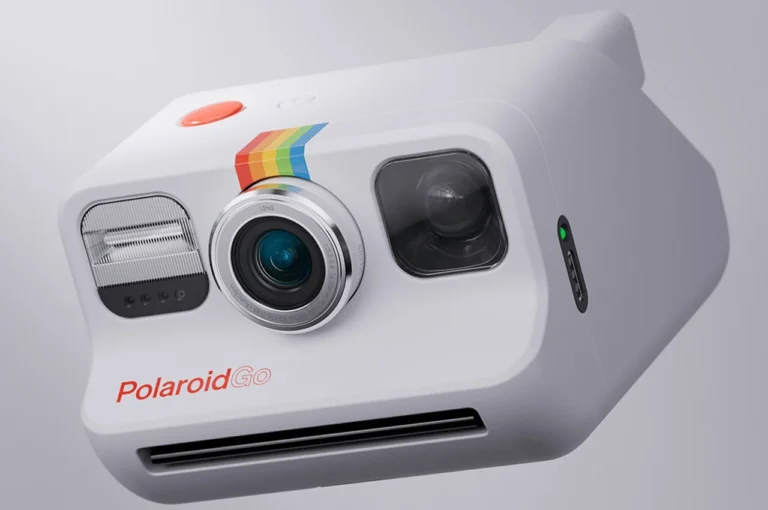
Polaroid Corporation is an American consumer imaging company best known for inventing and selling instant photography systems that produced a finished print minutes after exposure. Founded in 1937 by Edwin H. Land, it became synonymous with the peel-apart instant print and later with integral instant film, compact cameras, and a visual style built around immediacy, colour saturation, and the white-bordered snapshot.
- Founded in 1937 by Edwin H. Land in the United States.
- Made instant photography its defining product, first reaching market in 1948.
- Turned the instant camera into a mass-market object for snapshots, portraits, and events.
- The brand’s look became part of visual culture: square frames, white borders, and quick, imperfect prints.
- After ceasing instant film production in 2008, the name continued through digital products, licensing, and revived instant cameras.
What made Polaroid different?
Polaroid changed photography by collapsing the gap between taking a picture and holding a print. Earlier photographic processes required separate development, but Polaroid’s systems combined camera, film chemistry, and processing in one object. That made the image immediate and public: a portrait could be shared at once, a proof shot could be checked on the spot, and a family snapshot became a physical object within minutes.
The company’s early success came from Edwin Land’s push to make photography simpler and faster for ordinary users. Polaroid’s cameras were not only technical devices; they were designed around the ritual of seeing an image emerge from the camera body. That process, with its waiting time and visible chemical development, gave the photographs a distinct material presence that digital images do not have.
How does Polaroid instant film work?
Polaroid’s classic systems used light-sensitive film, rollers, and developer chemistry inside a sealed packet. After exposure, the camera ejected the film and spread chemicals across the image through rollers, starting development immediately. In integral film, the print and negative formed within the same sheet, so the picture could develop in daylight without a darkroom.
That process shaped the look of the pictures. Colours often skew warm or saturated, highlights could bloom, and the frame carried a branded border that made the image feel finished before any mounting or trimming. The material limits of the process — fixed aspect ratios, slower speed, and chemical variability — became part of its appeal rather than a defect.
Why did Polaroid matter to design and visual culture?
Polaroid mattered because it gave photographers, designers, and ordinary users an object that made speed visible. It became useful in fashion, portraiture, product testing, family albums, and studio workflows where a near-instant proof mattered. The camera also helped popularise the idea that an image could be both a document and a collectible object.
Its graphic identity became instantly recognisable: the white frame, the square image area, and the rainbow-striped logo all signalled instant photography at a glance. That visual language has been reused in advertising, interface design, packaging, and nostalgia-driven product design. When later brands borrow a Polaroid look, they usually mean more than the camera shape; they are borrowing the promise of immediacy and tangible memory.
What happened after instant film declined?
Polaroid’s original business weakened as digital photography removed the need for chemical processing and physical prints. In 2008 the company stopped producing its own instant film, a major shift that ended an era of mass instant photography. The brand itself did not disappear, but it changed form through licensing, reorganisation, and new product lines.
Since then, Polaroid has returned to instant cameras in updated versions, often using film compatible with revived formats and modernised electronics. The company also expanded into eyewear and other consumer products under the same name. In practice, “Polaroid” now refers both to the historical manufacturer and to a durable design shorthand for instant, analog-looking photography.
Frequently Asked Questions
Is Polaroid the same thing as instant photography?
No. Polaroid is one company that became the best-known maker of instant photography systems, but other brands also developed instant-print cameras and films. The name became so dominant that it is often used generically for the whole category.
Why do Polaroid pictures look so distinctive?
They combine a specific film chemistry, a fixed print format, and a controlled development process. That produces soft contrast, colour shifts, and the famous border, all of which make the image feel immediate and slightly unpredictable. Those traits are part of the aesthetic, not just technical side effects.
Does Polaroid still make cameras?
Yes. The company and brand continue to sell instant cameras and film, including compact models aimed at casual users and collectors. The current products are modernised, but they preserve the central experience of making a physical print almost immediately after exposure.
At a glance
- Founded
- 1937
- Address
- Evanston, United States
Articles mentioning Polaroid Corporation