
Poles are a West Slavic nation and ethnic group native to Poland, with long-established communities across Europe and the Americas. The term usually refers to people connected by Polish language, shared history, and cultural tradition, while in legal and civic contexts it can also mean citizens of the Republic of Poland regardless of ethnic background.
Stories from Poles
76 stories






About Poles
- Poles formed in medieval Central Europe out of West Slavic populations around the early Polish state.
- Polish identity is shaped by language, Catholic and secular traditions, regional customs, and a history of partitions and migration.
- Not all Poles live in Poland; large diasporas developed through emigration in the 19th and 20th centuries.
- The word can mean an ethnic group or, in some civic contexts, all citizens of Poland.
- Polish culture appears in literature, design, music, film, craft, and political history far beyond national borders.
Read the full overviewWhere did the Polish people come from?, What does Polish identity mean?, How does Polish culture appear in practice?, Why does the term matter in art and design?
Where did the Polish people come from?
Poles emerged from West Slavic communities that settled in the lands of present-day Poland during the early Middle Ages. The first Polish state took shape under the Piast dynasty in the 10th century, when ruling elites, Christian institutions, and local populations began to consolidate around a shared political center. Over time, language and custom helped turn a loose regional population into a more clearly defined nation.
Historically, Poland sat between German-speaking, Baltic, East Slavic, and steppe worlds, so Polish identity developed through contact as much as separation. That position brought trade, religious exchange, and conflict, all of which left marks on the culture. The result is a national identity that is Central European in geography but historically layered and diverse in practice.
What does Polish identity mean?
Polish identity rests first on the Polish language, a West Slavic language with its own literature, idioms, and visual rhythm. It also draws on common historical experiences such as the Polish-Lithuanian Commonwealth, the partitions of Poland, uprisings against foreign rule, the rebirth of the state after World War I, and the losses and resistance of the 20th century. These events made memory, continuity, and recovery central to the national story.
At the same time, “Poles” is not a sealed ethnic category. The modern Polish state defines the nation in civic terms as including all citizens of Poland, which means the word can carry both ethnic and political meaning. In practice, Polishness may be expressed through language, ancestry, religion, regional custom, or simply shared civic life.
How does Polish culture appear in practice?
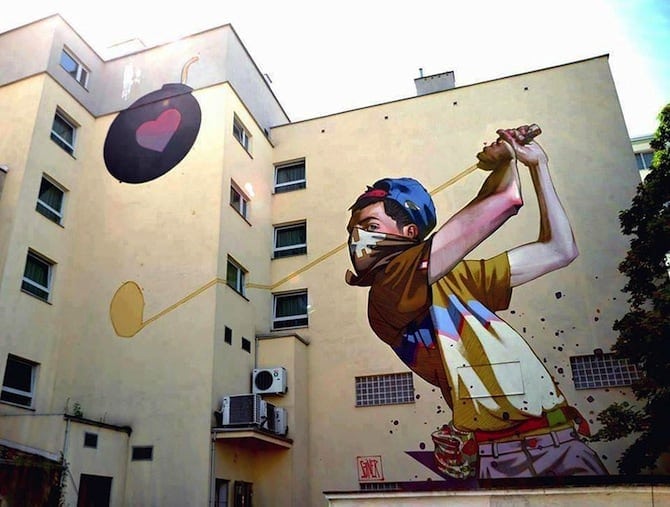
Polish culture is highly visible in made things: carved folk objects, embroidery, paper cuttings, ceramics, print culture, poster design, architecture, and contemporary art. Regional traditions remain important. Highland dress, Kashubian textiles, Łowicz cut-paper motifs, and Silesian craft each carry local forms that sit beside a broader national style. In modern design and visual culture, Polish makers often combine restraint with strong graphic form, whether in posters, interiors, or experimental objects.
The diaspora also matters. Polish communities in Chicago, London, Toronto, Paris, and elsewhere helped carry language, foodways, religious practice, and print culture abroad. That migration shaped how Polish identity is seen outside Poland: not only as a national heritage, but as a living, mobile culture that changes when it meets new materials, cities, and audiences.
Why does the term matter in art and design?
Polish artists and designers often work against a backdrop of political pressure, rebuilding, and resourcefulness, which gives their work a particular force. In the 20th century, Polish poster art, conceptual practice, and independent illustration gained international attention for their clarity and wit. Those traditions often used limited means well: paper, ink, collage, found imagery, and direct graphic language.
That material intelligence still shows up in contemporary work. Polish makers frequently draw on handcraft as well as digital tools, and on local references as well as global ones. The result is a culture that values form, labor, and adaptation, which makes the term useful in discussions of visual culture, not just history.
Frequently Asked Questions
Are Poles the same as Polish people?
Yes, in ordinary English, “Poles” means Polish people. It usually refers to people of Polish nationality or Polish ethnic background. In some contexts, especially legal or civic ones, it can also mean citizens of Poland more broadly.
Is Polish identity ethnic or civic?
It can be both. Ethnically, Poles are a West Slavic people with a shared language and historical tradition. Civically, the modern Polish nation also includes all citizens of Poland, whatever their ancestry.
Why is there a large Polish diaspora?
Large waves of emigration came from economic hardship, political repression, and war, especially in the 19th and 20th centuries. Many Poles settled in the United States, the United Kingdom, Germany, Canada, and France. Those communities preserved language and customs while also adapting them to new places.