
Rennesøy is a former municipality in Rogaland county, western Norway, made up of islands and coastal settlements in the Ryfylke region. Its administrative center was Vikevåg. As a local government area, Rennesøy began in 1838, lost Mosterøy in 1884, and absorbed it again in 1965 before later being merged into Stavanger municipality.
Stories from Rennesøy
1 story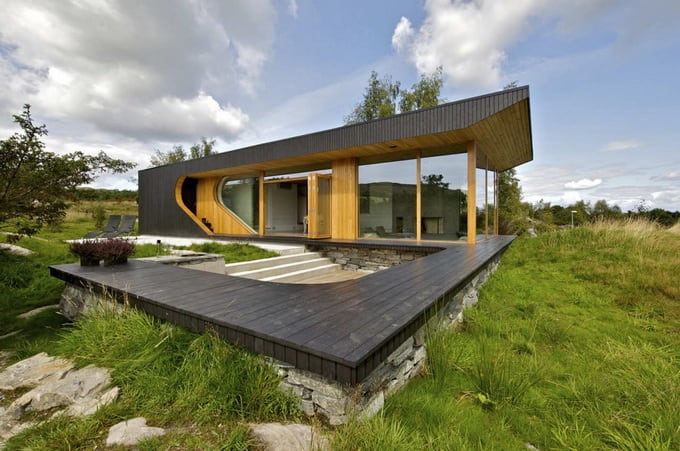
About Rennesøy
- Located in Rogaland, in the Ryfylke coastal region
- Built around island communities and ferry-linked settlement patterns
- Administrative center: Vikevåg
- Established as a municipality in 1838
- Mosterøy separated in 1884 and rejoined in 1965
Read the full overviewWhere is Rennesøy?, How did the municipality come about?, Why does Rennesøy matter in design and architecture?, What does it look like on the ground?
Where is Rennesøy?
Rennesøy sits in southwestern Norway, among the islands and narrow sea passages that shape much of the Rogaland coast. The place belongs to Ryfylke, a region known for steep shoreline, sheltered inlets, and scattered farms and villages rather than one dense urban core. That geography matters: movement between parts of the municipality has historically depended on boats, ferries, and later road links.
The administrative center, Vikevåg, served as the main local hub. Around it lay smaller settlements, farmland, and coastal ground used for fishing, transport, and everyday rural life. Rennesøy was not a single island in the cultural sense so much as a municipal frame for a fragmented maritime landscape.
How did the municipality come about?
Rennesøy became a municipality on 1 January 1838, when Norway introduced local self-government under the parish-based form of municipal organization. This gave the area its own administrative identity, even though the settlement pattern remained dispersed. Like many Norwegian municipalities, Rennesøy changed over time as boundaries were adjusted to match population, transport, and governance needs.
One important change came in 1884, when Mosterøy was separated from Rennesøy. That separation did not last permanently: Mosterøy was merged back into Rennesøy on 1 January 1965 during a period of municipal consolidation across Norway. Such changes were practical rather than symbolic, reflecting shifts in how the state organized coastal communities and services.
Why does Rennesøy matter in design and architecture?
Rennesøy matters less as a grand historical centre than as a setting that shapes how buildings are made and placed. On exposed coastal ground, construction has to answer wind, salt, rain, and uneven terrain. Cabins, houses, boathouses, and small civic buildings in such places tend to privilege shelter, durability, and clear orientation to view and weather.
That makes Rennesøy relevant to architecture that responds closely to site. A project such as Dalene Cabin by Tommie Wilhelmsen belongs to a landscape where material choices are concrete: timber weathering, compact forms, and openings positioned to frame sea and land while limiting exposure. The place is part of the work, not just a backdrop.
What does it look like on the ground?
Rennesøy presents the familiar Norwegian coastal mix of rock, water, pasture, and low settlement. Buildings typically sit with a practical modesty, adapted to topography instead of dominating it. Roads and bridges now tie together what once relied more heavily on water transport, but the archipelagic feel still shapes daily life and visual identity.
For a visitor or reader encountering the name in an article about a cabin, house, or landscape project, Rennesøy signals more than a coordinate on a map. It points to a place where isolation, access, and climate influence design decisions. The result is a setting that often produces restrained, durable architecture grounded in local conditions.
Frequently Asked Questions
Is Rennesøy still a municipality?
No. Rennesøy was a municipality for many years, but it was later merged into Stavanger municipality. Its historical identity remains important in local geography and in references to older administrative boundaries.
What region is Rennesøy part of?
Rennesøy belongs to Rogaland county in southwestern Norway and is part of the Ryfylke region. Ryfylke is known for its coastal archipelago, fjords, and smaller settlements spread across land and water.
Why would a design article mention Rennesøy?
Design and architecture articles mention Rennesøy when a project is tied to its coastal landscape or local building conditions. The place helps explain material choices, siting, and the scale of a building. In practice, the setting often matters as much as the structure itself.