Rita Ora is a British singer-songwriter and fashion collaborator known for pop singles, television work, and branded design partnerships. She broke through in the early 2010s with chart-topping UK singles and a debut album, then became a familiar face across music, fashion, and advertising. In visual culture terms, she matters as a performer who moved easily between recorded music, runway-adjacent styling, and mass-market product lines.
- Born: 26 November 1990, in Pristina, then part of Kosovo
- Nationality: British
- Known for: Pop singing, songwriting, television presenting, fashion collaborations
- Breakthrough: 2012 debut album Ora
- Notable chart result: Three UK number-one singles in 2012
How did Rita Ora become known?
Ora first reached wide attention through the UK pop industry, where strong singles and a polished public image mattered as much as vocal performance. Her debut album, Ora, arrived in 2012 and went to number one in the United Kingdom. That release also produced several hit singles, including “Hot Right Now,” “How We Do (Party),” and “R.I.P.”
Her early success established a formula that has remained central to her career: high-visibility songs, an image built for cameras, and a willingness to work across entertainment formats. She is also known for a mezzo-soprano vocal range, which gives her voice a lower, fuller quality than many mainstream pop singers.
Why does she matter in fashion and visual culture?
Ora’s importance extends beyond music because she has been used and has used herself as a fashion image. She often appears in styling that mixes performance wear, luxury cues, and streetwear. That made her a natural fit for brand projects that depend on recognisable personality and a strong visual identity.
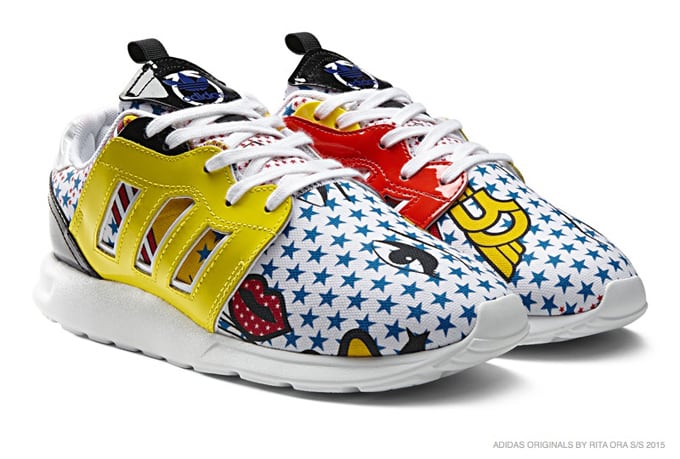
Her collaboration with Adidas Originals on the Spring/Summer 2015 “Super” lookbook is a clear example. The project placed her inside a product-led fashion setting rather than a concert or editorial shoot, turning her into a model, muse, and co-signer of the collection’s look. For brands, that kind of collaboration adds celebrity reach; for Ora, it extends her presence into clothing, photography, and campaign design.
What does a Rita Ora collaboration look like in practice?
In practice, an Ora-branded fashion project usually combines bold colour, sporty silhouettes, and a glossy, promotional finish. The clothing is meant to read quickly in photographs and on screens, where a lookbook or campaign image has only a moment to communicate attitude. Pieces are often styled to feel energetic and outgoing rather than quiet or minimal.
The “Super” lookbook sat in that register. It used the language of pop celebrity and athletic branding together, showing how a musician can function as both subject and styling reference. This kind of work reflects a wider trend in contemporary fashion, where a performer’s image becomes part of the product itself.
What should be understood about her public image?
Ora has built a career around visibility. She appears as a singer, judge, presenter, and brand partner, and those roles reinforce one another. Her image is not limited to sound; it includes hair, makeup, clothes, pose, and the choreography of public appearances.
That makes her useful as a reference point for contemporary celebrity culture. She shows how pop stardom now travels through album releases, television formats, social media, and branded fashion campaigns at once. In that system, the person becomes a repeatable visual asset as much as a recording artist.
Frequently Asked Questions
What is Rita Ora best known for?
She is best known for early-2010s pop hits and for becoming a recognisable media personality beyond music. Her debut album Ora and its chart success established her name in the UK. Later, television work and fashion collaborations broadened her profile.
Why is Rita Ora relevant to a fashion publication?
She matters because her career includes direct work with fashion brands and campaigns, not just red-carpet dressing. The Adidas Originals “Super” lookbook is one example of how she has been folded into product imagery. That places her within the visual language of contemporary fashion marketing.
Does Rita Ora have a role in design or making?
She is not primarily a designer in the strict sense, but she does participate in the making of fashion images and branded collections through collaboration. In those projects, her identity helps shape the final visual result. That makes her relevant to discussions of how celebrity, styling, and product development overlap.
Articles mentioning Rita Ora