
Rooney Mara is an American actor and model known for intense, often restrained screen performances and for recurring work in fashion photography and magazine portraits. She became widely known in the early 2010s through roles in The Social Network and The Girl with the Dragon Tattoo, then built a career that moved between studio films, independent projects, and editorial fashion work.
Stories from Rooney Mara
5 stories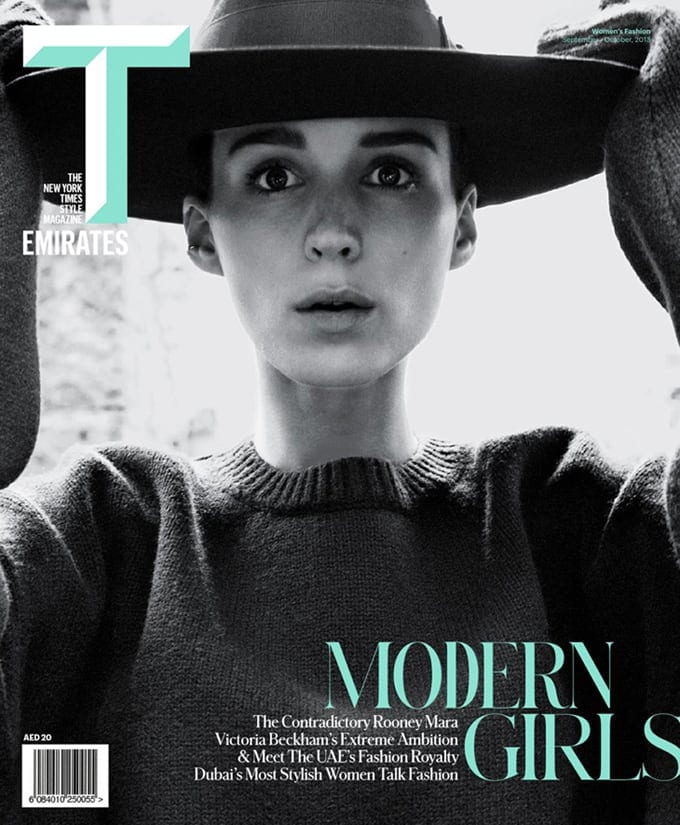
About Rooney Mara
- Born in 1985 in New York, she comes from the prominent Mara family, but built her own public identity through film and fashion.
- She first drew major attention with David Fincher’s The Social Network and The Girl with the Dragon Tattoo.
- Her performances often rely on stillness, controlled expression, and a pared-back physical presence.
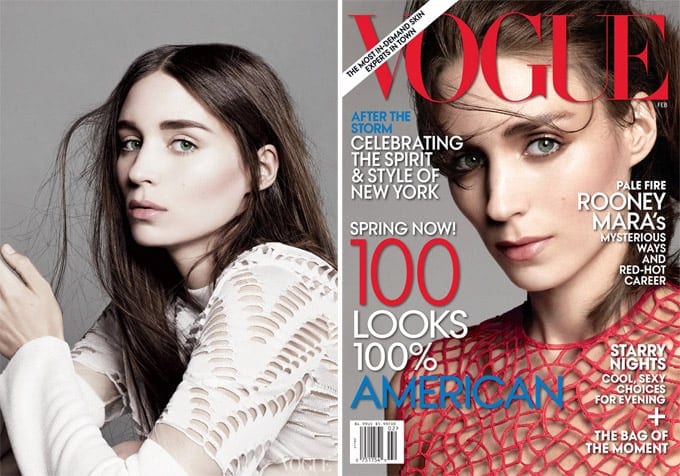
- She has also appeared frequently in fashion magazines, where editors and photographers use her severe, composed look to signal elegance and edge.
- Her name appears in both mainstream cinema and high-fashion publishing, which gives her an unusual cross-over status.
Read the full overviewHow did Rooney Mara become a public figure?, Why do fashion editors keep casting her?, What does her image look like in practice?, What is her place in contemporary film culture?
How did Rooney Mara become a public figure?
Rooney Mara began acting in the mid-2000s, but her profile rose sharply when she appeared in David Fincher’s The Social Network in 2010 and then starred as Lisbeth Salander in The Girl with the Dragon Tattoo in 2011. That role mattered because it fixed her image in the public mind: pale, severe, closely controlled, and almost unnervingly exact. The part required a transformation that suited both the film’s graphic language and Mara’s ability to hold attention with minimal gesture.
Before that breakthrough, she had been working steadily in smaller roles. After it, she became a recognizable face in serious American film culture, often cast in projects that wanted emotional intensity without theatrical display. That combination made her useful to directors and photographers alike.
Why do fashion editors keep casting her?
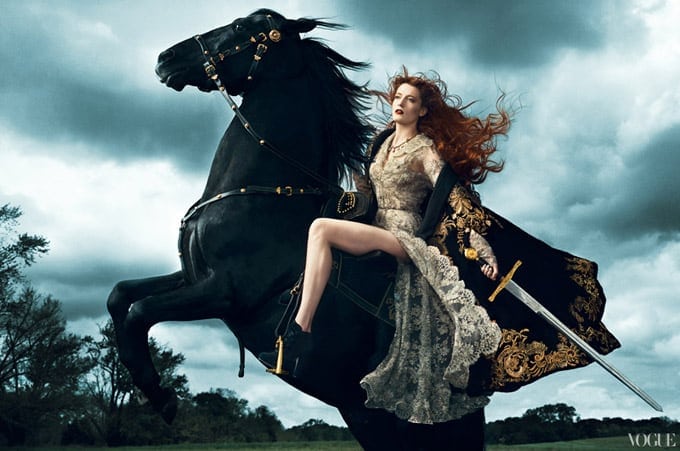
Mara’s fashion appeal comes from the same qualities that shape her screen work. She reads as precise rather than decorative, cool rather than exuberant, and that gives image-makers a strong starting point. In editorial settings, she can shift between severe modernism, romantic fragility, and minimalist luxury without losing her sense of distance.
Photographers and stylists often use her in black-and-white or tightly controlled color palettes, where bone structure, posture, and fabric carry more weight than expression. She works especially well with sharp tailoring, dark knitwear, sheer or structured dresses, and styling that emphasizes line over glamour. In that sense, she is not just a celebrity model subject; she is a person whose face and body language help define the mood of a page.
What does her image look like in practice?
In practice, Rooney Mara’s image depends on restraint. She is often photographed with a direct gaze, minimal makeup, and clothing that frames rather than overwhelms her. The effect is not plainness but compression: a look that feels edited down to its essential elements. That quality makes her useful for publications that want sophistication without obvious polish.
This also explains why she appears so often in magazine culture rather than in advertising alone. Editorial fashion can treat her as a character, not just a model, and build a visual story around ambiguity, tension, or stillness. When the styling is severe, the result can feel austere; when the styling softens, the same features can read as vulnerable or fragile.
What is her place in contemporary film culture?
Mara occupies a lane that sits between mainstream recognition and art-house seriousness. She has taken on roles in films such as Carol, A Ghost Story, and Women Talking, projects that depend on nuance and emotional withholding rather than broad performance. This has kept her associated with prestige cinema even when she is not at the center of the box office.
That matters because her career shows how a modern actor can move between media without being reduced to one format. Film establishes her as an actor with range and discipline; fashion publishing extends that identity into visual culture. For FreeYork’s readers, she is relevant less as a celebrity fact than as a recurring presence in the constructed image-world of magazines.
Frequently Asked Questions
Is Rooney Mara mainly a film actor or a fashion figure?
She is primarily a film actor, but fashion publishing has become a significant part of her public identity. Editors often cast her because her face, posture, and wardrobe styling produce a strong visual mood. That makes her visible in magazines in a way that goes beyond standard celebrity portraiture.
What made The Girl with the Dragon Tattoo important for her career?
The role of Lisbeth Salander gave Mara a character with a distinctive visual code and a demanding emotional register. It turned her into an instantly recognizable figure in international film culture. The performance also established the severe, tightly controlled image that many later fashion shoots would draw on.
Why does she matter to a design or visual culture publication?
Because her image is highly legible to photographers, stylists, and art directors. She helps show how a single face can carry ideas of restraint, tension, and modernity across film and print. Her career sits at the overlap of acting, editorial fashion, and the crafted public image.