Salma Hayek is a Mexican and American film actor, director, and producer known for moving from Mexican television and cinema into mainstream Hollywood while building a parallel career as a producer and public figure. She first became known in Mexico through the telenovela Teresa, then drew attention in El Callejón de los Milagros (Miracle Alley), before relocating to Hollywood in the early 1990s and becoming widely recognized through films such as Desperado, Dogma, and Wild Wild West.
| Born | September 2, 1966 |
|---|---|
| Nationality | Mexican and American |
| Known for | Acting, producing, directing |
| Early breakthrough | Teresa and El Callejón de los Milagros |
| Hollywood breakthrough | Desperado and later studio films |
From Mexican television to film stardom
Hayek began in Mexican television, where the telenovela format trained her in fast production schedules, heightened performance, and direct audience appeal. Teresa made her a recognizable face at home, while El Callejón de los Milagros showed her in a feature-film setting and earned an Ariel Award nomination. That early work matters because it places her in a real production culture, not just a celebrity trajectory: she emerged from a working television and film industry with its own rhythms, craft traditions, and audience expectations.
Moving to Hollywood in 1991 changed the scale of her career. She entered an industry where Mexican actors were still rarely centered in leading roles, especially in commercial action and comedy films. Her presence in English-language cinema helped expand the range of roles available to Latina performers, even if the progress was uneven and often dependent on star-driven projects.
What did Salma Hayek become known for?
Hayek became known for a combination of screen presence, glamour, and strategic career control. In Desperado, she appeared in a film shaped by action-movie styling, strong visual design, and music-video energy; later roles in Dogma and Wild Wild West kept her visible across different commercial genres. She also developed a reputation for choosing parts that made use of physicality, comic timing, and a strong, instantly readable image.
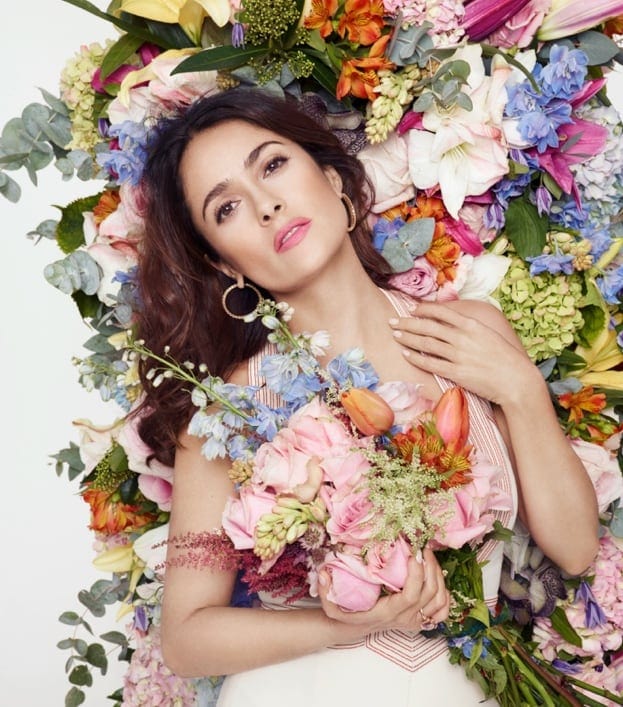
That image matters in visual culture because it has been built through styling as much as performance. Editorial portraits, advertising campaigns, and calendar shoots often emphasize her face, hair, and silhouette in carefully controlled lighting and composition. The result is a public persona that is highly legible in still photography, which is one reason she appears so often in fashion media and branded image-making.
Why does her work matter?
Hayek matters because she crossed several boundaries that were still rigid in the 1990s: national film industries, language markets, and the division between acting and producing. Later in her career, she took on more producing work, which gave her a measure of control over what got made and which stories reached the screen. For a performer who began in a relatively narrow television environment, that shift is significant.
She also helped normalize the idea of a Latin American star as a global fashion and entertainment presence. Her visibility in magazines, calendars, fragrance campaigns, and film promotions shows how contemporary stardom is built through a mix of cinema, editorial photography, and commercial branding. That crossover is central to modern celebrity culture, where the image circulates as widely as the films themselves.
How is she used in fashion and media imagery?
Hayek is often photographed in ways that emphasize contrast: softness and strength, classic glamour and directness, elegance and assertive pose. Fashion magazines tend to place her in controlled environments with floral arrangements, rich textiles, polished makeup, and deliberate framing. The visual language is not accidental; it draws on long traditions of celebrity portraiture that use costume, gesture, and setting to signal status and personality.
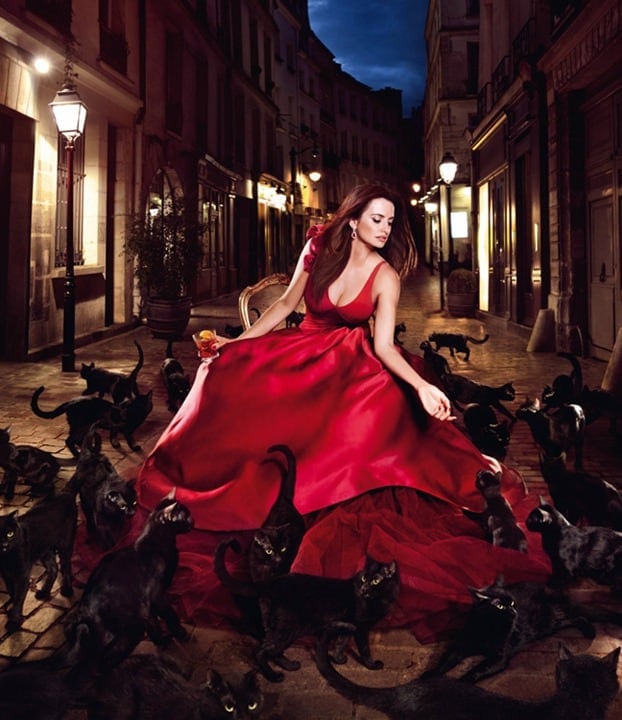
Campaigns such as the Campari Calendar use this vocabulary even more explicitly. Such projects rely on studio lighting, highly art-directed sets, and a strong relationship between the sitter and the lens. Hayek’s appeal in those contexts comes from how easily she can shift between actor, model, and icon, which makes her useful to publications and brands that need a figure who reads clearly in a single image.
Frequently Asked Questions
Is Salma Hayek mainly an actor or a producer?
She is best known as an actor, but producing became an important part of her career. Production work gave her more influence over material, financing, and representation, which matters in an industry where those decisions often shape who gets seen. The producing role also helped move her from being cast in projects to helping shape them.
What was her first major break?
Her first major break came in Mexican television with Teresa. She then gained film recognition with El Callejón de los Milagros, which led to an Ariel Award nomination. Those projects established her as a serious screen presence before her move to Hollywood.
Why is she important in visual culture?
Hayek is important because her image has been built across film, fashion, and editorial photography. She shows how a performer can become a recurring visual subject in magazines, calendars, and campaigns, not just a movie star. That crossover has made her a durable figure in both entertainment history and contemporary image culture.
Articles mentioning Salma Hayek