
Salman Khoshroo is an Iranian painter and photographer known for portraiture that moves between thickly built paint, bold color, and material-led surface effects. His work has appeared in solo painting and photography exhibitions, including early shows in Tehran, and it is often discussed for the way it treats the portrait as both likeness and physical object.
Salman Khoshroo on FreeYork
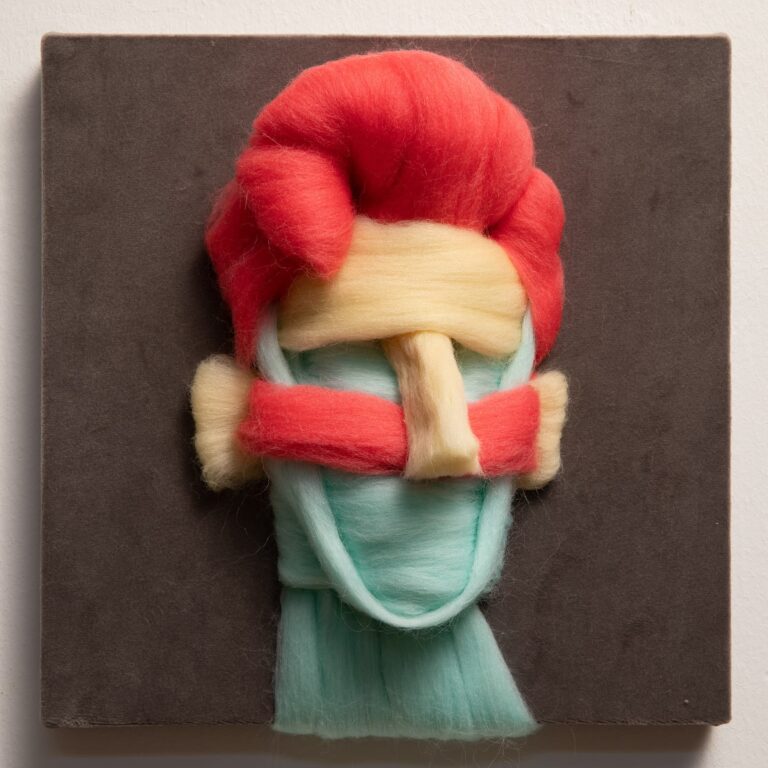

About Salman Khoshroo
- Iranian artist working across painting and photography
- Known for portraiture with heavy texture and vivid color
- Early exhibition history includes solo shows in Tehran
- Uses materials such as paint, wool, and palette knives to build surface
- Associated with works that make the process of making visible
What kind of artist is Salman Khoshroo?
Khoshroo belongs to a generation of contemporary artists who treat portraiture as an experimental field rather than a fixed genre. Faces in his work are not only images of people; they are also sites where material, gesture, and surface carry as much meaning as resemblance. That emphasis places him close to a broader current in contemporary Iranian art that values process and tactile presence.
His public profile first emerged through exhibitions rather than manifestos or teaching posts. The available record points to early solo presentations in painting and photography, with a first painting exhibition in 2006 and a second solo photography show in 2007 at Azad Art Gallery in Tehran. Those early displays suggest an artist moving between media from the outset, rather than settling into a single fixed method.
How does his work look on the surface?
Khoshroo’s portraits often read as built rather than simply painted. In works made with a palette knife, the paint can sit in thick ridges and flattened planes, producing a surface that catches light unevenly and gives the image a sculptural quality. The face may remain legible, but edges, contours, and color fields are often pushed toward abstraction.
Other works associated with his practice use wool as a primary material, introducing softness, density, and fiber texture in place of a conventional painted surface. That choice matters because it changes the meaning of portraiture: wool carries associations with handwork, craft, and warmth, while also allowing the image to be assembled through layering and pressure. The result is less like a window and more like an object with physical weight.
Why do materials matter in his practice?
Materials are not decorative extras in Khoshroo’s work. They determine how the image is made, how it sits in space, and how a viewer reads the portrait itself. Palette knife painting emphasizes speed, force, and visible decision-making; wool-based work emphasizes accumulation, texture, and touch. Both approaches foreground the labor of construction.
This matters because portraiture can easily become purely optical. Khoshroo resists that by making the viewer aware of medium at every step. The paint or fiber does not disappear into illusion. Instead, it remains present as substance, which gives the subject a second identity: not only a person represented, but an image physically assembled from raw material.
What does his early career tell us?
The biographical details connected to Khoshroo point to movement across cities and cultural settings. Born in Iran, he spent childhood years in New York City and later moved to Australia for university study. That path places him between several visual environments, which may help explain why his work feels open to different media and not tied to one school or national style.
His early habit of drawing and painting in Brooklyn also suggests a practice rooted in repeated observation and making rather than only in formal training. The exhibition record that followed, beginning in the mid-2000s, shows those habits developing into public work. For FreeYork readers, that progression is important: it connects the finished portrait to the long, physical act of making it.
Questions
Is Salman Khoshroo mainly a painter or a photographer?
He is known for both, though his reputation is strongest in relation to painting and material portraiture. Photography appears in his exhibition history, but the works most often discussed emphasize texture, brushwork, and handcrafted surface. His practice should be understood as cross-media rather than confined to one category.
What makes his portraits distinctive?
The portraits are distinctive because the material presence is impossible to ignore. Heavy paint, knife-made marks, and wool-based construction can make the image feel assembled rather than depicted. That gives the faces a strong physical character and a sense of process that remains visible in the finished work.
Where did his career begin?
His early life moved between Iran, New York City, and Australia, and his exhibition record began in the mid-2000s. A first solo painting exhibition is noted in 2006, followed by a solo photography show in Tehran in 2007. Those shows mark the start of a public career built around portraiture and material experimentation.