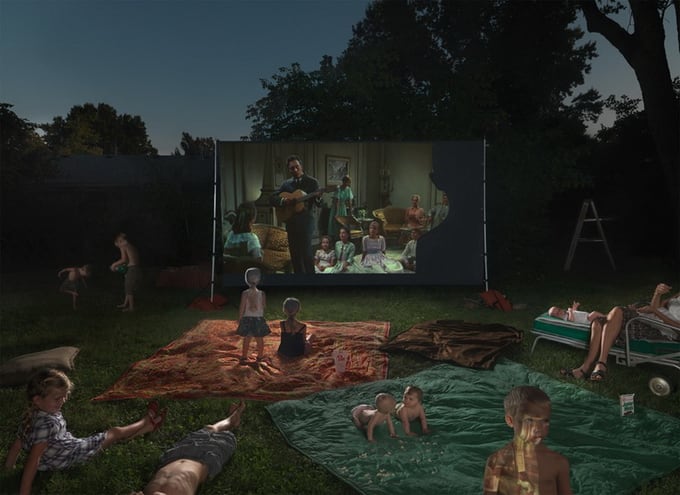
Springfield, Massachusetts is a city on the eastern bank of the Connecticut River and the county seat of Hampden County. It is the largest city in Western New England and a place with a long industrial and design history, from armories and machine works to the museums, print shops, and craft studios that continue to shape its image. For many readers, it also matters as a real New England city with a name that keeps appearing in fiction, illustration, and photographic series about American small-town life.
- Located in western Massachusetts on the Connecticut River
- County seat of Hampden County
- Largest city in Western New England
- Known for industrial production, especially firearms and machinery
- Often used as a reference point for American vernacular urban life in art and media
Where is Springfield, Massachusetts?
Springfield sits where the Connecticut River meets several smaller rivers, including the Westfield, Chicopee, and Mill rivers. That river junction helped make the city a transportation and manufacturing center, with water power and later rail access supporting heavy industry. Its location also placed it at a geographic hinge between the Boston region, the Connecticut River Valley, and the hill towns to the west.
The city’s scale is large enough to support civic institutions, museums, and a dense street grid, but it is not a metropolis. That combination gives it a readable urban form: brick industrial blocks, older housing stock, commercial avenues, and civic buildings spread across neighborhoods with distinct histories. In visual terms, Springfield offers the kind of everyday built environment that artists can treat as both specific place and general American city.
Why does Springfield matter in visual culture?
Springfield matters because it stands for more than itself in many works of art and media. It has been used as a model for fictional or composite American towns, especially in work that wants a place to feel generic without becoming anonymous. That tension makes the city useful to illustrators, photographers, and writers who build scenes from ordinary streets, chain stores, parking lots, and modest houses.
The city’s industrial past also gives it a strong material identity. Springfield was home to the Springfield Armory and to manufacturing that involved machining, casting, metalworking, and precision assembly. Those processes shaped the city’s architecture and labor history, and they continue to affect how Springfield is represented: as a place of making, work, and pragmatic structures rather than monumental display.
What does Springfield look like in practice?
In the city itself, Springfield appears through layered urban fabric: mill buildings, civic landmarks, mid-rise commercial blocks, and residential neighborhoods built at different moments of expansion. The streetscape often mixes old brick, concrete, asphalt, and painted wood siding, with the river and rail corridors cutting through the plan. That variety makes the city visually legible in photographs and drawings, because one block can show industrial heritage, domestic life, and commercial routine at once.
In creative work, Springfield is often not depicted as a skyline but as an atmosphere. Artists who reference it tend to focus on what can be built from memory and observation: a diner, a gas station, a school, a backyard, a winter street, a municipal building, a row of small businesses. Tim Doyle’s imagined Springfield, for example, draws on the look of decayed American commercial landscapes. Marc Hagan-Guirey’s miniature Springfield translates the place into a crafted model, where scale, texture, and repeated facades turn a fictionalized city into a physical object.
How should Springfield be understood today?
Springfield, Massachusetts is best understood as both a real city and a visual reference point. Its historical role in manufacturing, its river geography, and its place in New England give it a concrete civic identity. At the same time, its name has been generalized by pop culture until it can signify any number of American places that look familiar but resist exact location.
That dual status explains its usefulness to makers. A photographer can treat Springfield as a documented place with specific streets and buildings. An illustrator can treat it as a stand-in for suburban and urban America. A model builder can turn it into a miniature system of streets, roofs, and facades. In every case, the city’s value lies in how much ordinary visual information it holds.
Frequently Asked Questions
Is Springfield, Massachusetts the same Springfield used in fiction?
No. Springfield, Massachusetts is a real city with its own history, geography, and institutions. Fictional Springfields often borrow the name and some surface traits, but they are usually composites rather than direct portraits of the Massachusetts city.
Why is Springfield associated with industry?
The city developed as a manufacturing center because of its river access, transportation links, and concentration of skilled labor. Firearms production at the Springfield Armory became especially important, and other metalworking and machine-based industries followed. That industrial base shaped the city’s buildings, jobs, and visual character.
What makes Springfield useful to artists and photographers?
Springfield offers a mix of ordinary urban forms: streets, storefronts, houses, factories, and civic buildings. Those elements are easy to recognize and rearrange into scenes about memory, place, and American routine. Its familiarity makes it useful when the goal is to show a city that feels specific without becoming exotic.
At a glance
- Address
- Hampden County, United States
- Coordinates
- 42.1125, -72.59028
Articles mentioning Springfield, Massachusetts