Sting is the stage name of Gordon Matthew Thomas Sumner, an English singer, songwriter, bassist, and actor known first as the principal writer and frontman of The Police and later as a solo artist who blended pop, rock, jazz, reggae, classical, and world music into a polished, distinctive sound.
- He came to prominence in the late 1970s with The Police, where his high tenor voice and bass-led arrangements helped define the band’s sound.
- His solo work began in 1985 with The Dream of the Blue Turtles, which brought jazz musicians into a pop context and shifted him toward a more expansive style.
- He often works by crossing genres rather than abandoning them, using reggae pulse, jazz harmony, and orchestral writing inside mainstream song forms.
- His writing frequently combines political, literary, and personal subjects with memorable melodic hooks.
- He remains a visible figure in popular music, film, and activism, which has kept his name in circulation well beyond his early hits.
How did Sting become known?
Sting was born in 1951 in Wallsend, North East England, and began performing in the 1970s. The nickname “Sting” came from a black-and-yellow striped sweater he wore onstage, which made him look like a bee; the name stuck and became his public identity. Before fame, he worked as a teacher and played in local jazz and rock groups, which gave him a strong command of harmony and improvisation.
His breakthrough came with The Police, formed in 1977 with Stewart Copeland and Andy Summers. The band’s early singles mixed punk energy with dub-influenced bass lines and lean guitar writing, then moved into tighter pop structures on albums such as Reggatta de Blanc and Synchronicity. Sting’s songs for the band, including “Roxanne,” “Message in a Bottle,” and “Every Breath You Take,” gave him a reputation for concise writing with an unusually wide musical frame.
What does his solo music sound like?
Sting’s solo career began with The Dream of the Blue Turtles in 1985, a record that made his jazz interests explicit. He hired players such as Branford Marsalis and Omar Hakim, bringing improvised phrasing and flexible rhythm into songs still built for radio. That album set a pattern that would recur throughout his solo work: clean production, careful arrangement, and a willingness to treat pop songs as vehicles for other musical languages.
Later records extended that approach in different directions. Nothing Like the Sun brought in brighter pop writing and global themes, while Ten Summoner’s Tales and Mercury Falling used acoustic instruments, strings, and subtle groove patterns to create a more mature sound. Sting has also written in a Celtic and medieval mode on projects such as Songs from the Labyrinth, showing that his catalogue is less about a fixed style than about controlled borrowing from many traditions.
Why does Sting matter in visual culture?
Sting matters because his career sits at the point where mainstream pop became highly self-conscious about style. He helped make genre crossing look refined rather than novelty-driven, and that has influenced how musicians are presented visually: tailored clothing, muted palettes, elegant instrument setups, and album art that suggests intelligence as much as charisma. His image often carries a deliberate restraint, which makes his records feel composed rather than merely performed.
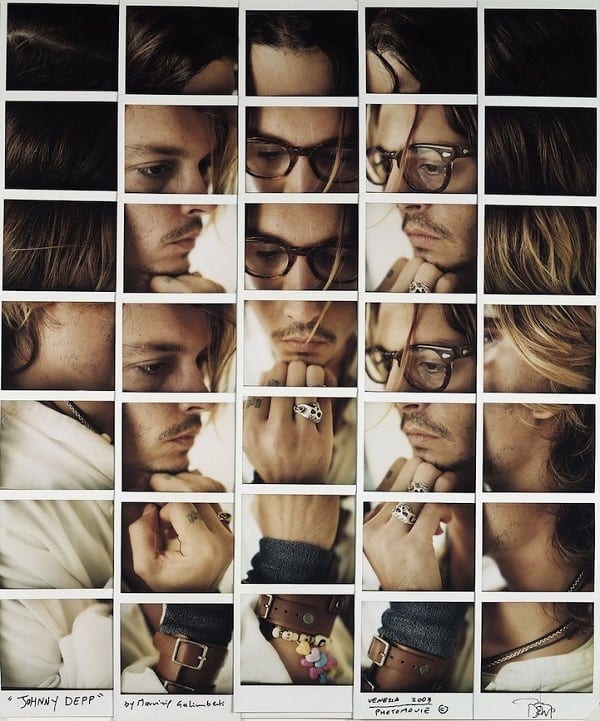
He also became a recognizable subject for portraiture, photography, and collage because his face and stage persona are so immediately legible. The sharp features, close-cropped hair, and calm expression give image-makers a strong graphic silhouette to work with. In editorial and promotional contexts, Sting often stands for a kind of cultured pop masculinity: polished, serious, and slightly severe, but still rooted in songcraft rather than spectacle.
What appears in practice onstage and in the studio?
Onstage, Sting usually appears with a bass guitar, a stripped-back band, and arrangements that leave space for voice and rhythm. His performances depend on precision more than theatrical excess. The songs are often built around repeated bass figures, clean drum patterns, and melodies that sit high in the vocal range, so the arrangement has to stay balanced and controlled.
In the studio, he has favored musicians with strong individual voices and producers who can keep texture clear. Jazz players, orchestral arrangers, and folk instrumentalists all appear in his discography, but they are rarely allowed to blur the song’s center. That discipline is a large part of his identity: the music often sounds fluent across styles while remaining tightly managed in form and presentation.
Frequently Asked Questions
Is Sting only known for The Police?
No. The Police made him famous, but his solo career has been long and substantial, with multiple successful albums and touring cycles. His solo work is where his interest in jazz, classical writing, and world music became most visible.
Why is he called Sting?
The name came from a black-and-yellow sweater that made him look like a bee. Fellow musicians started calling him Sting, and he adopted it as his stage name. It became one of the most recognizable names in pop music.
What kind of musician is he?
Sting is a singer-songwriter, bassist, and arranger who writes from within pop but rarely stays in one genre. His work draws from reggae, jazz, folk, classical music, and global styles, usually in carefully shaped arrangements. That mix is central to his sound and his public image.
Articles mentioning Sting (musician)