
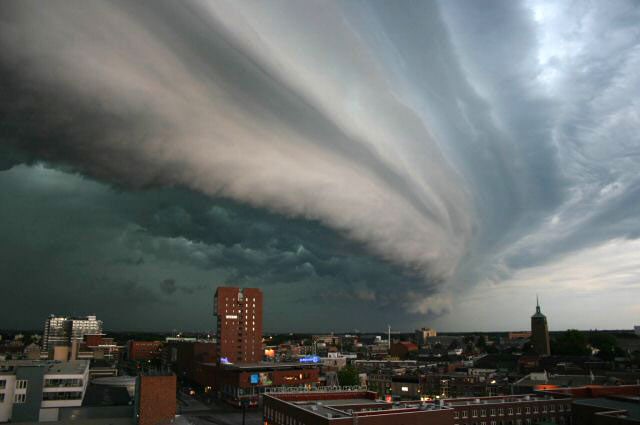
A storm is a disturbed atmospheric event marked by strong wind, precipitation, lightning, hail, snow, dust, or a combination of these forces. It names both the weather itself and the conditions it creates on the ground: rough seas, low visibility, fallen trees, damaged roofs, flooded streets, and the sudden changes in light and sound that make storms so visually distinct.
- Storms form when the atmosphere becomes unstable and energy is released quickly.
- They can be driven by heat, cold fronts, pressure differences, or moisture-rich air.
- Common forms include thunderstorms, snowstorms, hailstorms, dust storms, and blizzards.
- In visual culture, storms often stand for drama, power, danger, and transformation.
- Storms matter materially because they shape buildings, landscapes, clothing, transport, and emergency design.
What counts as a storm?
The word covers a broad range of weather events, but the shared feature is disturbance: air moving with unusual force and energy. A storm may bring thunder and lightning, or it may be defined mainly by wind, heavy rain, sleet, snow, sand, or freezing rain. Meteorologists sort storms by their physical drivers and effects, while everyday speech usually groups anything severe, sudden, or difficult under the same name.
That breadth matters. A summer thunderstorm, a winter blizzard, and a dust storm in an arid region look very different, but each alters visibility, movement, sound, and safety. The term therefore describes both a scientific condition and an immediate human experience of disruption.
How do storms form?
Most storms begin when warm, moist air rises into cooler air above it. As that air cools, water vapor condenses into clouds and releases heat, which can feed further upward movement. When enough instability builds, the atmosphere can produce strong convection, gusty winds, and heavy precipitation. Fronts, low-pressure systems, ocean temperatures, and terrain all influence how intense a storm becomes and where it travels.
Different storm types reveal different mechanics. Thunderstorms depend on rapid vertical motion and electrical charge separation. Blizzards combine snow with sustained wind and reduced visibility. Dust and sand storms depend less on rain and more on dry, forceful air that lifts loose particles and carries them across wide areas. In each case, the surface environment leaves its mark on the weather event.
Why storms matter in design and visual culture
Storms shape how objects are made because they test material limits. Roofs, windows, packaging, footwear, vehicles, and public infrastructure all have to resist wind-driven rain, impact from hail, or corrosion from salt and flooding. In design terms, storms expose weak joints, vulnerable seams, and poor drainage. They also influence material choice: galvanized steel, reinforced glass, waterproof membranes, dense textiles, and textured soles all answer directly to storm conditions.
Storm imagery has a long life in photography, painting, film, and graphic design because it compresses drama into a single scene. Dark cloud banks, flashing light, and blurred motion create immediate tension. Artists often use storms to show scale and volatility, while product and editorial imagery borrow storm language to suggest energy, danger, or transformation. The visual appeal comes from contrast: low skies against bright lightning, still land against moving weather, or solid structures against unstable air.
Storms in practice: from weather event to made object
Storms leave traces that makers respond to directly. Waterproof fabrics, sealed enclosures, drainage channels, and wind-resistant forms all emerge from the practical problem of keeping water and force under control. Even decorative work can borrow storm logic: cloud-like forms in installation art, rippled surfaces in product design, and fractured textures in print and fashion often echo the look of turbulent weather.
In photography, storms are also a way of organizing time. Light changes quickly, clouds build and collapse, and scenes can shift from clear to threatening in minutes. That volatility rewards fast framing and careful exposure, which is why storm images often feel immediate and hard-won. Whether the subject is a lightning strike, a rolling supercell, or an object built for harsh conditions, the storm turns atmosphere into visible structure.
Frequently Asked Questions
Is a storm always dangerous?
No. Some storms are mild and short-lived, while others are severe and destructive. The word usually implies some degree of risk or intensity, but the actual danger depends on the type of storm, its duration, and the place it hits. A brief rainstorm may be inconvenient; a tornado-producing supercell or coastal cyclone can be life-threatening.
What is the difference between a storm and severe weather?
“Storm” names a specific kind of atmospheric disturbance, while “severe weather” is a broader category that includes damaging storms and other hazardous conditions. Severe weather can include heat waves, tornadoes, hail, blizzards, and heavy rain. All storms are weather events, but not all severe weather is called a storm in everyday use.
Why do storms appear so often in art and photography?
Storms offer strong contrasts in light, shape, and motion, which makes them visually compelling. They also carry familiar meanings: tension, change, instability, power, and aftermath. For that reason, artists and photographers use storms not just as scenery but as a way to describe emotional or material forces in a single image.
Articles mentioning Storm


