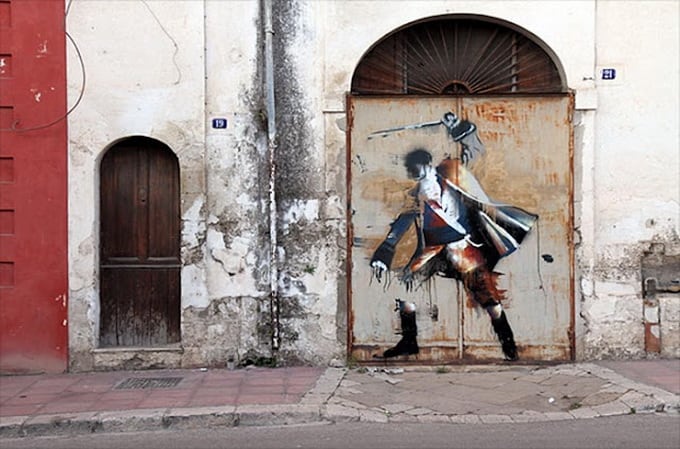
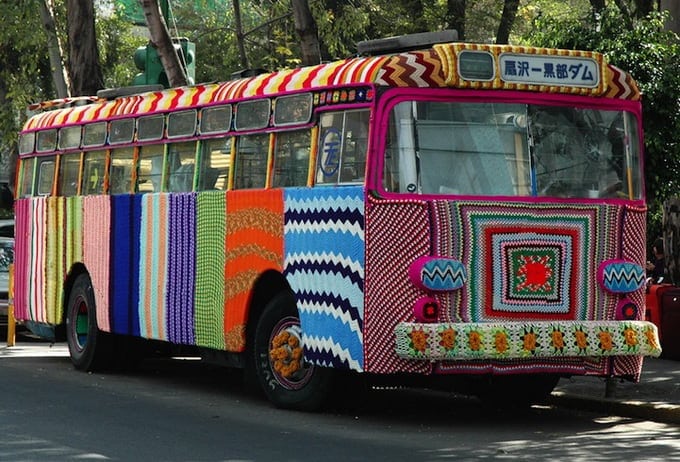
France-based artist, Shaka aka Marchal Mithouard, uses a combination of graffiti elements in his sculptural 3d paintings. Website: http://www.shaka1.fr/ …
Conor Harrington from Ireland, joined Classical painting with contemporary street art. This work appeared in the Festival’s FAME in Italian 2012 on the…
Once a production hall on the Svitava riverbank, this Brno factory now hosts exhibitions beneath its original steel framework and corrugated roof. KOGAA kept…
Dysturb introduces Source.s, a fictional beverage in Paris and NYC, as a creative campaign to raise awareness about fake news through visuals and slogans.
Lizaveta Khikhlushka's art captures the essence of London's urban landscape. Through detailed illustrations, she reimagines the city's alleys and subways, inviting viewers to discover…
Discover 'The Colour Library: Yellow' from Shutter Hub Editions, featuring 100 captivating photos of yellow from various photographers. This collection highlights yellow's diverse and…
Discover how WESR blends Peruvian folklore and urban culture through his vibrant murals in Berlin. Explore the relationship between traditional Andean imagery and contemporary…
No articles match this filter.
Read the full overview
Street art, once seen as an act of vandalism, has evolved into a respected and influential form of urban expression.
It often conveys social and political messages, bridging the gap between art and activism.
The transformation from graffiti to street art has seen the medium gain legal and commercial recognition.
Street art tours and festivals have become popular, reflecting its integration into mainstream culture.
Legal and ethical debates continue to shape the street art scene, with copyright and public space usage at the forefront.
What distinguishes street art from graffiti? Street art is often image-based and intent-driven, aimed at engaging a broad audience, while graffiti traditionally focuses on stylized text and is associated with territorial marking.
Can street art be considered legal? Legality depends on authorization. If an artist has permission to use a space for their work, it’s legal. Unauthorized street art is often still considered vandalism.
How has street art impacted communities? Street art can revitalize neighborhoods, stimulate tourism, and provoke community dialogue. It transforms public spaces, adding vibrancy and cultural depth.
Do street artists make money from their work? Some do, especially when transitioning into gallery shows, commissions, and merchandise. The commercial success of street artists varies widely.
What challenges do street artists face? Beyond legal risks, street artists contend with issues of commercialization, preserving the integrity of their work, and navigating the art world’s traditional boundaries.