
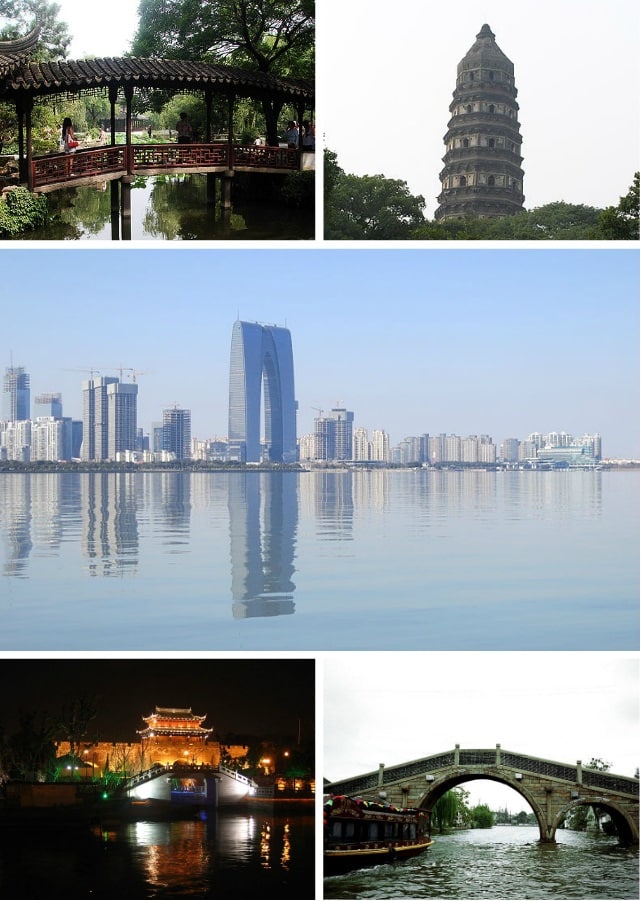
Suzhou is a major city in Jiangsu Province in eastern China, set on the lower Yangtze River beside Taihu Lake and near Shanghai. It is a prefecture-level city with a long reputation for silk production, classical gardens, canals, and finely made craft. In design and architecture writing, Suzhou often appears as a place where historical urban form and contemporary cultural building projects meet.
- Located in the Yangtze River Delta, one of China’s most economically active regions
- Known for classical gardens, waterways, and a dense historic city fabric
- Long associated with silk weaving, embroidery, and other skilled making
- Often used as a setting for museums, theaters, and civic buildings that reference landscape and garden design
- Its mix of old and new makes it a frequent subject in architecture and visual culture coverage
Where is Suzhou and why does it matter?
Suzhou sits southeast of Jiangsu’s provincial capital and close to Shanghai, in the low-lying river country that shaped the Yangtze River Delta. Its position made it an important inland port and commercial center, linked by rivers and canals to the wider region. That geography still matters: water is not just scenery in Suzhou, but part of the city’s infrastructure, identity, and visual character.
The city’s importance also comes from its scale. Suzhou is large enough to function as a major industrial and administrative center, but its historic core remains strongly associated with older patterns of Chinese urban life. For writers about design, that combination makes it more than a map location. It is a place where landscape, craft, and high-rise development sit in close view of one another.
Why do designers keep referring to Suzhou’s gardens?
Suzhou is famous for its classical gardens, many of which were built by scholars, officials, and merchants over centuries. These gardens are compact, carefully composed spaces that use rocks, water, pavilions, framed views, and planted courtyards to create a controlled experience of nature. They are not public parks in the modern sense; they are designed environments that reward slow movement and close looking.
That tradition has become a visual reference point far beyond the city itself. Architects and product designers borrow from Suzhou’s gardens when they want to suggest balance, enclosure, reflection, or layered movement through space. In practice, that can mean buildings organized around courtyards, facades with screen-like rhythms, or interiors that use water, stone, and timber to evoke a garden sequence rather than a single grand room.
What does Suzhou look like in contemporary architecture?
Recent projects in Suzhou often try to translate local history into contemporary forms without copying old buildings outright. Museums, theaters, and cultural centers may use curved roofs, perforated skins, stepped massing, or bridges across water to echo the city’s garden culture and canal networks. These references are usually structural and spatial rather than decorative: the arrangement of circulation, light, and landscape carries the idea.
That approach appears in architecture coverage because Suzhou allows a clear comparison between heritage and present-day design. A new building there is rarely read only as a standalone object. It is also judged against the city’s older architecture, its relationship to water, and the expectations created by Suzhou’s long image as a place of cultivated order and refined making.
What kinds of craft are associated with Suzhou?
Suzhou has a strong craft identity, especially in silk and embroidery. Suzhou embroidery is known for fine stitching, delicate shading, and detailed pictorial effects, often producing highly controlled surfaces that read almost like painting. Silk production helped build the city’s wealth and gave its name weight in domestic luxury and trade.
That craft tradition matters to FreeYork because it connects material skill to urban culture. Suzhou is not only a backdrop for buildings; it is a city where making has long been part of economic life and aesthetic value. When designers cite Suzhou, they often invoke precision, patience, and finish as much as they invoke scenery.
Frequently Asked Questions
Is Suzhou a historic city or a modern one?
It is both. Suzhou has a long documented history, but it is also a large contemporary city with major industry, new districts, and a significant urban population. Much of its interest lies in how these layers remain visible at once.
Why do architects use Suzhou as a reference?
Architects use Suzhou because its gardens, canals, and courtyard traditions offer a clear language for organizing space. The city suggests ways to shape movement, frame views, and connect buildings to water and landscape. Those ideas can be adapted into very modern forms without becoming literal replicas.
What is Suzhou best known for besides gardens?
Suzhou is also known for silk and embroidery, especially the precision of Suzhou embroidery. Its waterways, historic street patterns, and role in the Yangtze River Delta have all shaped its identity. These are the features that keep it relevant in discussions of craft, urban design, and cultural architecture.
At a glance
- Address
- Jiangsu, People's Republic of China
- Coordinates
- 31.3, 120.6
Articles mentioning Suzhou


