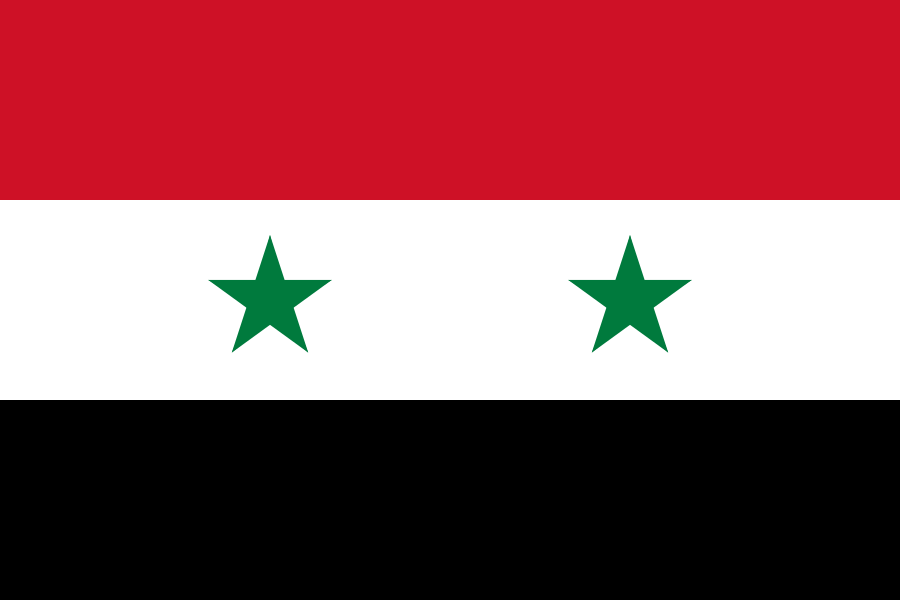
Syria is a country in Western Asia on the eastern Mediterranean, bordered by Turkey, Iraq, Jordan, Israel and Lebanon. Its territory combines coastal plain, mountain ranges, inland plateaus and desert, and its culture has been shaped by long urban histories, religious diversity and centuries of trade across the Levant.
- A Levantine country with a Mediterranean coast and a large inland desert.
- Known for ancient cities, layered craft traditions and dense urban heritage.
- Home to Arab Sunnis as the majority population, alongside Kurds, Armenians, Assyrians, Christians, Druze and Alawites.
- Syria’s built environment reflects stone masonry, mud brick, timber roofs, tile work and plaster finishes adapted to climate and local materials.
- Recent war has damaged towns, monuments and workshops, making restoration and rebuilding central to its present significance.
What is Syria known for?
Syria is known for its deep historical continuity. Cities such as Damascus, Aleppo, Homs and Hama have long served as commercial and cultural centres, while smaller settlements preserve vernacular building methods tied to local stone, clay and timber. The country also contains stretches of steppe and desert where architecture traditionally uses thick walls, courtyards, shaded interiors and compact forms to manage heat and dust.
Its importance to visual culture comes from the density of craft practices that developed there: carved stone, inlaid wood, handwoven textiles, metalwork, calligraphy, ceramics and plaster ornament. These traditions were never isolated arts. They shaped mosques, houses, caravanserais, market streets and domestic interiors, giving Syria a strong place in the history of making.
Why does Syria matter in art and design?
Syria matters because it sits at the meeting point of empires, religions and trade routes, and that history is visible in materials. Roman, Byzantine, Islamic, Ottoman and modern influences all left traces in the country’s architecture and decorative arts. Builders and makers worked with what the land provided: limestone in the north, basalt in the south, earth in rural zones, and lime plaster and timber where conditions allowed.
That material intelligence has become especially visible in contemporary restoration and artistic response after years of conflict. Architects, conservators and artists have turned to traditional methods such as hand-cut stone, lime mortar, earthen brick and carved timber as both repair techniques and statements of continuity. In FreeYork’s context, Syria appears not just as a place on a map but as a living archive of making under pressure.
What does Syrian architecture and craft look like in practice?
In practice, Syrian architecture often uses enclosed courtyards, high walls, carved thresholds and carefully proportioned openings. In older homes, a visitor might find patterned black-and-white stonework, arched passages, painted ceilings, mashrabiya-style screens and interiors finished with plaster or tile. In rural areas and smaller towns, construction may rely on mud brick or rubble stone, shaped by available resources and climate rather than style alone.
Craft production is equally varied. Textile production includes embroidery, weaving and dye work; woodcraft includes doors, screens and furniture; metalwork includes trays, lamps and engraved vessels. Even where factories now dominate many markets, handmade objects remain tied to local identity, especially in restoration projects, religious buildings and artisan workshops.
How has conflict changed Syria?
The war in Syria has damaged not only homes and infrastructure but also the craft ecologies that support making. Workshops closed, heritage buildings collapsed, and many artisans left the country or lost access to materials and markets. That disruption matters because craft knowledge often depends on apprenticeship, site-specific practice and steady demand.
At the same time, reconstruction has made older techniques newly relevant. Conservation teams and artists have had to relearn or preserve methods that industrial building supply chains cannot replace, especially when repairing historic masonry, decorative plaster, brick vaults or carved stone. Syria’s current significance lies partly in this tension between loss and recovery: a place where the built past remains active in present repair.
Frequently Asked Questions
Is Syria mainly important because of its ancient history?
No. Ancient history is only one part of Syria’s significance. The country also matters because of living craft traditions, modern cities, religious and ethnic diversity, and the way conflict has reshaped both preservation and rebuilding. Its present-day cultural life is as important as its archaeological past.
What materials are most associated with Syrian building?
Stone, earth, timber, plaster and tile are central. Limestone and basalt appear in different regions, while mud brick and earth construction remain important where they suit the local climate and economy. These materials support techniques such as load-bearing masonry, courtyard planning and decorative carving.
Why do artists and architects keep returning to Syria in contemporary work?
Syria offers a powerful setting for work about memory, damage and repair. Artists and architects often respond to its destroyed buildings, displaced communities and resilient craft traditions by using handmade or historically grounded materials. That gives Syrian references a strong presence in works about reconstruction, heritage and the politics of place.