The Scream is the popular title for a group of four works by Edvard Munch, made as paintings and pastels between 1893 and 1910, in which a lone figure stands on a bridge or path beneath a violent, glowing sky. Munch called the image Der Schrei der Natur—The Scream of Nature. It became one of the best-known pictures in modern art because it turns a private feeling of panic into a clear, repeatable visual form.
- It is not a single work but a family of related versions.
- Munch made the image in paint and pastel, not just one medium.
- The composition combines simplified drawing, feverish color, and a stark landscape.
- The central figure is often read as expressing anxiety, alienation, or existential fear.
- It has become a recurring reference point in popular culture and visual parody.
What the image shows
The basic scene is simple: a narrow path or bridge, a figure in the foreground with a skull-like face and hands pressed to the head, and two distant walkers receding into the background. Behind them, the sky swirls in bands of orange, red, and blue over fjord or water. Munch reduced the setting to sharp diagonals and flat areas of color, so the landscape feels less like a place than a pressure field.
The figure’s mouth is open, but the body also seems to recoil from the sound of the sky itself. That ambiguity matters. The work does not illustrate a literal scream so much as a state of alarm that seems to pass through both person and environment. The image stays memorable because its parts are plain and direct: bridge, figure, sky, water, distance.
How Munch made it
Munch returned to the subject several times, producing versions in oil, tempera, pastel, and crayon. The best-known paintings date from 1893, while later versions include a pastel from 1895 and another painted version from around 1910. Working across media let him adjust the surface from chalky and immediate to denser and more saturated, while keeping the same underlying composition.
The methods are important to the look. In the pastel versions, the color sits in visible strokes and smudges, giving the sky and foreground a vibrating, handmade surface. In the painted versions, the brushwork remains loose and nervous rather than polished. That roughness supports the subject: the picture feels unstable because the marks themselves refuse smooth finish.
Why does The Scream matter?
The work belongs to Symbolism and Expressionism, but it also helped define the broader visual language of modern anxiety. Munch did not aim for naturalistic description. He used distortion, simplification, and color to register inner feeling, making the image a model for later artists who wanted to show emotional states rather than accurate appearances.
Its influence extends far beyond painting. Designers, filmmakers, advertisers, and meme-makers reuse the pose, the open mouth, and the slashing sky because the image reads instantly even when altered. In that sense, The Scream functions like a visual shorthand for distress, shock, or overwhelm. It is a rare artwork whose composition is so distinct that it survives almost any translation.
Why it keeps getting remade
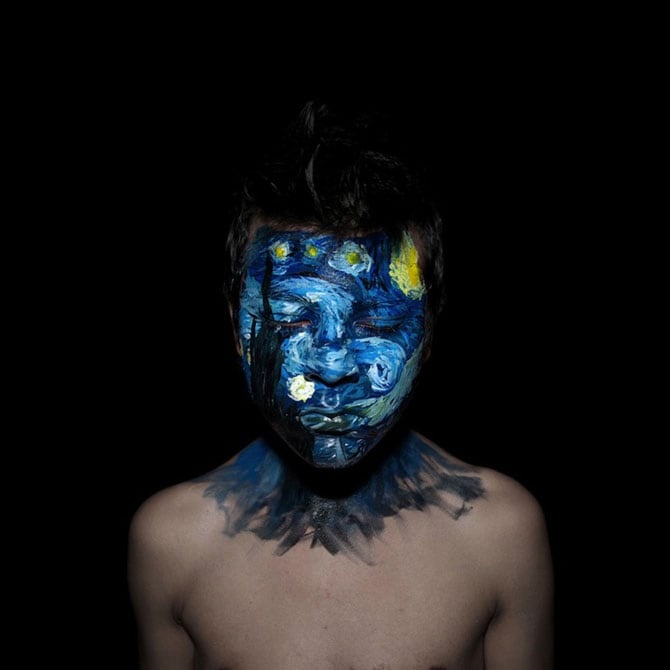
Reproductions of The Scream often swap the human figure for a celebrity face, a mascot, an animal, or a pop-culture character. The joke works because Munch’s composition is so stripped down. Once the silhouette and sky are retained, the image can absorb almost any new subject while keeping its emotional charge.
That adaptability is why the work appears so often in parody, costume, editorial illustration, and social media. It offers a clear template for making fear visible. The figure’s pose is easy to imitate, and the background’s color bands can be adjusted without losing recognition, which makes the image unusually useful for visual remixing.
Frequently Asked Questions
Is The Scream one painting or several?
It is several related works. Munch made multiple versions over many years, using different supports and media, including painting and pastel. The most famous are the 1893 painted version and a 1895 pastel.
What does the figure in The Scream represent?
The figure is usually read as a symbol of intense anxiety, not as a portrait of a specific person. Munch described the experience as sensing “a scream passing through nature,” which shifts the subject from individual drama to a wider feeling of unease. The image remains open enough to support psychological, social, and existential readings.
Why is the sky in The Scream so bright and unnatural?
The sky is exaggerated on purpose. Munch used color as an emotional device, not a descriptive one, so the orange and red bands intensify the sense of disturbance. The color also flattens the space behind the figure, making the whole scene feel strained and unstable.
Articles mentioning The Scream