
Tobbe Malm is a Swedish sculptor known for turning discarded steel bolts into figurative metal sculptures, often welded from hundreds of small industrial parts. His work sits between found-object assemblage and traditional figurative sculpture, with the bolt as both raw material and visible structural unit.
Stories from Tobbe Malm
1 story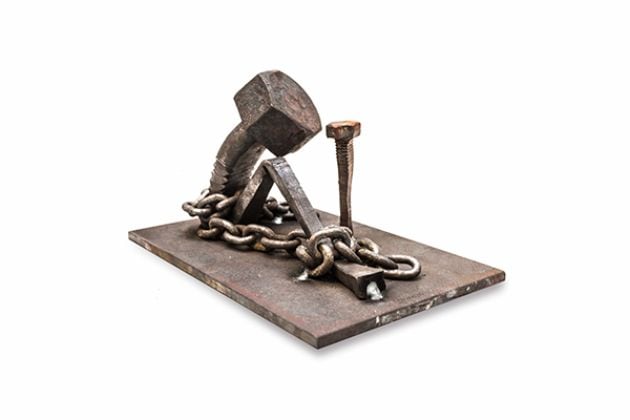
About Tobbe Malm
| Field | Sculpture, assemblage, metalwork |
|---|---|
| Nationality | Swedish |
| Best known for | Figurative sculptures made from used steel bolts |
| Materials | Recovered steel bolts, welded steel |
| Process | Selection, cleaning, cutting, welding, and surface finishing |
Read the full overviewWhat makes his sculptures distinctive?, Where did this approach come from?, How are the sculptures made?, Why does Tobbe Malm matter?
What makes his sculptures distinctive?
Malm’s sculptures are built from industrial hardware that most people would treat as scrap. He gathers steel bolts, groups them by size and profile, and welds them into bodies, limbs, faces, and animals. The result keeps the rough logic of the original fasteners: hex heads, threaded shafts, rust marks, and dented surfaces remain visible, so the finished figure still reads as a history of use and wear.
The choice of material matters as much as the form. A bolt is designed to hold structures together, so when Malm uses bolts to build a figure, the material carries a literal sense of joining and tension. The sculptures often feel muscular and compressed, as if the anatomy is assembled under pressure rather than modeled from clay or carved from stone.
Where did this approach come from?
Malm works within a long sculptural tradition that treats discarded industrial objects as expressive material. His practice echoes modern assemblage and welding-based sculpture, but it is grounded in a very specific object: the mass-produced steel bolt. That specificity gives the work a clear visual language and separates it from broader scrap-metal sculpture.
The method also reflects contemporary interest in reuse. By reworking hardware that has already served a function, Malm shifts attention from utility to form. The source material is ordinary and anonymous, yet the final objects are carefully composed and often emotionally direct, which gives them an immediate presence in galleries and public displays.
How are the sculptures made?
The process begins with sorting. Bolts need to be matched by scale, shape, and condition before welding can start. Some pieces are left heavily oxidized for texture; others are cleaned so the metal surface takes on a more uniform tone. Assembly then depends on the figure being built: dense clusters of bolts can form solid masses, while more open arrangements create outlines and movement.
Welding is the key technical step. It binds the individual bolts into a stable armature, but it also leaves seams, joins, and heat discoloration that become part of the visual finish. Malm’s work usually avoids hiding the fabrication process. The viewer can see how the sculpture was built, which keeps the object legible as both an image and a structure.
Why does Tobbe Malm matter?
Malm matters because he gives a humble industrial item a new artistic identity without disguising where it came from. The work is easy to recognize at a glance, but it also rewards close looking: each bolt contributes line, texture, and weight. That balance makes the sculptures accessible while still technically disciplined.
His work also shows how material choice shapes meaning. Using bolts is not only a recycling gesture; it changes the look and feel of the sculpture. The repeated metal units create a granular surface that catches light unevenly and suggests labor, assembly, and endurance. In practice, that means the subject and the substance reinforce each other.
Frequently Asked Questions
Are Tobbe Malm’s sculptures made from new or used bolts?
They are generally made from used steel bolts. The worn surfaces, rust, and marks of handling are part of the visual effect, so the material’s previous life stays visible. That history is important to the work’s meaning and appearance.
Is his work considered recycling or fine art?
It is both, but the art context matters most. The reuse of scrap material is a practical method, yet the finished sculptures are composed with formal decisions about proportion, silhouette, and texture. They are built to be seen as sculpture first, not as a craft demonstration.
What do the sculptures usually depict?
Malm often makes figurative subjects, including human bodies and animals. The forms are not highly polished or realistic in a classical sense; instead, they are compact, textured, and sometimes slightly rough-edged. That gives them a strong presence and makes the material part of the subject rather than a hidden support.
}