
Tom Sachs is an American artist known for building sculptures, installations, drawings, and films that mimic luxury goods, corporate systems, and heroic technologies from cheap or stubbornly handmade materials. His work treats branding, craftsmanship, and aspiration as subjects in their own right, often turning plywood, foam core, bronze, glue, cardboard, and automotive paint into replicas of space hardware, retail objects, and design icons.
Stories from Tom Sachs (artist)
4 stories


About Tom Sachs (artist)
- His work examines how consumer objects gain power through status, repetition, and desire.
- He often rebuilds famous forms by hand rather than fabricating them to factory finish.
- Common materials include foam core, plywood, bronze, steel, epoxy, and spray paint.
- He is best known for the long-running Space Program series.
- His studio practice often resembles a workshop, with strict systems and visible labor.
Read the full overviewWhat Tom Sachs makes, Why does Tom Sachs matter?, What is the Space Program?, How does his studio practice work?
What Tom Sachs makes
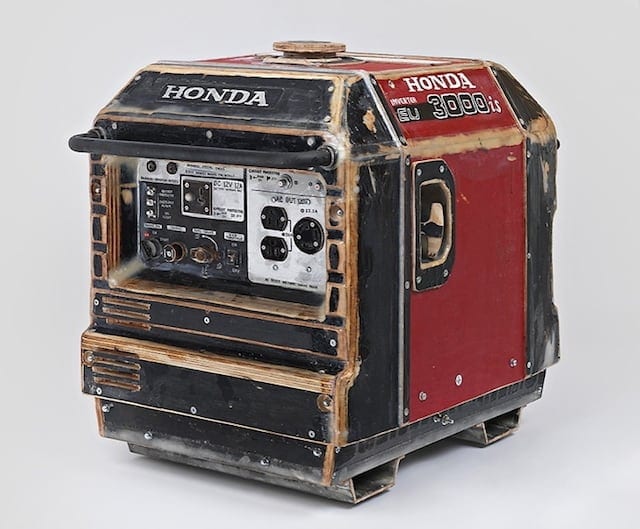
Sachs makes objects that look familiar at first glance and then become unstable on closer inspection. A NASA module, a Chanel bag, a skateboard deck, or a luxury countertop accessory might reappear in his work as a rough, visibly assembled copy. The point is not realism alone. The point is the tension between the prestige of the original and the blunt evidence of the materials that make the copy.
That material choice matters. Foam core, plywood, duct tape, hot glue, and industrial coatings let Sachs show seams, fasteners, cuts, and repairs. He often leaves the process visible, so the object reads as both finished artifact and working prototype. The result is a kind of anti-luxury luxury: painstaking, obsessive, and handmade, but never trying to hide the hand that made it.
Why does Tom Sachs matter?
Sachs matters because he has made craftsmanship itself part of the subject. His work does not simply criticize consumer culture; it imitates its polish, systems, and promises while exposing how much labor and improvisation sit underneath them. That makes his art legible to viewers who know design, branding, product photography, or industrial manufacture, even when the surface appears playful or absurd.
He also occupies a useful position in contemporary art because he crosses sculpture, performance, installation, and engineering-minded making. His studio methods borrow from fabrication shops and from amateur build culture at the same time. That mix has made him influential for artists and designers interested in how an object can look commercial without becoming anonymous, and how a rough build can still carry the authority of a coveted product.
What is the Space Program?
Space Program is Sachs’s best-known series, a group of installations and performances that treat the Apollo mission as a world of logos, tools, rituals, and heroic labor. These works often include life-size spacecraft components, mission control environments, astronaut gear, and props that echo both NASA history and the visual language of toy-making and model building. Rather than presenting space travel as pure science, Sachs frames it as a culture of fabrication and belief.
The series is important because it condenses many of his recurring interests into one setting: mythic American ambition, technical precision, handmade evidence, and the gap between aspiration and reality. A lunar module rebuilt in steel or a control panel assembled from everyday parts becomes more than a prop. It becomes a model for how modern institutions package expertise, romance, and risk.
How does his studio practice work?
Sachs’s practice is known for discipline and repetition. The studio often operates with rules, checklists, and procedural tasks that turn making into a system rather than a single gesture. That approach mirrors the bureaucratic and industrial systems his work studies. It also keeps the object from drifting into casual craft; each visible flaw or rough edge tends to feel deliberate and tested rather than accidental.
In practice, this means his works can resemble prototypes, mockups, or repair jobs as much as artworks. He has used everything from hand-carved components to cast metal and painted surfaces that imitate the finish of commercial goods. The labor shows in the joins, the weight, and the mismatch between the ideal form and the material reality of the build.
Frequently Asked Questions
Is Tom Sachs making satire or celebration?
His work does both at once. Sachs borrows the look of luxury and technological achievement, but the handmade construction keeps the object from becoming a clean celebration of either. The result is usually ambivalent: admiration for design discipline sits beside suspicion of the systems that produce desire.
Why do so many of his works use rough materials?
Rough materials let him show labor, scale, and compromise. Foam core, plywood, glue, and tape make the construction visible and keep the object from slipping into seamless imitation. That visible effort is central to the meaning of the work, not a limitation of it.
What should be noticed first when seeing a Tom Sachs piece?
The first useful thing to notice is the mismatch between subject and material. A work may look like a premium consumer object or a piece of aerospace hardware, but the seams, edges, and tool marks reveal a different logic underneath. That gap is where much of the work happens.