
Vik Muniz is a Brazilian visual artist known for making images out of unlikely materials, then photographing the finished arrangements so the photograph becomes the final work. He began as a sculptor in the late 1980s, but became widely known for pictures built from sugar, chocolate syrup, dust, thread, trash, and other ordinary substances. His work sits between drawing, sculpture, collage, and photography, and it often depends on a second layer of seeing: a distant image that reads clearly only when the viewer steps back.
Stories from Vik Muniz
1 story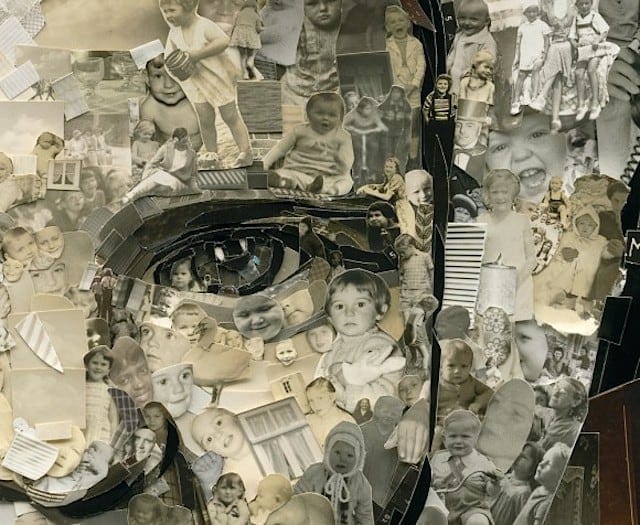
About Vik Muniz
- Born Vicente José de Oliveira Muniz in Brazil and based in New York City.
- Best known for constructing images from temporary materials and then photographing them.
- Often uses materials with strong associations, such as chocolate, sugar, garbage, and magazine cuttings.
- His images frequently rework familiar art-historical scenes, portraits, and media imagery.
- The 2010 documentary Waste Land brought wider attention to his work with waste pickers at Jardim Gramacho in Rio de Janeiro.
Read the full overviewHow does Vik Muniz make his images?, Why the materials matter, What made him widely known?, Is Vik Muniz a photographer, a sculptor, or a collage artist?
How does Vik Muniz make his images?
Muniz usually starts with a recognizable source image, then rebuilds it at a much larger scale using material that changes the image’s meaning. A portrait might be assembled from syrup, a landscape from dust, or a famous painting from cut paper and printed fragments. The material is not hidden. It is part of the point, because the viewer sees both the subject and the substance at once.
He then photographs the arrangement. That final print is what survives, while the original construction is often temporary and deliberately fragile. This method gives his work a strange double life: it resembles collage or painting at first glance, but it is actually a performance of making, followed by a photographic fix.
Why the materials matter
Muniz does not choose materials for novelty alone. He uses them to add a second meaning to the image. Sugar can suggest sweetness, labor, and commodity trade; trash can point to waste, value, and social inequality; chocolate syrup can turn a familiar picture into something bodily and theatrical. The material often comments on the picture it forms.
This is one reason his work matters in visual culture. It shows how a photograph can document an event, but also become an object in its own right. The image is never only about likeness. It is also about process, time, and the way matter can carry meaning before it is even arranged into a picture.
What made him widely known?
Muniz gained broad recognition through a body of work that made art history feel handmade and unstable. He recreated canonical images, advertising tropes, and newspaper photographs using eccentric substitutes, then presented the results as finished photographic works. The pieces reward close looking because they shift between clarity and breakdown: from afar they read as a single image, up close they dissolve into individual scraps, grains, and marks.
His collaboration with workers at Jardim Gramacho in Waste Land brought another dimension to that practice. The project linked image-making to labor, reuse, and the lives attached to discarded material. It also made plain that Muniz’s art depends on organization, site, and human effort, not just on visual wit.
Is Vik Muniz a photographer, a sculptor, or a collage artist?
He belongs partly to all three, but none of those labels is complete on its own. His early training as a sculptor still matters because his work is built in space before it is photographed. At the same time, photography determines the final form, since the camera flattens the construction into an image that can be exhibited, reproduced, and collected.
Collage is useful as a description because he assembles pictures from fragments. But unlike a conventional paper collage, Muniz often works at scale and with materials that cannot be glued into a stable object. The result is a practice centered on transformation: ordinary things become images, and those images become photographs.
Frequently Asked Questions
What materials does Vik Muniz use?
He uses a wide range of everyday materials, including sugar, syrup, chocolate, dust, dirt, thread, magazine clippings, and trash. The choice changes from series to series, but it is always tied to the meaning of the picture. The materials are often unstable, which means the image exists first as an event and only afterward as a photograph.
Why are his works photographed instead of kept as objects?
Photography is the final medium that holds the work together. The physical arrangement may be temporary, messy, or impossible to preserve, but the photograph fixes the image and lets it circulate. That shift matters because the work asks what counts as the artwork: the material setup, the act of making, or the printed result.
What is Waste Land and why is it important?
Waste Land is a documentary about Muniz’s project with catadores, the waste pickers working at Jardim Gramacho, a landfill outside Rio de Janeiro. The film showed how his art connected image-making with recycling, labor, and social life. It also made his practice legible to a wider public by showing the scale and human organization behind it.