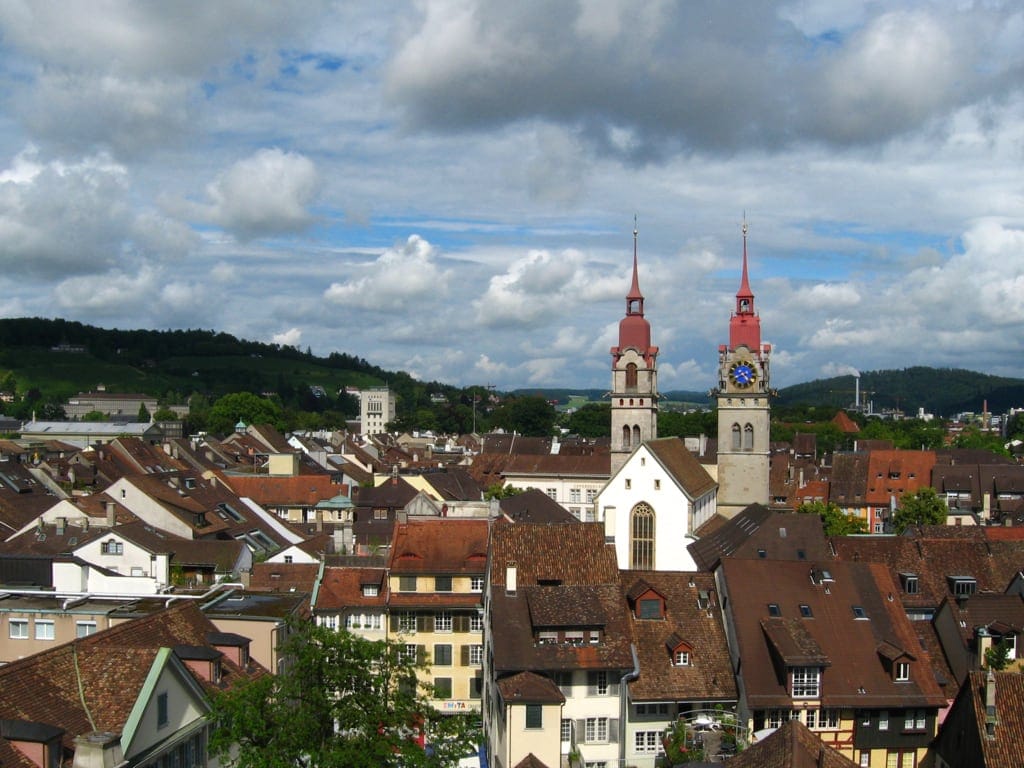
Winterthur is a city in the canton of Zurich in northern Switzerland, known for its dense urban fabric, industrial heritage, and role as a regional centre for services and technology. It sits about 30 kilometres north-east of Zurich and is commonly shortened to Winti in the local dialect. The city grew from a smaller settlement into one of Switzerland’s larger cities, with a population of more than 100,000.
| Type | City |
|---|---|
| Country | Switzerland |
| Canton | Zurich |
| Region | Northern Switzerland |
| Population | More than 100,000 |
| Common local name | Winti |
| Nearest major city | Zurich |
Why Winterthur matters
Winterthur matters because it shows a familiar Swiss pattern: a city that moved from manufacturing toward services without erasing its industrial past. Machine building, engineering, and other forms of production shaped its growth, and that history still marks the city in its streets, stations, and factory quarters. Today, the economy leans toward service work, education, and high-tech industry, but the urban character still reflects earlier eras of making.
That mix gives Winterthur a practical importance beyond its size. It functions as a working city rather than a resort or administrative capital, and many residents commute to Zurich for jobs or institutions. At the same time, Winterthur retains enough local identity to stand apart, which is part of why it appears in cultural and visual writing as a real place with a specific atmosphere rather than just a suburb of Zurich.
What does Winterthur look like in practice?
Winterthur reads as a compact Swiss city with a strong centre, rail connections, and a plain but efficient built environment. The city’s appearance is shaped less by monumental landmarks than by repeated patterns: apartment blocks, tram and rail infrastructure, former industrial buildings, and commercial streets that support everyday life. The result is a place that often feels functional, orderly, and inhabited rather than ceremonial.
For photographers, designers, and other visual observers, that matters because Winterthur offers textures associated with work, transit, and ordinary urban life. Its architecture tends to reward attention to surface and structure: brick, concrete, steel, glass, and the repurposed spaces left behind by industry. The city’s scale also makes it legible, which can make it a useful setting for images that need clarity rather than spectacle.
How did Winterthur develop?
Winterthur’s growth came from its position in a productive Swiss corridor and from industrial development in the nineteenth and twentieth centuries. As manufacturing expanded, the city accumulated workshops, factories, and the housing needed for workers and managers. Over time, as in many European industrial cities, parts of that economy shifted or declined, and newer sectors moved in.
That transition did not wipe away the older city. Instead, Winterthur became a layered place where former industrial sites often sit near contemporary offices, schools, and transport routes. This kind of layering is important to understanding the city’s visual character: what remains visible is not just architecture, but the sequence of uses that have passed through it.
Why does Winterthur appear in visual culture?
Winterthur appears in visual culture because it offers a credible urban setting with a strong sense of place and without the overexposure of bigger Swiss cities. It can stand in for modern Switzerland broadly, but it also has a local specificity that resists becoming generic. That makes it useful for documentary photography, editorial work, and projects interested in the relationship between city, labour, and transit.
In practice, Winterthur tends to be represented through scenes of streets, railway lines, workplaces, and the everyday built environment. Those subjects suit a place where the visual interest comes from use, repetition, and maintenance rather than from iconic form alone. In that sense, Winterthur is less a postcard city than a working landscape.
Frequently Asked Questions
Is Winterthur part of Zurich?
No. Winterthur is a separate city within the canton of Zurich, which is the larger administrative region. It is close to Zurich and well connected by train, so the two places are often discussed together, but Winterthur has its own municipal identity.
What is Winterthur known for?
Winterthur is known for industry, services, and a strong regional role in northern Switzerland. Its earlier manufacturing history remains important to the city’s identity, even as newer economic sectors have become more visible. The city also has a reputation for being practical, well connected, and less showy than Zurich.
Why might a photography article mention Winterthur?
A photography article may mention Winterthur because it provides a clear example of an urban setting shaped by labour, infrastructure, and everyday life. Its industrial past and present-day service economy create a useful visual contrast. That makes it relevant in writing about place, atmosphere, and how cities are represented.
} änder to=final code qq彩票
At a glance
- Address
- Winterthur District, Switzerland
- Coordinates
- 47.5, 8.75
Articles mentioning Winterthur