
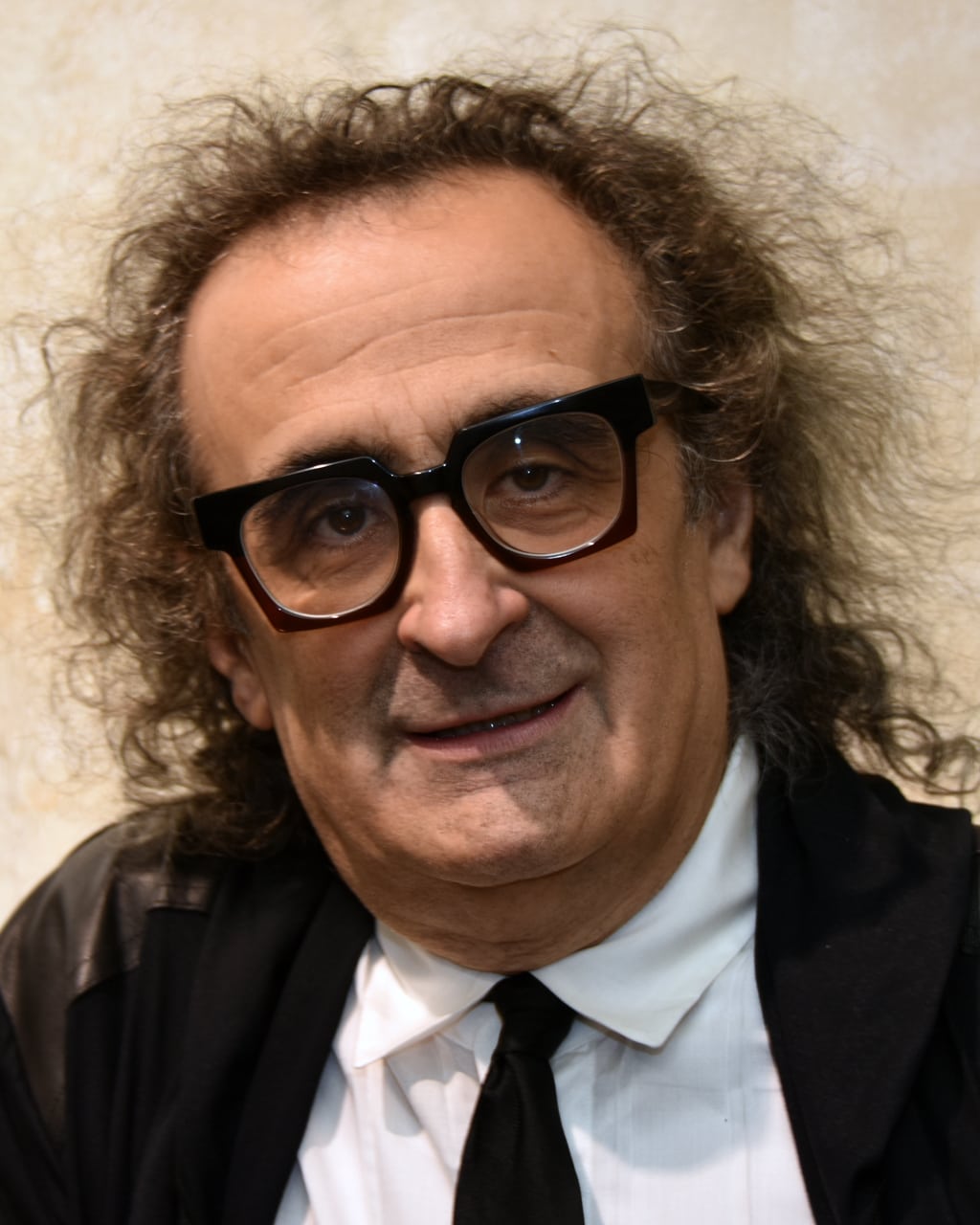
Yigal Ozeri is an Israeli-born painter and printmaker known for large-scale, photo-realistic oil portraits, especially images of young women placed in open landscapes. Born in 1958, he lives and works in New York City. His work sits between painting, photography, and cinema: the surfaces often look lens-made at first glance, but the images are built by hand with layered oil paint, careful glazing, and close attention to light, skin, hair, and atmosphere.
- Born in Israel in 1958; based in New York City.
- Best known for large-scale photorealistic oil paintings.
- Frequently depicts young women in natural settings, often with a cinematic stillness.
- Also works in etching and book projects, including a collaboration with poet Ronny Someck.
- His technique depends on precise drawing, smooth paint handling, and controlled detail rather than visible brushwork.
What makes Yigal Ozeri’s paintings distinctive?
Ozeri’s best-known paintings present figures that seem suspended between portrait, fashion image, and film still. The women he paints are often isolated in fields, forests, roadsides, or sunlit clearings, with bodies turned slightly away from the viewer or caught mid-thought. That combination of scale, realism, and narrative ambiguity gives the work its pull: the image reads quickly as photographic, but it slows down when the viewer notices how deliberately it has been made.
His paintings belong to the broader photorealistic tradition, but they are not simple copies of photographs. The point is not mechanical reproduction. The point is to use oil paint to simulate photographic presence while keeping the human hand visible in the choices: which details sharpen, which soften, how skin reflects light, how a dress folds, how a line of trees frames the body.
How are the paintings made?
Ozeri’s process relies on source photography, drawing, and highly controlled oil technique. He typically builds the image from reference material, then translates it into paint with smooth transitions and thin layers that reduce the visibility of the brush. This creates the illusion of camera clarity, but the final image remains a constructed painting rather than a direct transcription.
The finish often resembles the polished surface of advertising photography or editorial portraiture. That effect depends on careful management of edges and tonal shifts: bright highlights on hair or skin are balanced against deeper shadows in fabric, foliage, or background space. The result is a kind of visual stillness, where even outdoor scenes feel staged and composed.
Why do his landscapes matter?
Landscape in Ozeri’s work is never just background. Fields, roads, and wooded edges help determine the mood of the figure, creating a space that feels both expansive and enclosed. The open setting suggests freedom, but the tightly composed image often produces a different feeling: suspension, distance, or quiet tension.
This matters because it connects portraiture to environment in a way that is more cinematic than traditional studio painting. The viewer does not just read the face or body; the surrounding space becomes part of the subject. In practice, that means the tree line, sky, grass, and shadows carry as much emotional weight as the figure itself.
What is the etching collaboration with Ronny Someck?
In 1997, Ozeri collaborated with the Israeli poet Ronny Someck on The Razor that Cut the Metaphoric Face of Poetry, a book that paired five etchings by Ozeri with five poems by Someck. The etchings were titled Pointed Tower, Tears of Buildings, Unbuilt Pagoda, Dirty Laundry, and Tears of Buildings II. The edition was produced by the Cabri Print Workshop in Kibbutz Cabri, in the Western Galilee.
That project shows another side of Ozeri’s practice: printmaking, sequencing, and collaboration. Etching requires a different rhythm from painting. The line is incised rather than brushed, and the image tends to feel sharper, more reduced, and more graphic. In a book format, those qualities can work in dialogue with poetry, where image and text unfold page by page rather than all at once.
Frequently Asked Questions
Is Yigal Ozeri a photorealist?
Yes, but the label only partly describes his work. His paintings aim for photographic precision, especially in skin, light, and detail, but they are not merely imitations of photographs. They use the visual language of photography to produce a painted image that feels both immediate and slightly unreal.
What subjects does he paint most often?
Ozeri is best known for portraits of young women, usually shown outdoors. The figures often appear alone, with the landscape giving the image its mood and structure. Rather than crowding the scene with action, he tends to hold the pose and let quietness do the work.
Does he only paint, or does he make prints too?
He works in more than one medium. Alongside oil painting, he has produced etchings, including the 1997 collaboration with Ronny Someck. That print project shows that his practice includes both the smooth illusionism of painting and the sharper, more linear language of intaglio printmaking.
Articles mentioning Yigal Ozeri

