
Yokohama is a major port city on Tokyo Bay and the capital of Kanagawa Prefecture. It grew from a small coastal settlement into Japan’s largest incorporated city and one of the country’s most important commercial centres. Its role in trade, migration, and modern industry has also made it a frequent setting for architecture, photography, and design that deal with Japan’s encounter with the outside world.
Stories from Yokohama
6 stories


About Yokohama
- Yokohama sits south of Tokyo in the Kantō region on the eastern edge of Honshu.
- It opened to foreign trade in the nineteenth century and quickly became a gateway city.
- Its port and waterfront shaped its urban form, economy, and visual identity.
- Artists and designers often use Yokohama as a backdrop for modernity, mobility, and international exchange.
- It is not just a suburb of Tokyo; it has its own large population, civic identity, and built environment.
Read the full overviewWhy does Yokohama matter?, How did Yokohama become a port city?, What does Yokohama look like in practice?, Why do artists keep returning to Yokohama?
Why does Yokohama matter?
Yokohama matters because it helped define modern urban Japan. When the port opened in the late Edo period, foreign merchants, diplomats, goods, and technologies entered through the city in large numbers. That made Yokohama one of the first places where rail, shipping, photography, Western-style buildings, and imported consumer goods became part of everyday life.
This history left a strong visual record. Old docklands, warehouse districts, brick promenades, and harbour views still shape how the city is seen and photographed. For makers working in architecture, film, or book design, Yokohama often stands for contact between Japan and the wider world, not as an abstract idea but as a specific place with quays, piers, rails, and dense civic streets.
How did Yokohama become a port city?
Yokohama’s rise began after Japan ended its long period of limited foreign contact in the nineteenth century. The city’s harbour was developed to handle international trade, and from that point it expanded fast. Warehouses, customs facilities, ship services, and transportation links followed, drawing workers, merchants, and migrants from across the country.
That port infrastructure changed the city’s scale and look. A waterfront economy needs cranes, storage, roads, and rail connections, so the city grew in layers around logistics. The resulting urban fabric is less tied to one historical centre than to movement: ships arriving, cargo shifting, people commuting, and goods passing through.
What does Yokohama look like in practice?
In built form, Yokohama combines harbour infrastructure with dense commercial districts and carefully maintained public waterfronts. Its most recognisable spaces include the Minato Mirai area, historic brick warehouses, and streets where European and Japanese architectural languages sit side by side. This mixture is not decorative alone; it reflects the city’s long role as a point of exchange.
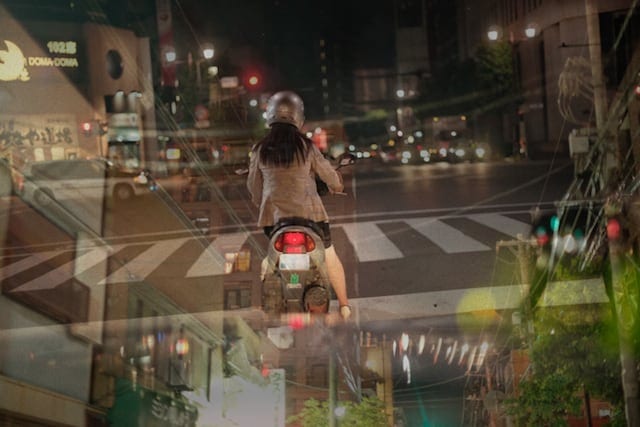
In visual culture, that makes Yokohama useful as more than a backdrop. Photographers often use its bayside light, industrial edges, and layered skyline to frame questions of memory and modernity. Designers and architects return to it for the same reason: the city shows how a port can turn logistics into form, and form into identity.
Why do artists keep returning to Yokohama?
Artists return to Yokohama because the city holds several ideas at once. It is local and international, historic and contemporary, tightly urban and open to the sea. That combination gives it a strong visual charge, especially in work concerned with atmosphere, urban change, or the afterlife of trade.
In practice, this means Yokohama appears often in photography, public art, film, and architecture projects that need a place with a recognisable modern edge. The city’s piers, streets, and civic spaces offer clear surfaces, strong lines, and traces of exchange. Those qualities make it especially useful for makers interested in how cities carry history without turning into museums.
Frequently Asked Questions
Is Yokohama part of Tokyo?
No. Yokohama is a separate city and the capital of Kanagawa Prefecture, though it sits immediately south of Tokyo and is closely linked to the wider metropolitan area. Many people commute between the two cities, which can blur the boundary in daily life.
Administratively and culturally, Yokohama has its own identity. Its port history and urban development followed a different path from Tokyo’s role as the national capital.
Why is Yokohama important in Japanese design and architecture?
Yokohama matters because it shows how imported materials, international trade, and port logistics influence the built environment. Its warehouses, waterfront districts, and mixed architectural styles provide examples of modern Japanese urban form shaped by global exchange.
For architects and designers, the city offers a useful model of adaptation. It is a place where infrastructure, public space, and historical memory all remain visible in the same urban landscape.
What is Yokohama best known for visually?
Yokohama is best known for its harbour views, brick warehouses, skyline, and the contrast between historic port structures and newer redevelopment. The city’s waterfront has a clean, open character that photographers and filmmakers use often.
It is also known for a sense of cosmopolitanism rooted in history rather than branding. That visual identity comes from ships, commerce, migration, and the long presence of international exchange.