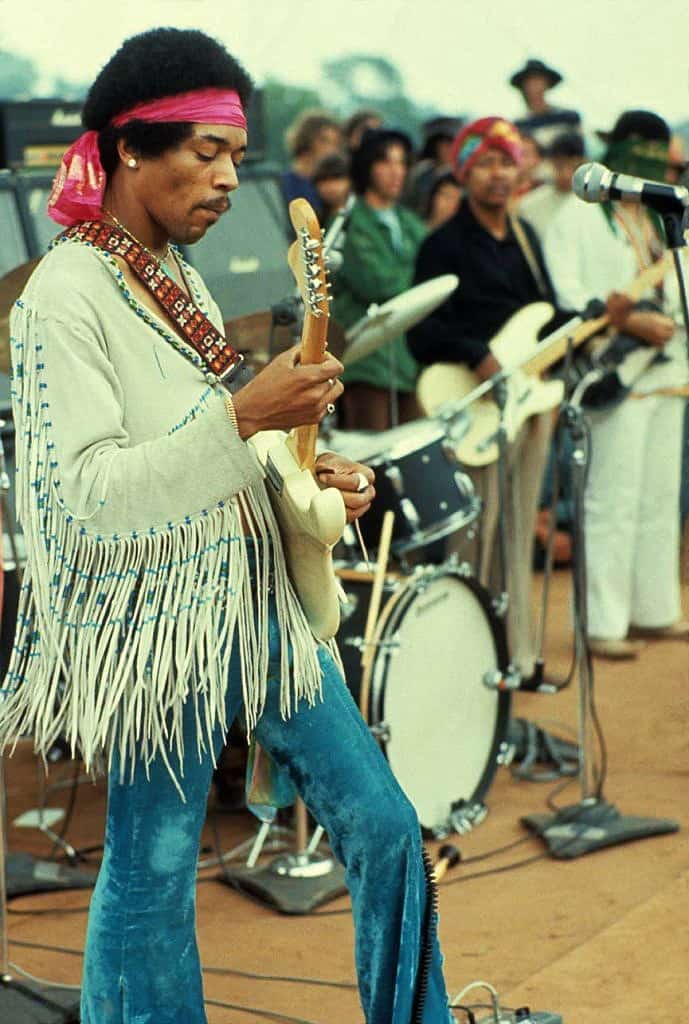
Max Yasgur was a dairy farmer from Bethel, New York, whose land hosted the Woodstock Music and Art Fair in August 1969. His farm became the practical center of one of the most famous outdoor gatherings in American cultural history, turning a working dairy operation into a temporary festival site for hundreds of thousands of people.
- Yasgur owned the White Lake farm in upstate New York where Woodstock took place.
- He was not a promoter or event planner; he provided the land.
- The festival’s scale overwhelmed roads, fields, sanitation, and local infrastructure.
- His role made him a symbol of rural hospitality and, for some, a figure in the counterculture story.
- Woodstock remains the main reason his name is still widely known.
Who was Max Yasgur?
Max Yasgur was born in 1919 and made his living in agriculture, operating a dairy farm in Sullivan County, New York. He was a private citizen rather than a public figure, and his importance came from a specific decision: he agreed to let the Woodstock organizers use part of his property after other sites fell through. That choice placed him at the center of a weekend that drew an estimated 400,000 to 500,000 people.
Yasgur’s farm was not a purpose-built venue. It was open land meant for cattle, hay, and ordinary farm work. That mattered because Woodstock was built on improvisation. Organizers had to adapt fields, roads, fences, and slopes into stages, crowd space, and access routes, while Yasgur watched his working landscape become a temporary city.
Why did Woodstock end up on a dairy farm?
The festival moved to Yasgur’s farm because the original plans for a more controlled venue collapsed. The Woodstock organizers needed a large rural site quickly, and Yasgur’s land offered the space, isolation, and relative flexibility they could no longer find elsewhere. The choice was practical, but it also changed the shape of the event. Instead of a fenced commercial arena, Woodstock became a spread-out outdoor gathering defined by mud, weather, and open horizon lines.
The farm’s physical features shaped everything that followed. Rolling pasture could hold people, but it could not easily handle the traffic, sanitation, food delivery, and emergency access required for a crowd that size. The result was a festival that looked less like a planned spectacle and more like a temporary settlement made inside an agricultural landscape. That tension between pastoral setting and mass gathering became part of Woodstock’s image.
What did Yasgur’s land look like in practice?
In practice, Yasgur’s farm became a patchwork of performance grounds, camping areas, bottlenecks, and muddy footpaths. The stages stood on open ground, while spectators spread across fields, hillsides, and roads. Tractors, hay bales, portable toilets, tents, and hastily arranged barriers appeared beside the normal infrastructure of a dairy operation. The site had to support not just concerts, but food stalls, medical tents, water access, and the movement of equipment and people.
Because the festival drew far more attendees than expected, the farm’s layout turned into part of the story. Roads clogged, cars were abandoned, and many people arrived on foot. Rain turned the fields into thick mud. That difficult physical setting is one reason photographs of Woodstock remain so striking: they show a huge cultural event taking place inside ordinary farmland, with the textures of rural labor still visible around it.
Why does Max Yasgur still matter?
Yasgur matters because Woodstock became a shorthand for a generation, and his land made the event possible. He was not the artistic driver of the festival, but his decision gave the organizers a place to stage it when the project was close to collapse. In cultural memory, that makes him the man who supplied the ground beneath the myth.
He also stands for a less glamorous part of cultural history: the material conditions that allow a legendary event to happen. A festival needs acreage, access roads, water, food, labor, and permission. Yasgur supplied the most important of those resources, and the event’s afterlife has kept his name attached to the logistics as much as to the music.
Frequently Asked Questions
Was Max Yasgur part of the counterculture?
Not in the usual sense. He was a dairy farmer, older than most of the Woodstock crowd, and rooted in rural business rather than the music scene. His association with the counterculture came through the use of his land, not through personal identification with hippie politics or festival culture.
Did Yasgur make money from Woodstock?
He was paid for the use of his property, but the festival was also a major disruption to his farm and local roads. The event brought national attention, yet it was not a simple commercial win for him or for the surrounding community. His role is remembered more for the decision to help than for any financial result.
Why is his name linked so closely to Woodstock?
Because the festival needed a place to exist, and Yasgur provided it at a critical moment. When people remember Woodstock, they often picture the music and the crowd, but those images depended on a specific piece of land in rural New York. Yasgur’s farm was the site where the event became real.
Articles mentioning Max Yasgur