
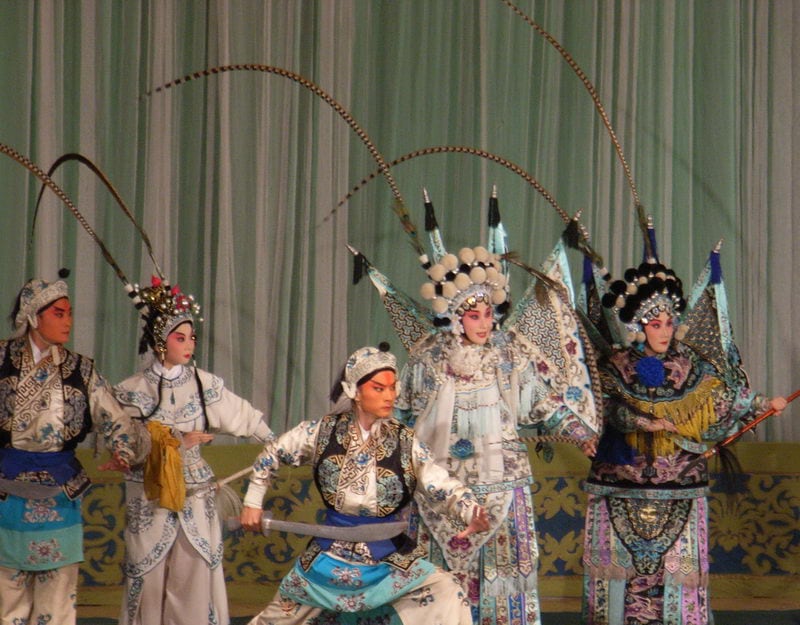
Chinese culture is the shared body of language, values, rituals, arts, foodways, and social practices that developed across China over thousands of years and continues to evolve across mainland China, Taiwan, Hong Kong, Macau, and global Chinese communities. It is not a single fixed style: regional customs, dialects, religions, and courtly or local traditions have always shaped it differently.
- It includes many overlapping traditions rather than one uniform identity.
- Writing, calligraphy, ceramics, painting, music, and architecture are central artistic forms.
- Confucian, Daoist, Buddhist, and folk beliefs have all influenced daily life and institutions.
- Food, family structure, festivals, and craft practices vary sharply by region.
- Modern Chinese culture also includes film, design, publishing, and contemporary art.
What defines Chinese culture?
Chinese culture developed from early agrarian societies along the Yellow and Yangtze Rivers, then expanded through dynasties, trade, conquest, migration, and imperial administration. The classical written language gave the culture a durable shared framework even when spoken languages differed widely. That is one reason calligraphy, poetry, and the brush remain so important: writing has long been treated as an art form as well as a means of communication.
Its core values have often been discussed through Confucian ideas about filial duty, education, hierarchy, and social harmony, but those values sit alongside Daoist ideas of balance and naturalness, Buddhist ethics, and local religious practice. In daily life, this means ancestor rites, festival calendars, respect for elders, and a strong emphasis on lineage and schooling, though each region and era has adapted them differently.
How does it appear in art and making?
Chinese culture has had an outsized influence on material practice. Ink painting, seal carving, porcelain production, lacquerwork, jade carving, embroidery, and paper cutting all developed sophisticated techniques with distinct tools and conventions. In architecture, timber framing, courtyard planning, tiled roofs, and axial layout shaped imperial palaces, temples, and domestic compounds, while later periods introduced hybrids with Western materials and planning systems.
For designers and artists, Chinese culture often appears through objects that balance utility and symbolism. A teacup, folding screen, scholar’s rock, or household altar can carry ideas about status, season, luck, or moral cultivation. Even when made for modern interiors or publication design, references to Chinese culture often draw on older systems of pattern, ornament, scale, and restraint rather than on a single visual motif.
Why does Chinese culture matter today?
Chinese culture matters because it remains both deeply local and globally visible. It shapes daily life for more than a billion people, but it also travels through migration, trade, film, cuisine, fashion, and digital media. That circulation has created many public misunderstandings, especially when a single aesthetic gets treated as “Chinese” without regard for region, class, period, or political context.
In contemporary design and visual culture, Chinese culture is often cited for its disciplined use of form, its long history of craft, and its ability to combine continuity with change. The most useful way to think about it is as a living set of practices: some inherited, some reinvented, and many contested. Its strength lies in that range rather than in any one emblem.
Frequently Asked Questions
Is Chinese culture the same as Han Chinese culture?
No. Han Chinese traditions have been highly influential, but Chinese culture also includes the practices of many other ethnic groups, local communities, and historical border regions. The cultural field is broader than one ethnicity and has always been shaped by exchange within and beyond China.
What are the most recognisable forms of Chinese culture in visual design?
Calligraphy, brush painting, porcelain, red-and-gold festival imagery, seal marks, paper cuts, and timber architecture are some of the most recognisable forms. In modern design, these may appear as a reference to brushstroke, grid, symmetry, layered paper, or restrained ornament rather than as literal quotation. Good use of these forms depends on context, since they can easily slide into stereotype.
Why do people describe Chinese culture as ancient and changing at the same time?
Because many of its written, ritual, and craft traditions are very old, but none has stayed unchanged. Dynasties fell, religions spread, cities grew, and globalisation introduced new materials and media. Chinese culture persists through adaptation, not through freezing one historical moment.
Articles mentioning Chinese culture


