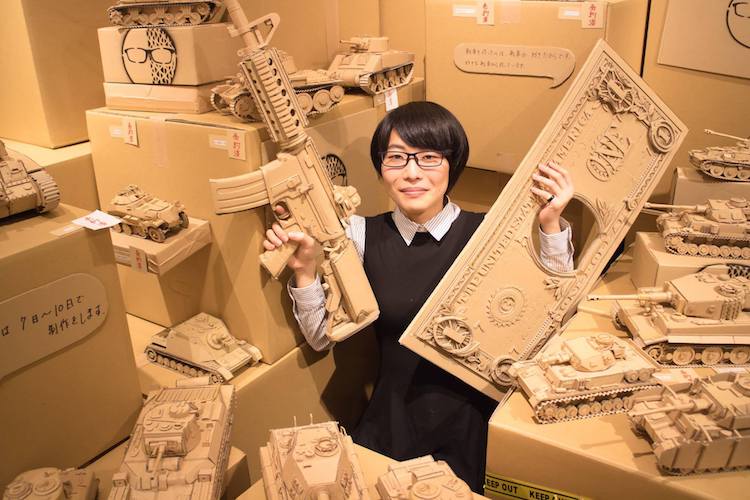
Ohno is a Japanese artist known for turning used Amazon cardboard boxes into intricate sculptural works. He takes a disposable packing material and reworks it into objects that read as both craft and commentary, using the printed logos, corrugation, tape marks, and brown surfaces of the boxes as part of the final piece.
| Essential fact | Details |
|---|---|
| What it is | A contemporary artist working with recycled cardboard |
| Known for | Sculptures made from discarded Amazon shipping boxes |
| Material | Corrugated cardboard, printed packaging, adhesive residue, cut and layered paperboard |
| Approach | Reuse, cutting, folding, stacking, and assembling found packaging into detailed forms |
| Significance | Shows how mass-market packaging can become handmade visual art |
What does Ohno make?
Ohno makes sculptures from old shipping boxes, especially the familiar cardboard cartons used by Amazon. The works preserve enough of the original packaging to remain recognizable, but they are transformed through careful cutting, bending, and assembly. The result is not simple recycling or decoration; it is a conversion of throwaway material into image, form, and texture.
The appeal of the work comes partly from the contrast between subject and material. Cardboard is usually associated with transit, storage, and disposal. In Ohno’s hands it becomes structural and expressive, capable of holding detail and suggesting volume in a way that feels playful but exacting.
Why cardboard matters here
Cardboard is one of the most ordinary materials in contemporary life, and that makes it a sharp choice for sculpture. Amazon boxes carry the visual identity of global e-commerce: logos, arrows, shipping labels, and bruised edges from transport. By reworking that material, Ohno uses a surface already loaded with everyday meaning.
The material also shapes the look of the finished pieces. Corrugated board has visible layers and a soft stiffness that rewards cutting and scoring. Printed areas, taped seams, and worn edges create texture without extra paint or finish, so the sculptures often keep a raw, assembled appearance rather than looking polished in a conventional fine-art sense.
How are the sculptures made?
Ohno’s process depends on close attention to the structure of the box itself. A shipping carton can be opened flat, cut into strips or panels, and reconfigured into new shapes. Folding, layering, and joining pieces allows the artist to build up contour and detail while still letting the original packaging remain legible.
This kind of making sits between model-making, collage, and sculpture. It requires a strong sense of pattern, joinery, and proportion, because the material is thin and easily crushed. The final object often depends on precision in the cut and the fold: a slight bend can define a curve, and a printed seam can become part of the visual rhythm.
What makes Ohno’s work stand out?
Ohno’s work stands out because it treats a branded, disposable object as a serious artistic medium. Many artists use found materials, but the choice of Amazon boxes gives the work a specific contemporary charge. The source material points to shipping networks, consumption, and the volume of goods moving through daily life.
At the same time, the sculptures do not read as satire alone. They also show patience, dexterity, and an interest in form for its own sake. That balance between critique and delight is part of what makes the work memorable: the viewer sees a familiar box, then notices how far it has been pushed by hand into something elaborate and new.
Frequently Asked Questions
Is Ohno a cardboard sculptor or a mixed-media artist?
Ohno is best described as a sculptor working with cardboard and found packaging. The use of printed boxes and other packaging details gives the work a mixed-media quality, but cardboard remains the central medium. The material choice is not incidental; it defines both the look and the meaning of the sculptures.
Why use Amazon boxes specifically?
Amazon boxes are instantly recognizable and widely encountered, which makes them a powerful symbol of contemporary consumption and delivery culture. Their printed branding and standardized construction also give the artist a ready-made visual vocabulary. That combination makes them useful both as material and as subject.
Are the sculptures preserved as found objects or heavily altered?
They are heavily altered, even when parts of the original box remain visible. The boxes serve as raw material that is cut, folded, layered, and reassembled into new forms. Their identity as packaging stays present, but their function as packaging is gone.
Articles mentioning Ohno