
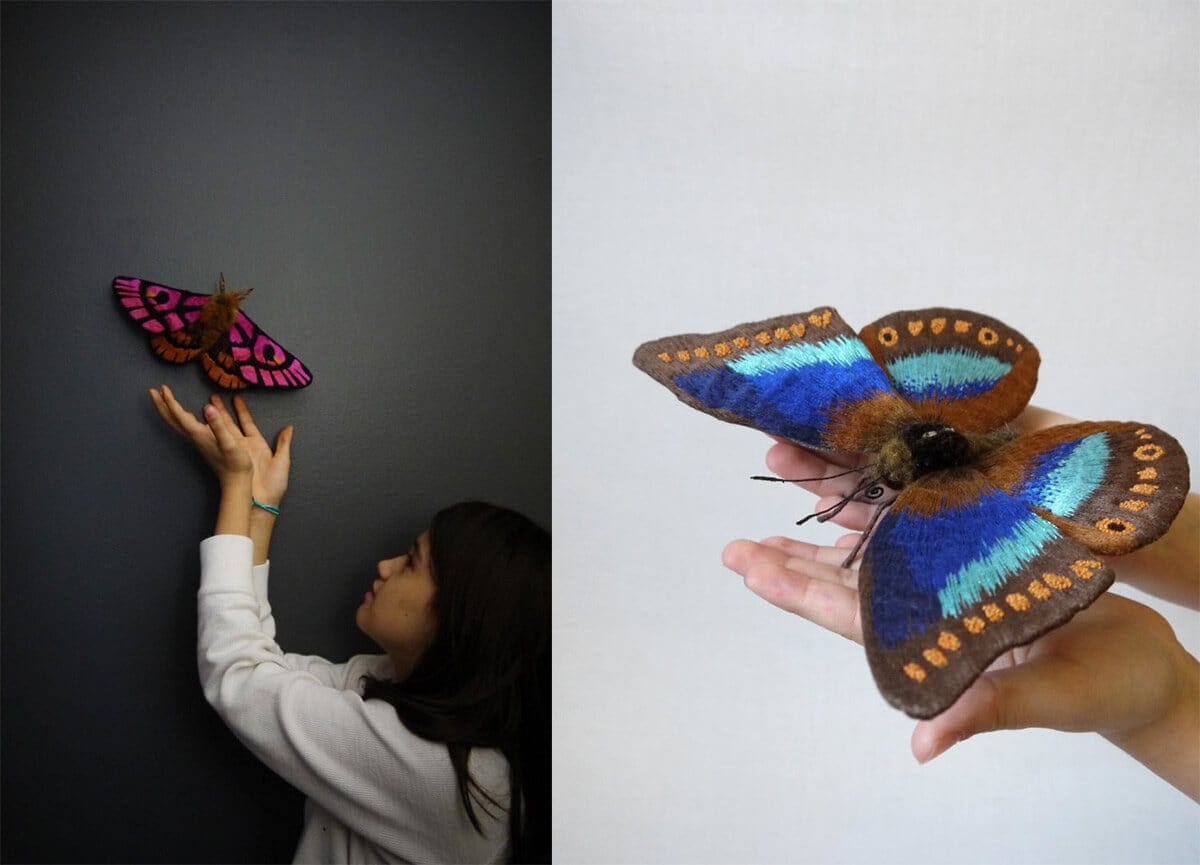
Yumi Okita is a contemporary textile artist known for large, hand-crafted insect sculptures made from layered fabric, embroidery, and other soft materials. Her work turns moths, cicadas, beetles, and related creatures into vivid objects that sit between specimen, plush toy, and decorative sculpture.
| Field | Textile art, soft sculpture |
|---|---|
| Known for | Oversized fabric insects with embroidered wings and tactile surfaces |
| Materials | Fabric, thread, embroidery floss, stuffing, wire, and painted or embellished details |
| Working method | Hand-sewn construction with layered textiles and surface decoration |
| Why it matters | Bridges craft, sculpture, and natural history imagery in a distinctly handmade form |
What does Yumi Okita make?
Okita makes insect sculptures from cloth rather than hard materials. The creatures are usually scaled up far beyond life size, which gives them a strange double effect: they look at once delicate and monumental. Wings are often built from sheer or patterned fabric, then marked with stitching, paint, or appliqué to echo the veining and mottling of real insect wings.
The surfaces matter as much as the silhouettes. Felt, cotton, satin, and other textiles let Okita suggest fur, shell, antennae, and wing membranes through texture instead of realism alone. Because the forms are hand-made and visibly assembled, the work reads as both an object of wonder and a record of labor.
Why insects?
Insects give Okita a subject that is already rich in pattern, color, and structure. Moths and cicadas are especially suited to textile interpretation because their wings, bodies, and segmented parts can be translated into stitching, layered cloth, and folded construction. The result is not a scientific model; it is a crafted interpretation that borrows from nature without trying to imitate it exactly.
That distance from strict realism is part of the appeal. The enlarged scale lets small creatures occupy the visual authority usually reserved for monumental sculpture. It also changes how they are seen: what is often overlooked outdoors becomes an object for close looking, with seams, stitches, and fabric grain becoming part of the image.
How are the sculptures made?
Okita’s process is rooted in textile technique. A sculpture typically begins with a shaped body and wing structure, then gains volume through stuffing and internal support. Fabric pieces are cut, stitched, and layered to build color and contour, while embroidery or surface painting adds markings that suggest species-specific detail.
The handwork remains visible in the final piece. Edges may stay soft, and the transitions between materials can be legible rather than hidden. That visibility distinguishes soft sculpture from industrial fabrication: the object does not pretend to be machine-made, and the time spent making it becomes part of its meaning.
Why does her work stand out?
Okita’s work sits at the intersection of textile art, sculpture, and natural history display. It uses craft techniques associated with domestic making—sewing, stuffing, embroidery—but applies them to a scale and subject more often associated with taxidermy, entomology, or museum collecting. That collision gives the work its charge.
Her insects also carry a strong visual accessibility. They are immediately recognizable, even when stylized, and they invite a sensory response that harder materials often suppress. Cloth softens the fear or disgust insects can provoke, while the scale and detail preserve their strangeness. The work therefore depends on both attraction and unease.
Frequently Asked Questions
Is Yumi Okita a textile artist or a sculptor?
She is both, though textile artist is the more precise label because her sculptures depend on fabric construction, embroidery, and stitching. The finished works also function as sculpture because they occupy space as full three-dimensional objects. That overlap is central to her practice.
Are the insects based on real species?
They often resemble real moths, cicadas, and beetles, but they are not strict scientific reproductions. Okita uses recognizable features such as wing shape, body segmentation, and markings, then heightens them through color and pattern. The work feels observational without being documentary.
What materials are most associated with her work?
Fabric, thread, embroidery floss, stuffing, and structural supports are the core materials. Surface additions such as paint or appliqué may appear as well, depending on the piece. Those materials are chosen for their ability to create softness, volume, and fine surface detail at the same time.
Articles mentioning Yumi Okita
