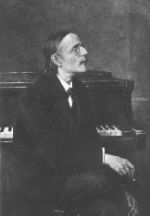
Peter Cornelius was a German composer, poet, translator, and writer on music whose work bridged the worlds of opera, literary culture, and music criticism in the 19th century. He is best known today for Der Barbier von Bagdad, a comic opera that shows his taste for clear melody, sharp characterisation, and finely worked text.
| Born | 24 December 1824, Mainz, German Confederation |
|---|---|
| Died | 26 October 1874, Mainz, German Empire |
| Nationality | German |
| Known for | Opera, song, poetry, translation, music criticism |
| Associated with | Weimar circles, Franz Liszt, German Romantic music |
Who was Peter Cornelius?
Cornelius came of age in the high Romantic period, when German artists often moved between genres and treated music, poetry, and criticism as parts of the same intellectual life. He studied music seriously but never limited himself to composition. He also wrote verse, translated texts, and contributed essays about music, which shaped how he thought about setting language to sound.
That breadth matters. Cornelius did not work as a purely academic composer or a salon poet who happened to write songs. His pieces often show close attention to words, dramatic pacing, and the relation between speech rhythm and musical line. That makes him an important figure for understanding how 19th-century composers tried to make music serve literature without flattening it.
What did he write?
Cornelius’s most substantial surviving work is Der Barbier von Bagdad (The Barber of Baghdad), an opera first staged in 1858. It is witty, compact, and highly literate, with music that supports comic timing rather than grand spectacle. He also wrote songs and smaller vocal works that suit his gift for shaping text with economy.
His output was never large, partly because his career was interrupted by illness, financial strain, and the practical difficulties of securing performances. Even so, the pieces he did complete have a distinct profile: lean orchestration, careful verbal setting, and a preference for clarity over heavy gesture. In a period often associated with large-scale symphonic ambition, Cornelius remained interested in the intimacy of voice and language.
Why does Peter Cornelius matter?
Cornelius matters because he represents a strand of German Romantic music that was literary, self-aware, and disciplined. He belonged to the orbit of Franz Liszt in Weimar, where composers debated the future of music, programmatic ideas, and the role of modern poetry. Cornelius absorbed that atmosphere but kept his own voice, less flamboyant than some of his contemporaries and often more exact in word setting.
He also shows how translation and criticism fed composition in the 19th century. A composer who reads and rewrites texts closely learns to treat language as material, not decoration. That approach gives Cornelius a place in the history of opera and the art song, where the relationship between text, melody, and dramatic intent is central.
How did he work in practice?
Cornelius worked across multiple forms of writing, and that affected the texture of his music. His librettos and translations made him sensitive to syllable count, accent, and idiom. In his operatic writing, this produces passages where the rhythm of speech remains audible even when the music is elaborate.
His working life also reflects the precarious conditions faced by mid-19th-century composers who lacked a secure institutional post. Performance opportunities, patronage, and critical reputation all mattered. Cornelius had to negotiate those pressures while producing work that was often more polished on the page than prominent on the stage in his lifetime.
Frequently Asked Questions
Was Peter Cornelius mainly a composer or a writer?
He was both, and the two roles reinforce each other. Cornelius wrote music, poetry, translations, and criticism, and his musical work depends heavily on his literary instincts. He is best understood as a composer with a strong writer’s sense of structure and language.
What is his best-known work?
Der Barbier von Bagdad is his best-known composition. It is a comic opera valued for its verbal wit and compact musical design. Even though it has not entered the standard repertoire as firmly as some larger 19th-century operas, it remains his signature work.
Where does he fit in music history?
Cornelius fits into German Romanticism and the Weimar circle around Franz Liszt. He belongs to the generation that tried to expand music’s relation to poetry, drama, and criticism. His career helps explain how composers of that period thought beyond instrumental music and treated opera and song as serious literary forms.
Articles mentioning Peter Cornelius