

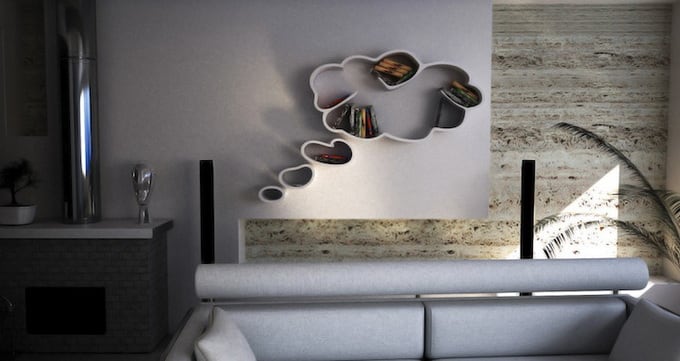
Design Studio Dripta produced one of the more quietly poetic furniture objects to emerge from independent design in the early 2010s: the “Dream” bookshelf, a wall-mounted structure combining wood and fiberglass that was conceived specifically for positioning above a bed.
Where Function Meets the Imagination
The premise of “Dream” is deceptively simple: bring your book collection into the space where you actually read — the bedroom — and mount it at the one location that makes both ergonomic and narrative sense. The shelf arcs gently over the sleeping area, positioning volumes within easy reach while framing the bed as a dedicated reading environment rather than an afterthought at the end of the day.
Dripta’s material choice is key to the object’s appeal. The combination of natural wood and fiberglass allows the shelf to achieve organic, curved forms that would be prohibitively heavy or structurally compromised in wood alone. The fiberglass shell provides rigidity across the span while the timber detailing — visible on shelving surfaces and edge treatments — keeps the piece warm and domestic in character. The finished object sits somewhere between furniture and installation art.
A Considered Object for Bookish Interiors
What distinguishes “Dream” from more conventional shelving solutions is the deliberateness of its placement logic. Dripta designed the piece with the understanding that the books we keep closest to us at night are often the ones we return to most often — novels read in fragments before sleep, reference works consulted in the early morning, collections that constitute something closer to a personal archive than a library. Positioning those volumes directly overhead transforms them from background furniture into active presence.
The studio’s approach reflected a broader movement in independent design toward objects that carry a conceptual proposition without sacrificing usability. “Dream” succeeded on both counts: it was a genuinely practical shelving system, and a small argument about how the spaces in which we rest might also be spaces in which we think. That combination of utility and quiet ambition made it one of the more memorable furniture concepts of its era.