
Andy Wright is a sculptor known for hyper-realistic portrait busts, figurative sculpture, and character commissions in bronze and other materials. His work aims to capture gesture, anatomy, and personality so a figure feels paused mid-movement rather than simply posed.
Andy Wright on FreeYork
About Andy Wright
- Works across portraiture, figurative sculpture, and creature-making.
- Often models famous people, film characters, monsters, and original figures.
- Emphasises anatomy, movement, and a lifelike surface finish.
- Produces bespoke commissions as well as cast bronze editions.
What kind of sculptor is Andy Wright?
Andy Wright works in figurative and portrait sculpture, with a strong focus on realism. His pieces are built to read as physically convincing and psychologically specific: faces carry expression, bodies show weight and balance, and the overall pose suggests an instant taken from life. That approach places him close to the traditions of academic figure sculpture, but his subject matter is often contemporary, cinematic, or fantastical.
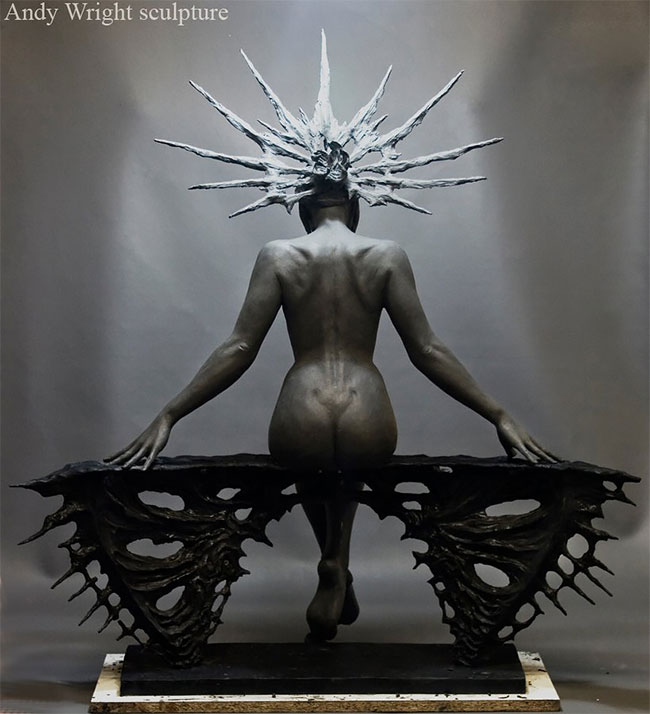
His output includes life-size busts, statues of public figures, and sculpted versions of film characters and creatures. He also makes original figurative works, some of which are cast in bronze. The range matters because it shows a practice that moves between likeness, imagination, and craft-led interpretation.
What does his work look like in practice?
Wright’s sculptures are usually described in terms of realism, but the important detail is how that realism is used. He aims for what he calls “frozen in time” gestures, which means the figure is rarely static in the ordinary sense. A shoulder twist, a slight turn of the head, or a shifted stance gives the work energy and keeps it from feeling like a simple display model.
Surface treatment is part of the effect. In portrait heads and full figures, small anatomical cues, facial planes, and textural details help create the sense of a living subject. In monster or creature commissions, the same attention to structure turns into something more theatrical, where familiar film imagery is translated into a solid sculptural object rather than a screen image.
Why does portraiture matter in sculpture?
Portraiture in sculpture has a long history because it has to do two jobs at once: record a likeness and express character. Wright’s work leans into both. The face alone is not enough; posture, proportion, and gesture all help carry identity, which is why his figures are framed as almost alive rather than merely accurate.
That emphasis on character also explains his interest in anatomy. A convincing figure needs underlying structure, not just a finished skin. Muscles, joints, and weight distribution determine whether a sculpture feels internally coherent, especially when the subject is a dynamic pose or a fantastical body built from imagination rather than direct observation.
Commissions, bronze, and original design
Wright accepts custom commissions, including bespoke bronze statues. Commission work in sculpture usually begins with a concept, sketch, or brief and then moves through modelling, refining, and casting. Bronze is especially suited to this kind of practice because it preserves fine detail while giving the final object durability and a strong physical presence.
His original designs extend the practice beyond commissions. Rather than copying a known figure, these works test how movement and grace can be shaped into a new form. In that sense, his sculptures are not only about likeness; they are also about building a memorable presence from anatomy, pose, and finish.
Questions
Is Andy Wright mainly a portrait sculptor?
Portraiture is central to his practice, but it is not the whole of it. He also works with figurative sculpture, movie characters, and imaginative creatures. The common thread is realism and strong modelling rather than a single subject category.
What materials does he use?
His work includes bronze, especially for original figurative pieces and commissions. Bronze casting allows detail, weight, and permanence, which suit both portrait heads and full figures. Other materials may be used in the modelling stage, but bronze is the material most clearly associated with the finished work described here.
Why are gesture and anatomy so important in his sculptures?
Gesture gives the figure movement and emotional charge, while anatomy makes that movement believable. Together they prevent the sculpture from feeling stiff or generic. Wright’s practice depends on both because his aim is not just resemblance, but presence.