
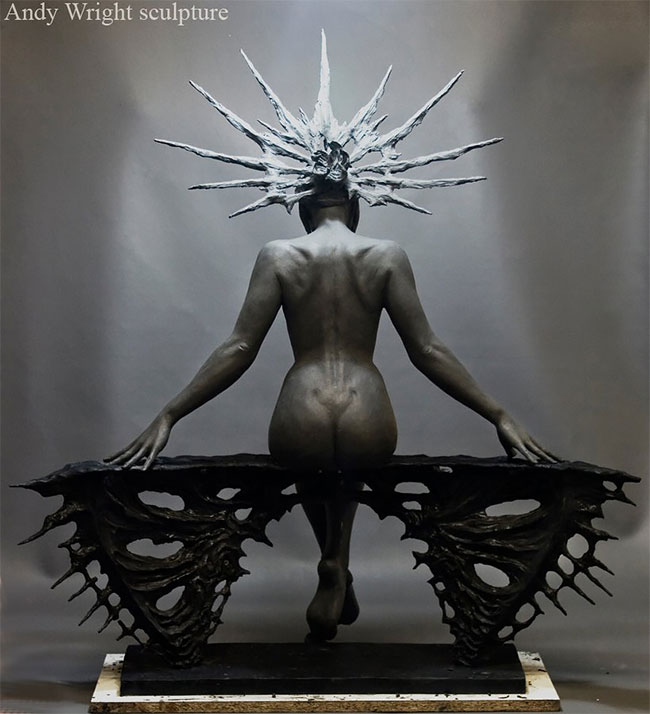

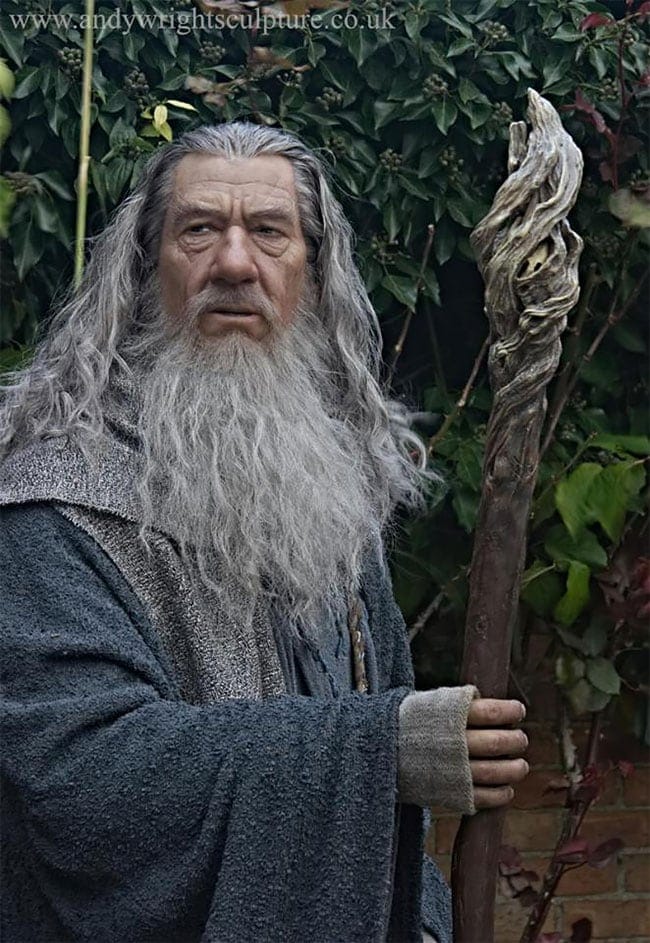
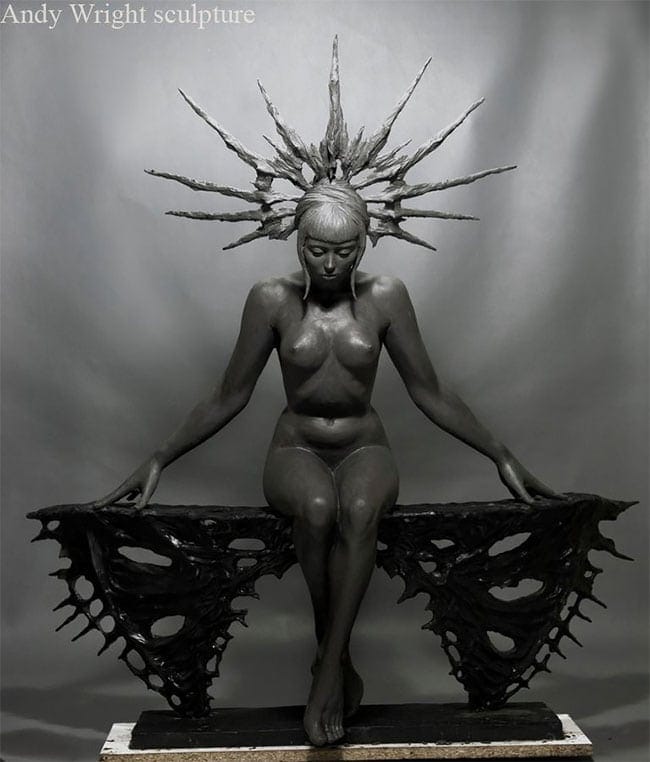
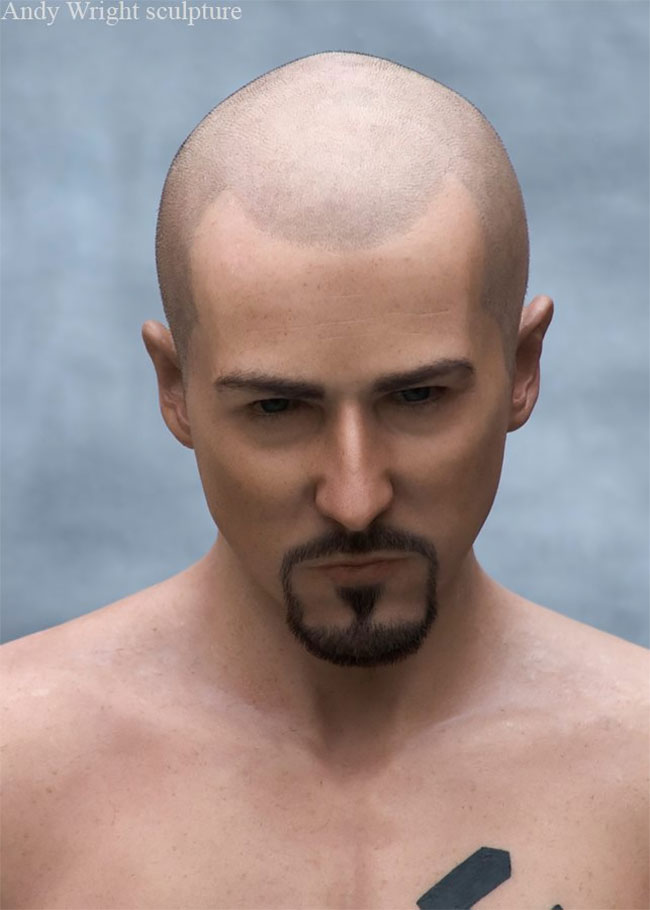
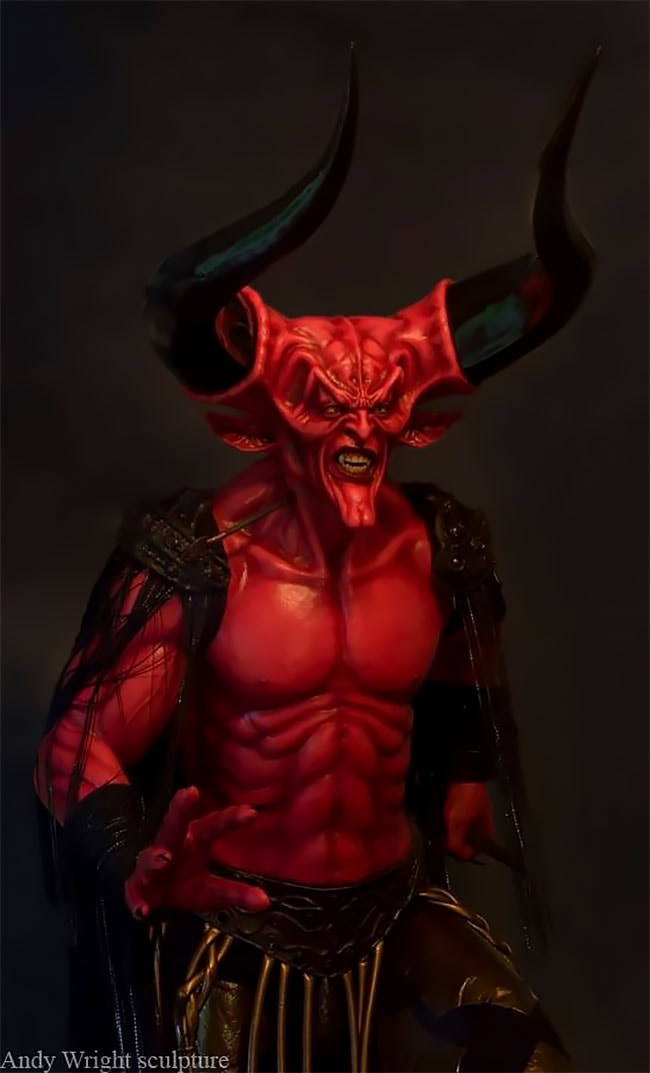
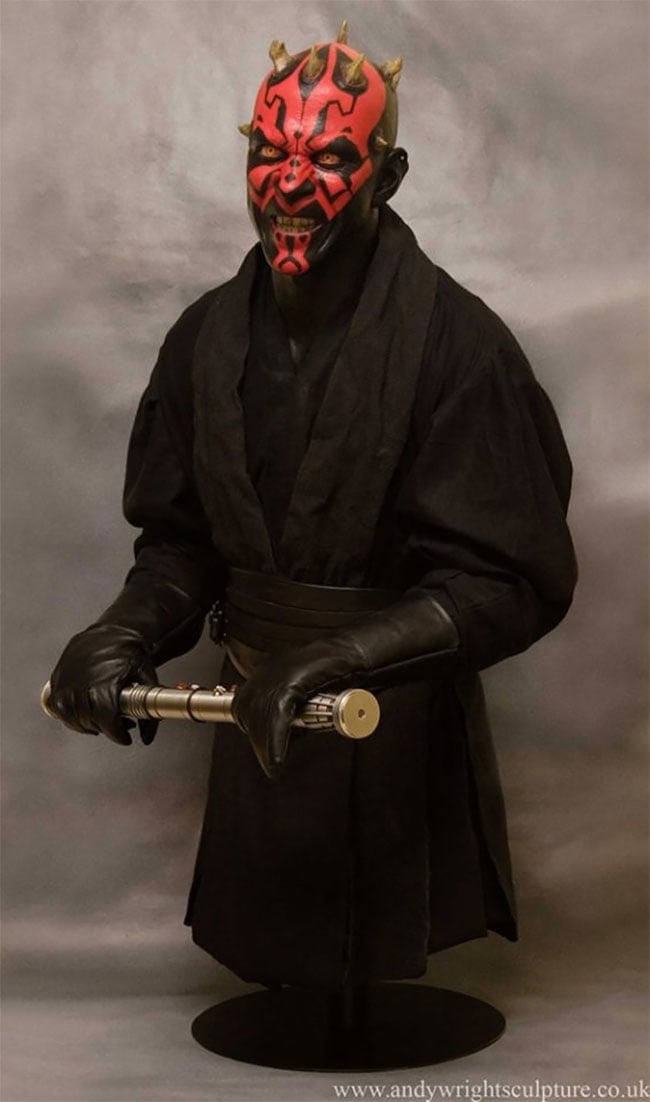
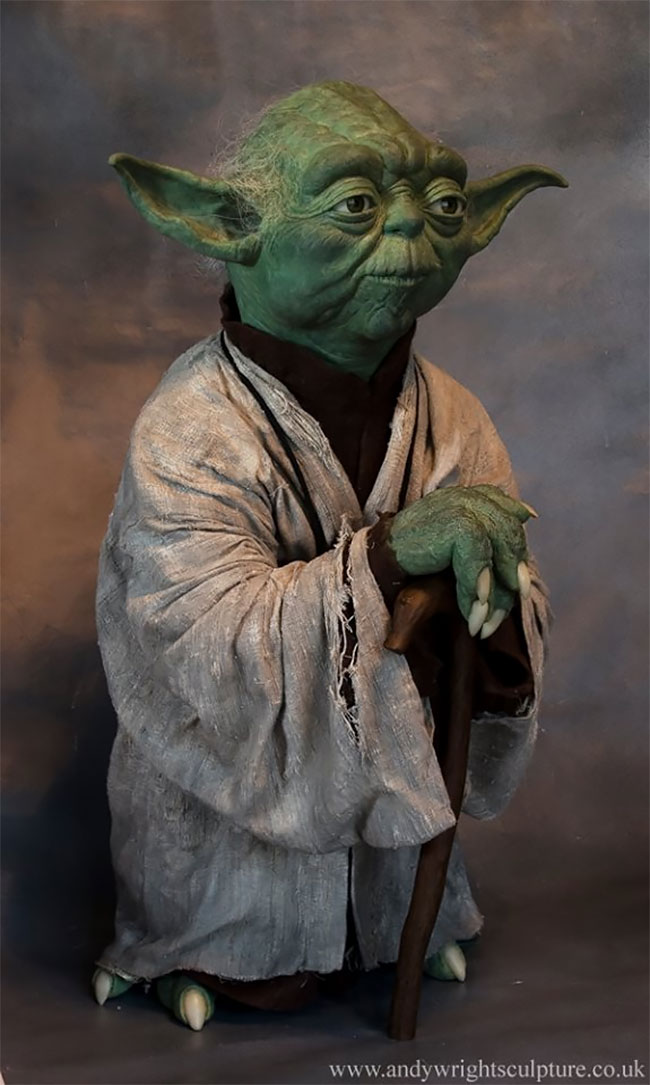
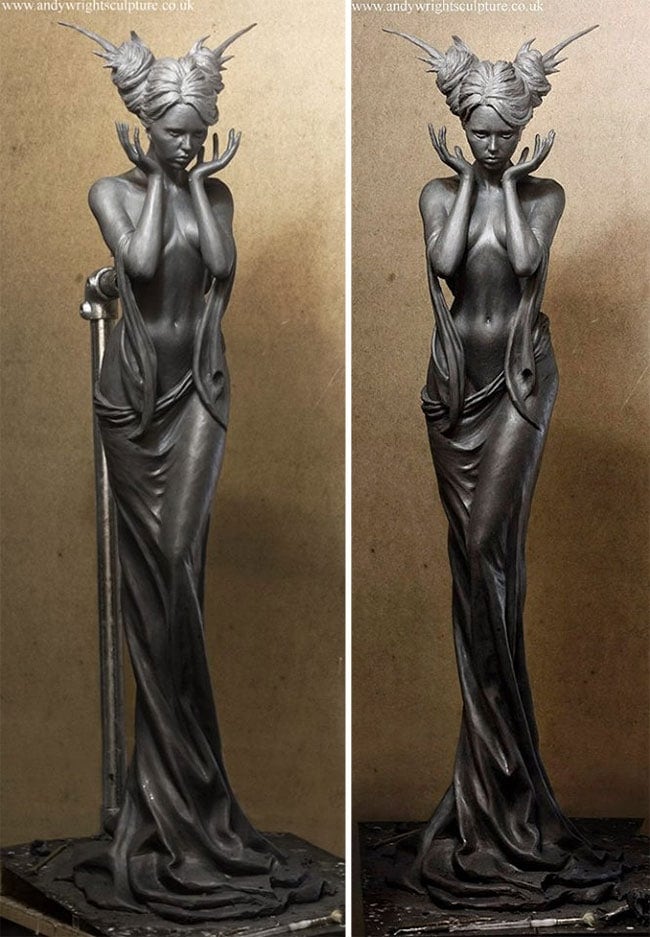
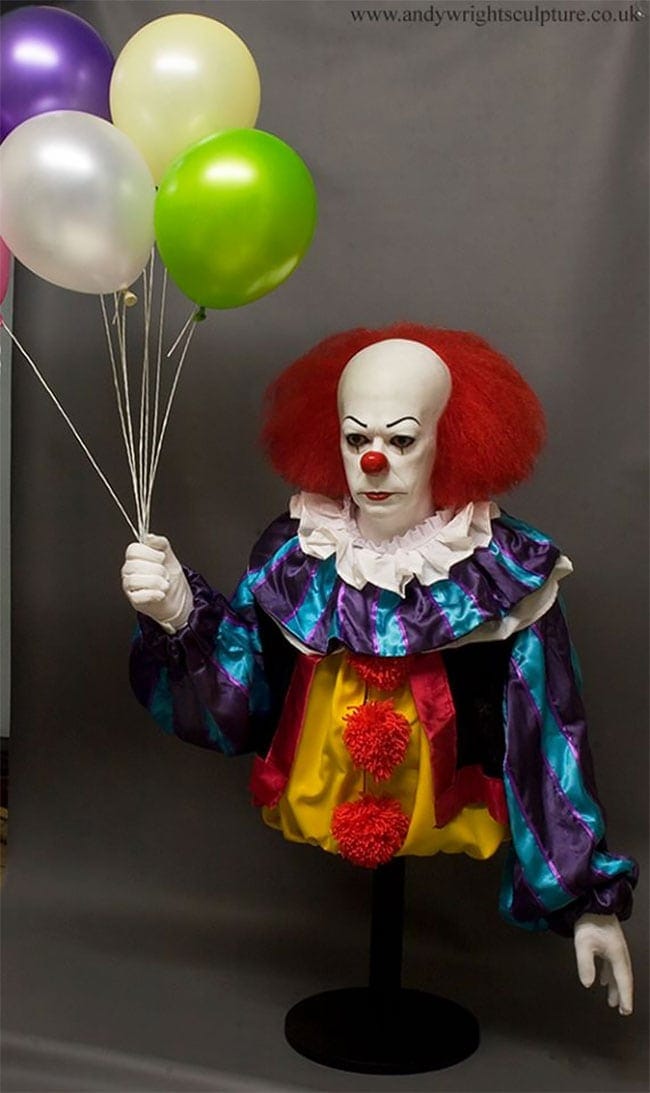
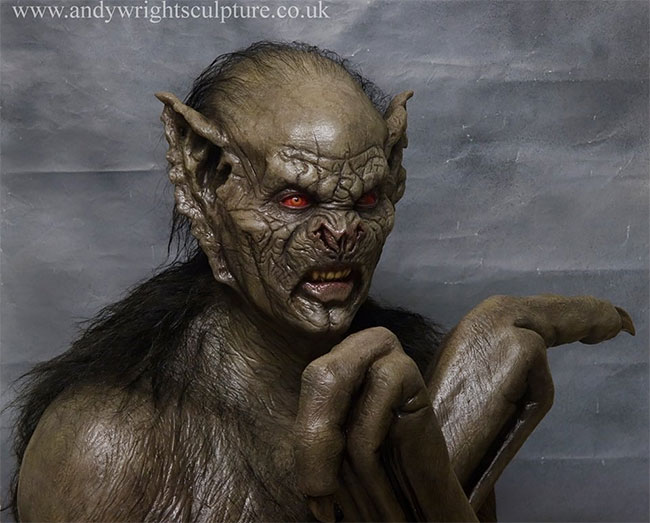
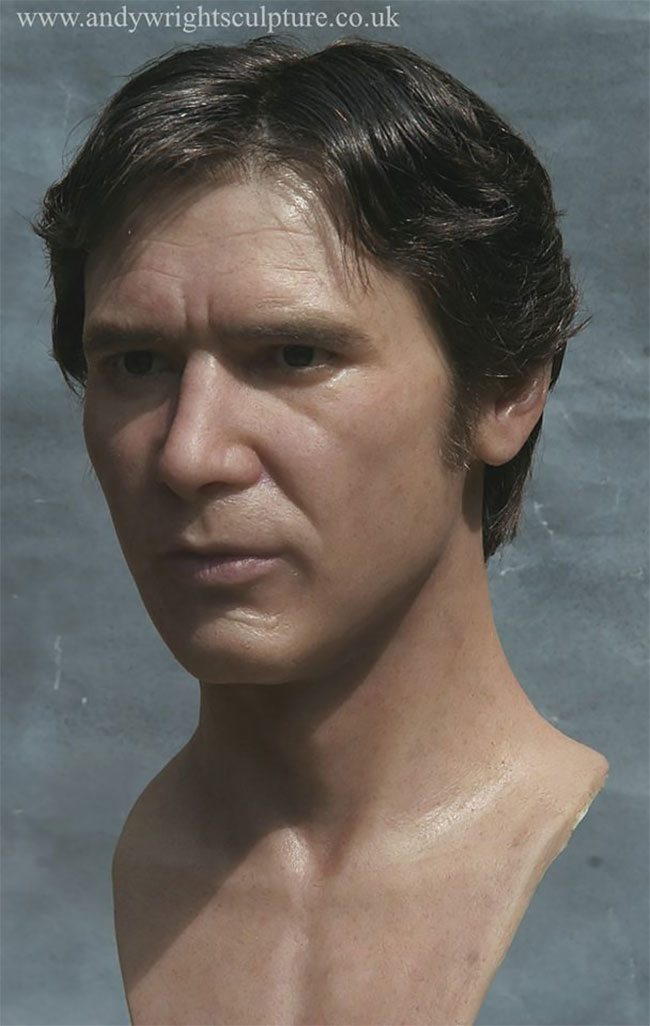
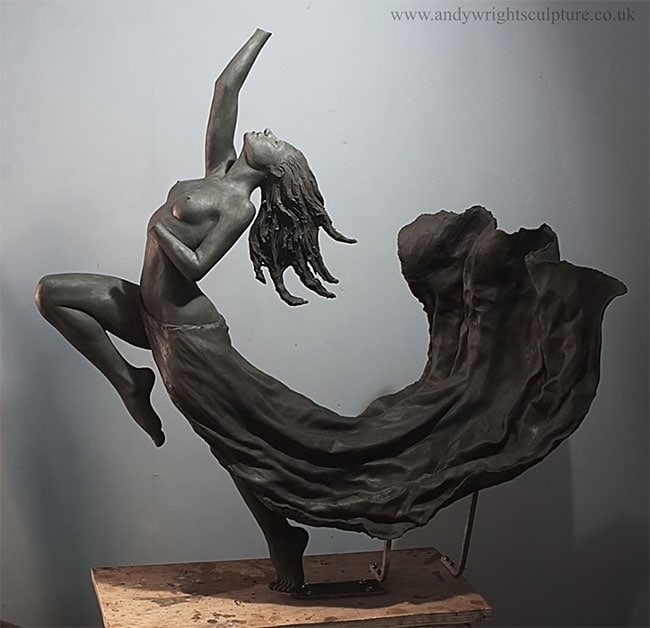
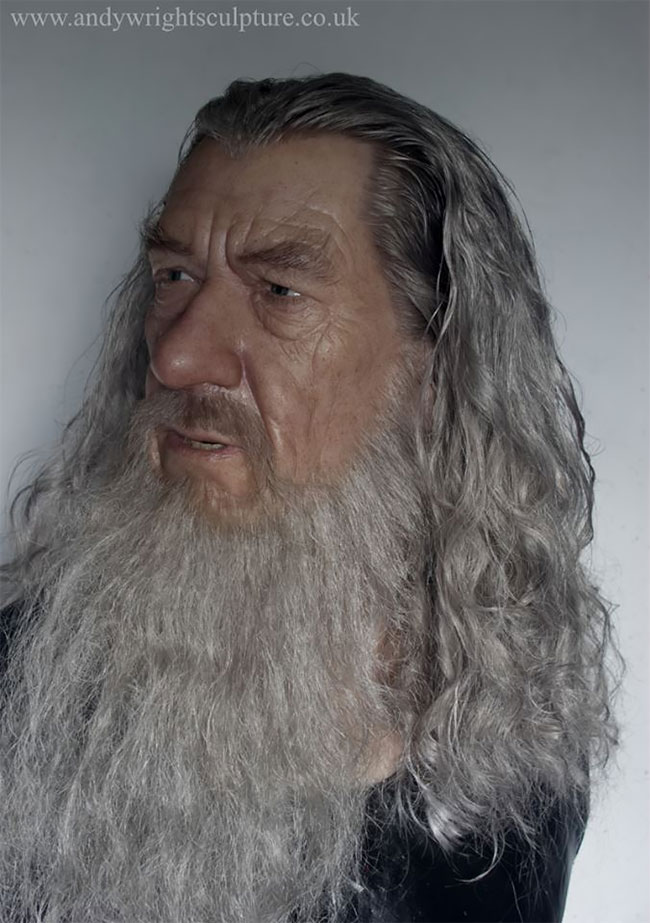
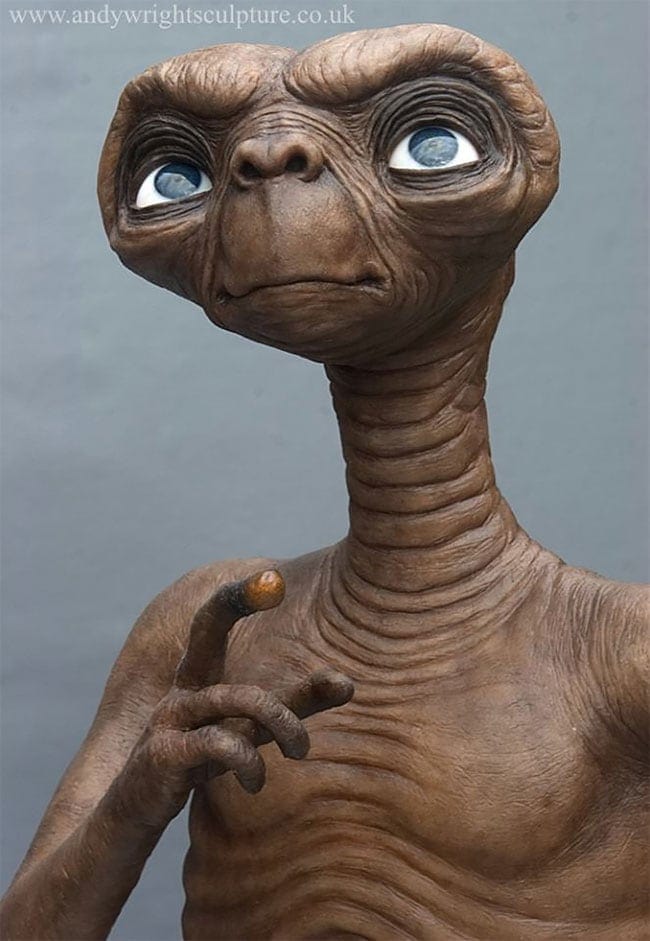
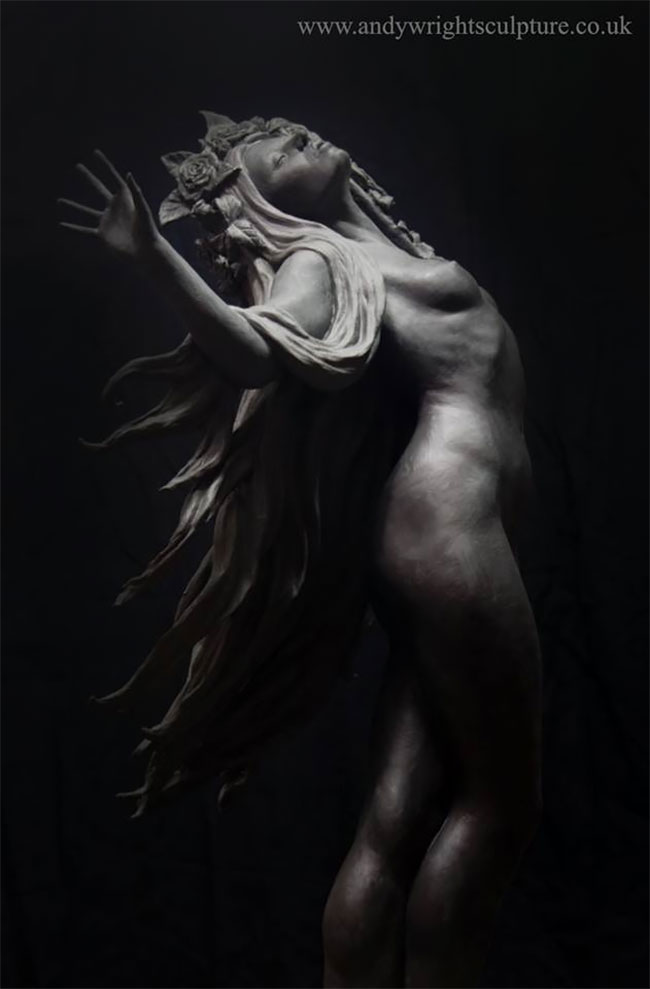
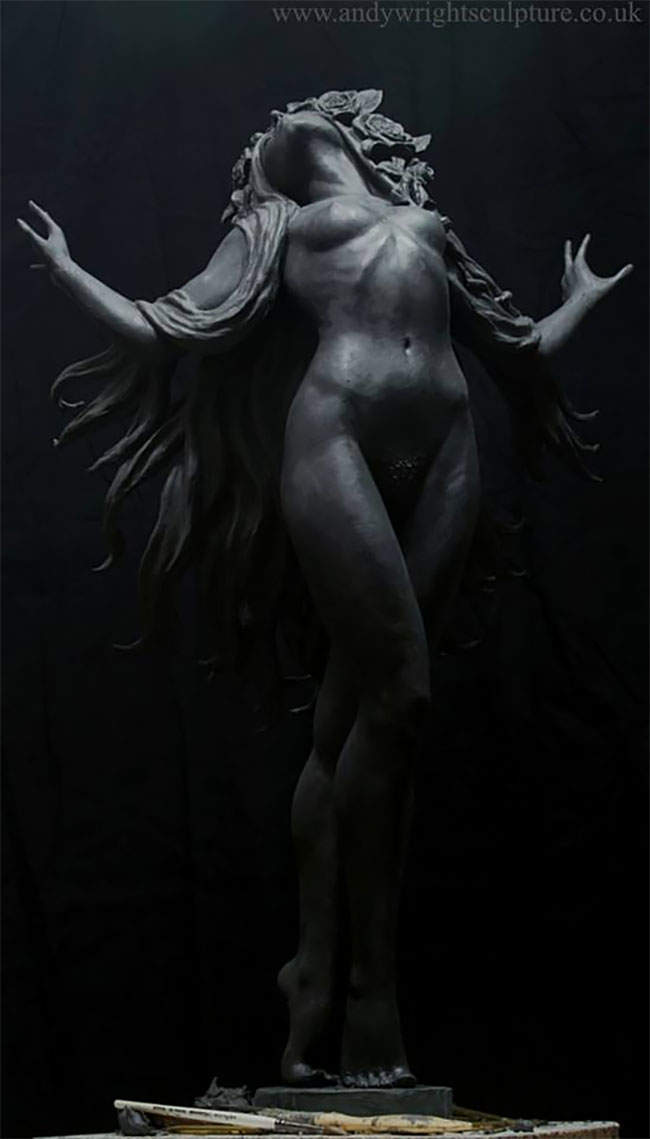
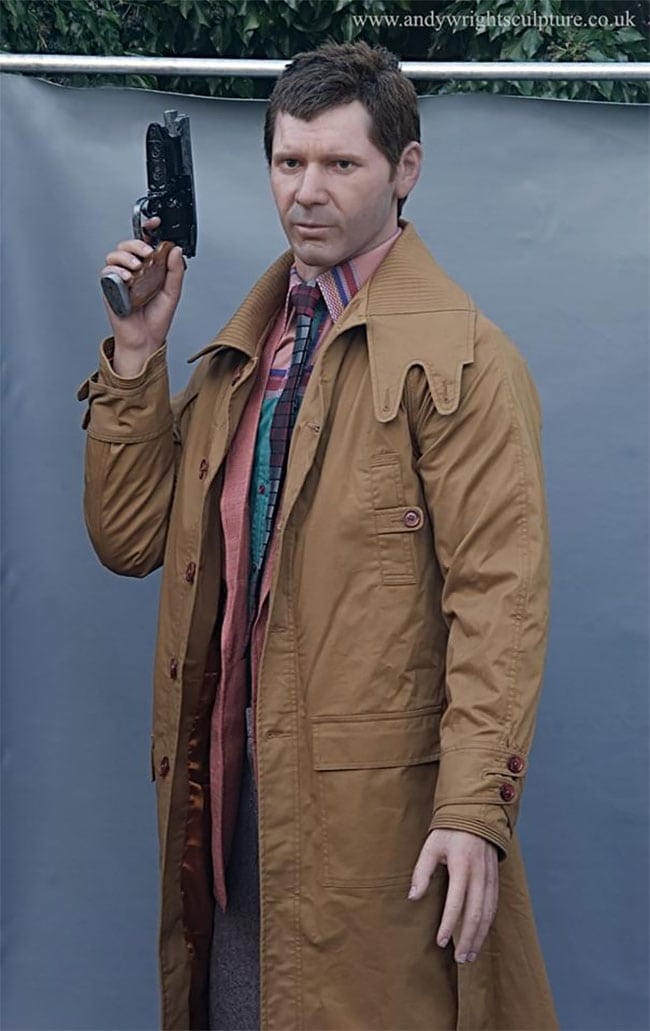
These sculptures by Andy Wright move between hyper-realistic portraiture, figurative sculpture, and surreal character pieces. The images show heads, torsos, and full figures built with close attention to anatomy, gesture, and expression, from bronze-looking bodies in the studio to finished characters that read as people, creatures, or mythic figures.
Figures that shift from realism into fantasy
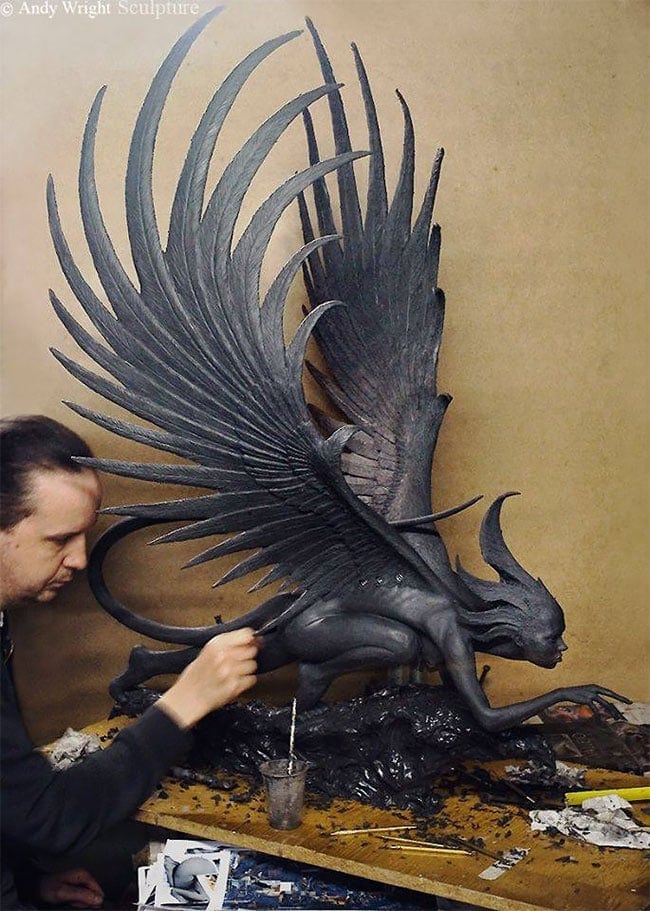
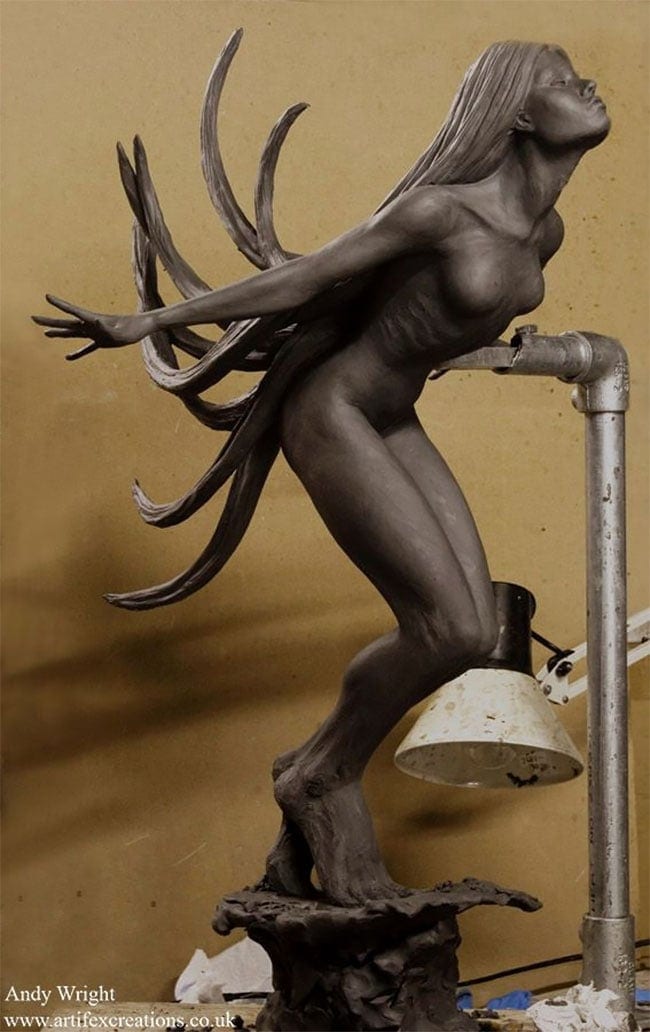
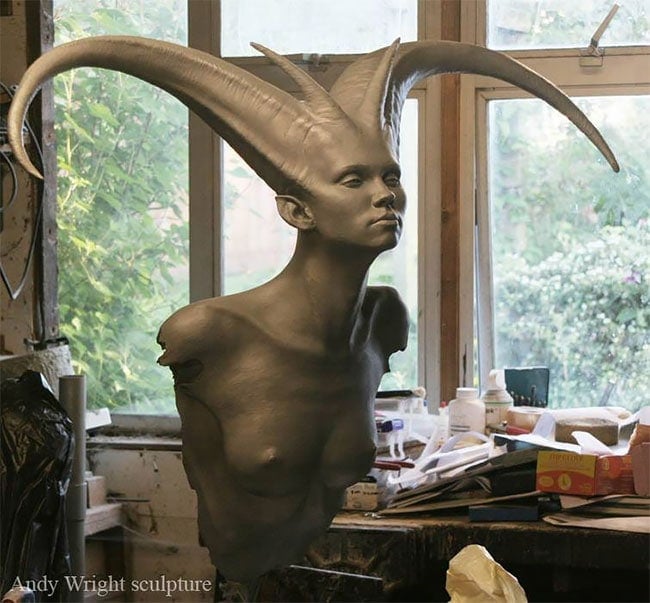
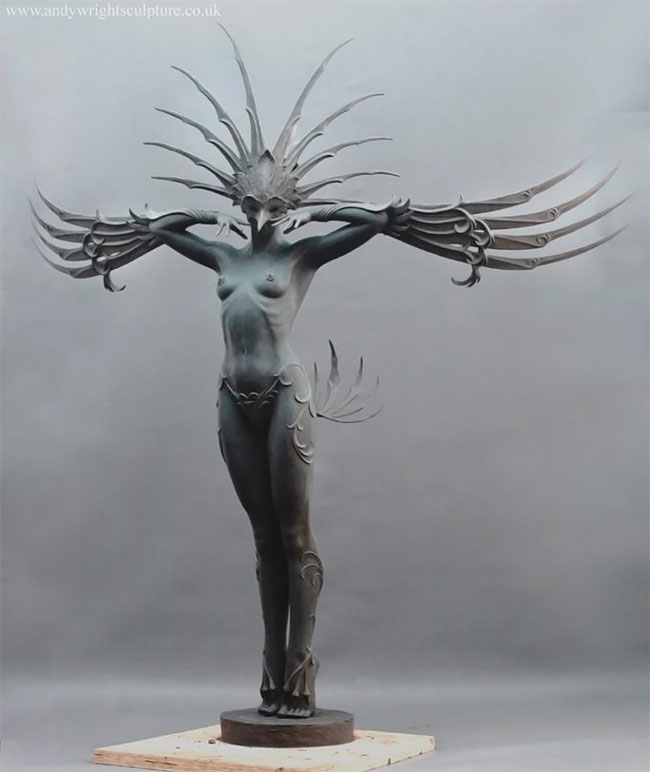
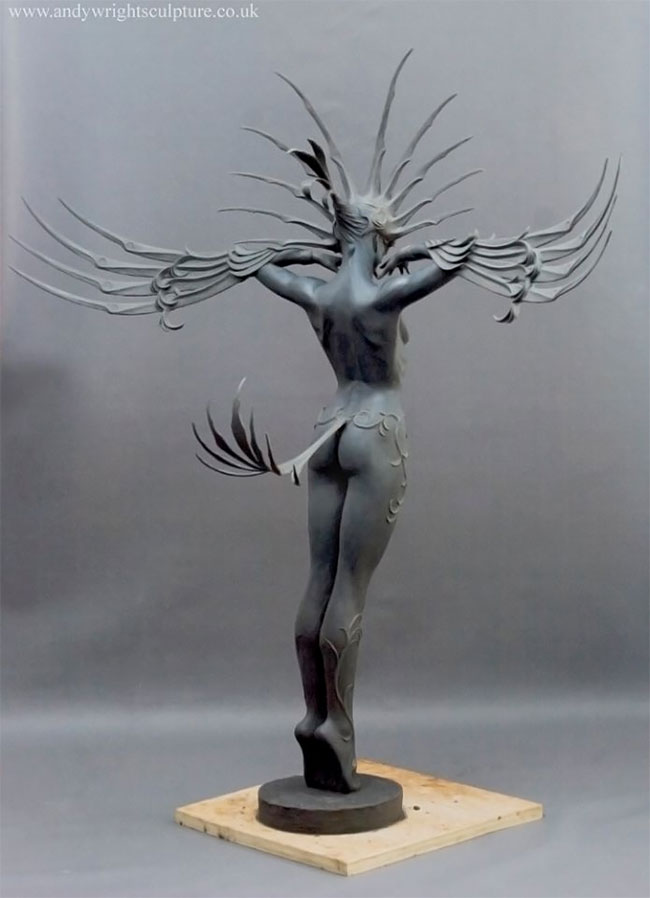
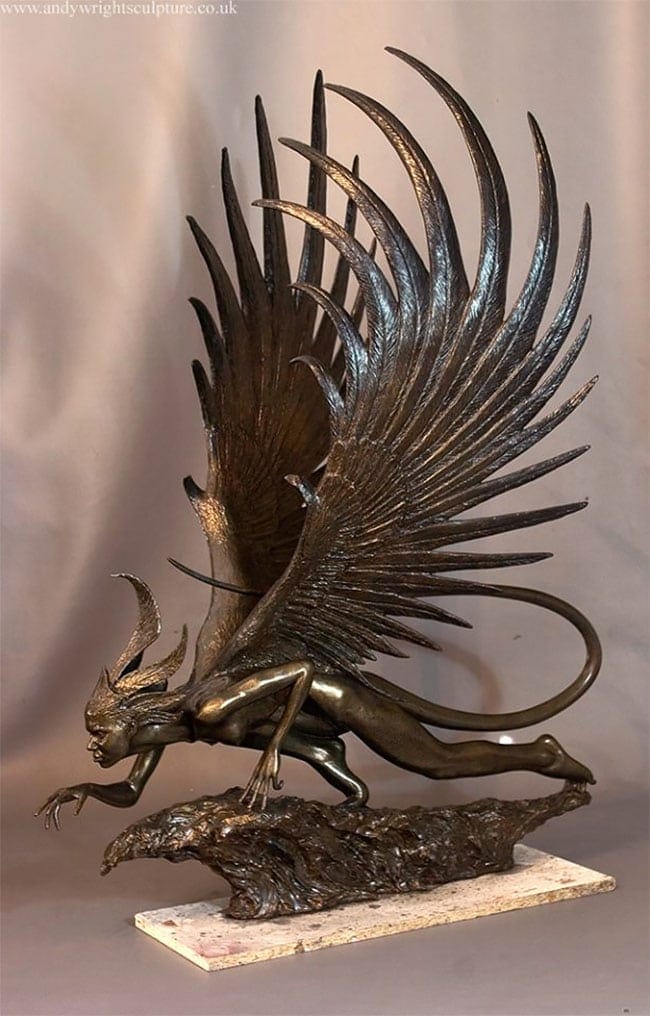
Several works keep the body recognisable while pushing it into unusual territory. One image shows a winged, birdlike figure with a human torso and a dark, matte surface. Another presents a female figure with long, hornlike extensions sweeping far beyond the head. A third shows a crouched figure with elongated spines or tendrils fanning backward from the body. The forms stay grounded in anatomy, but each one departs from ordinary portrait sculpture through scale, protrusions, and posture.
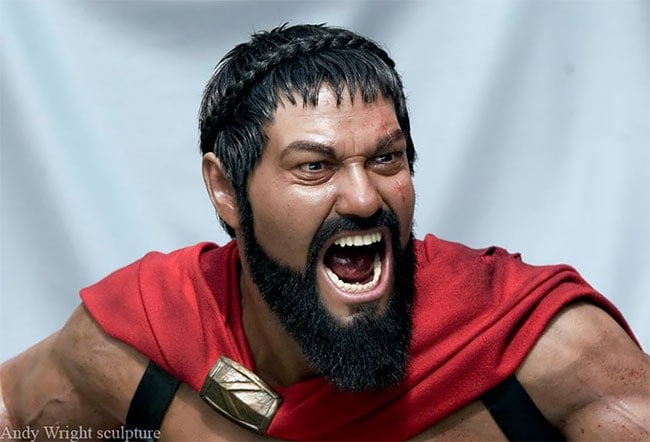
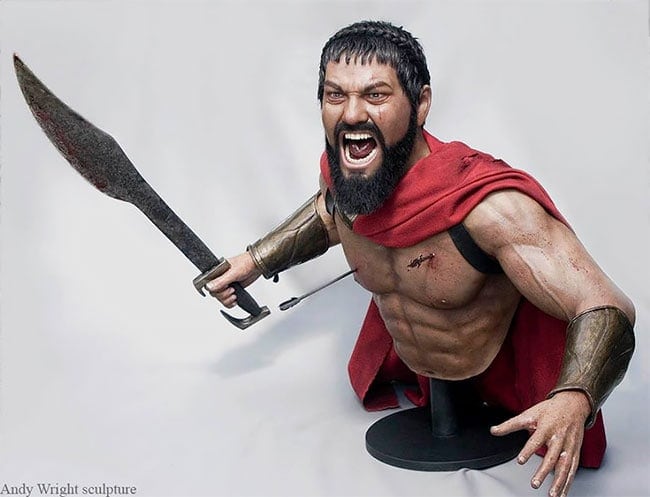
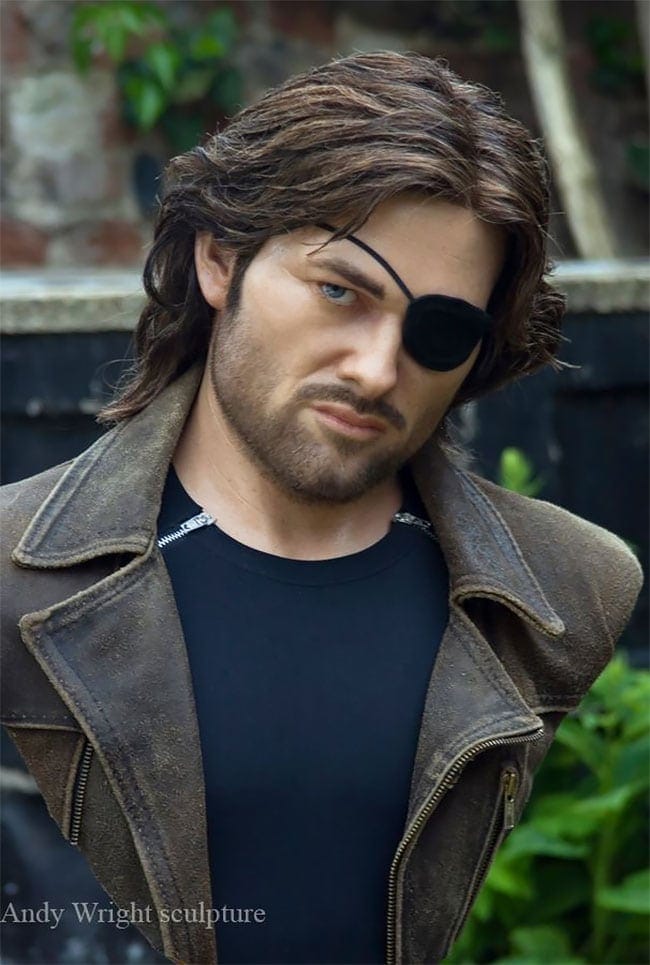
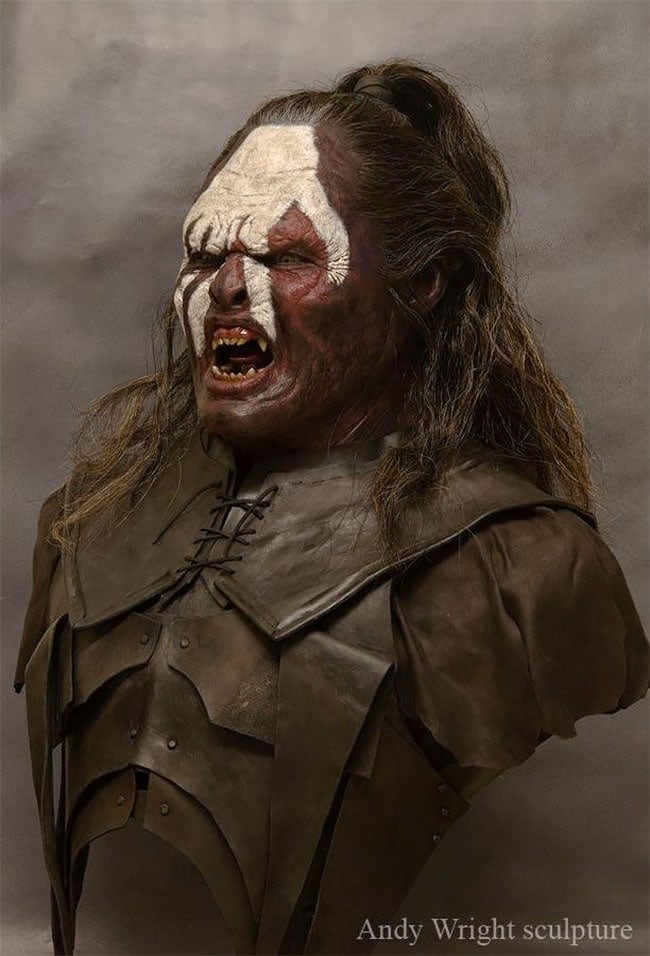
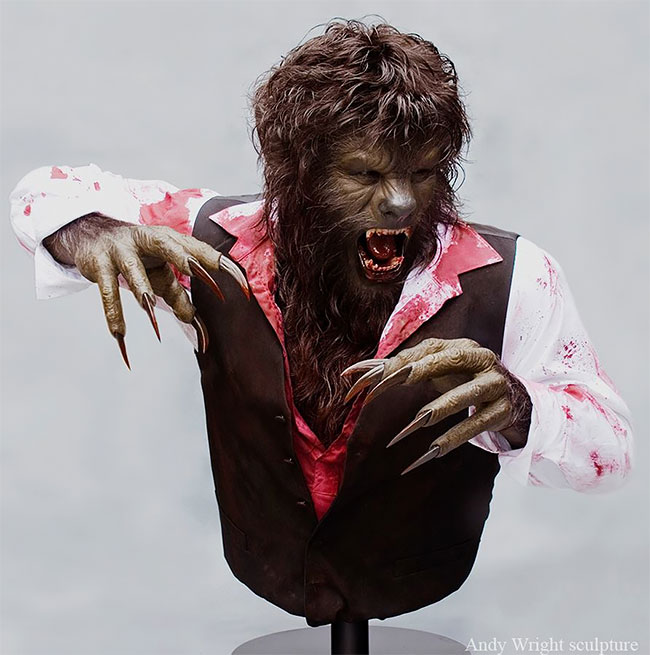
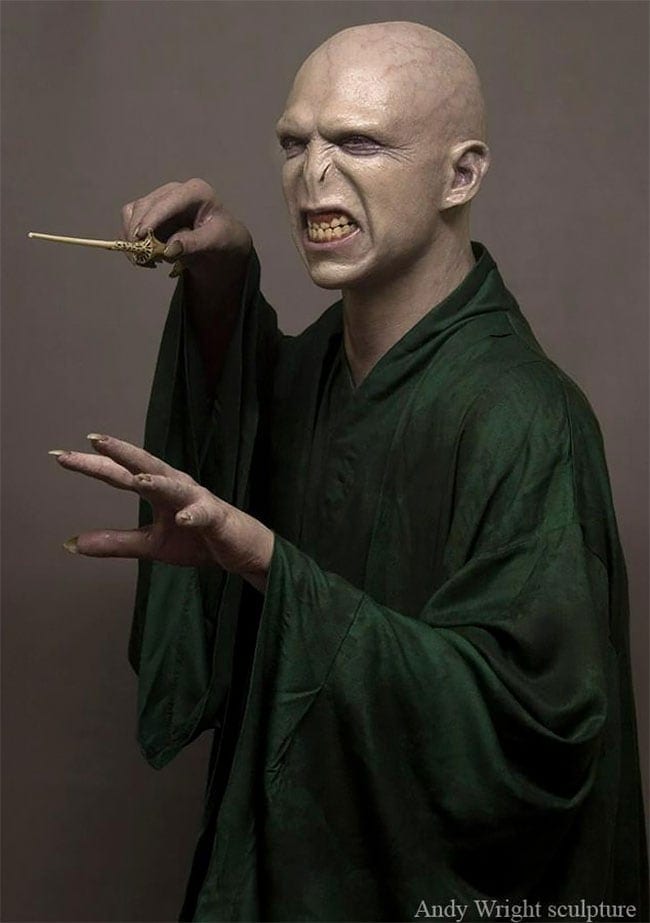
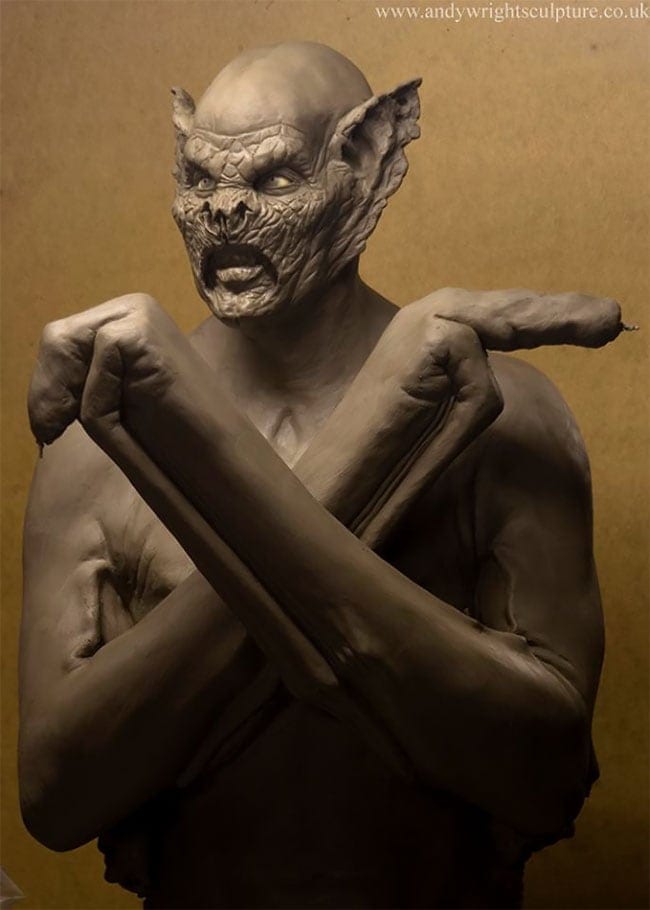
Other works in the set show the same approach in a more direct portrait mode. A muscular figure is shown shouting, with a red cape and weapon; another bust features an eyepatch, beard, and jacket; another has a severe, open-mouthed face with pale skin and dark clothing. The surface detail is tight enough that skin folds, hair, facial hair, and clothing seams all register clearly. In the article text, Wright describes an interest in bodies and how they move, and the images repeatedly show figures caught in motion rather than standing neutrally.
Bronze surfaces and workshop settings
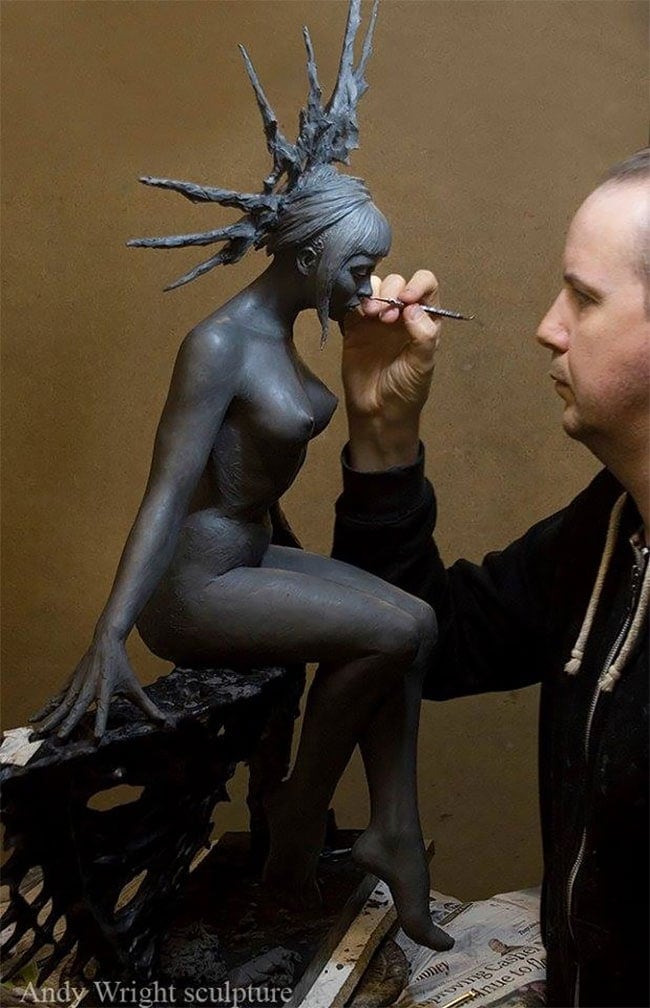
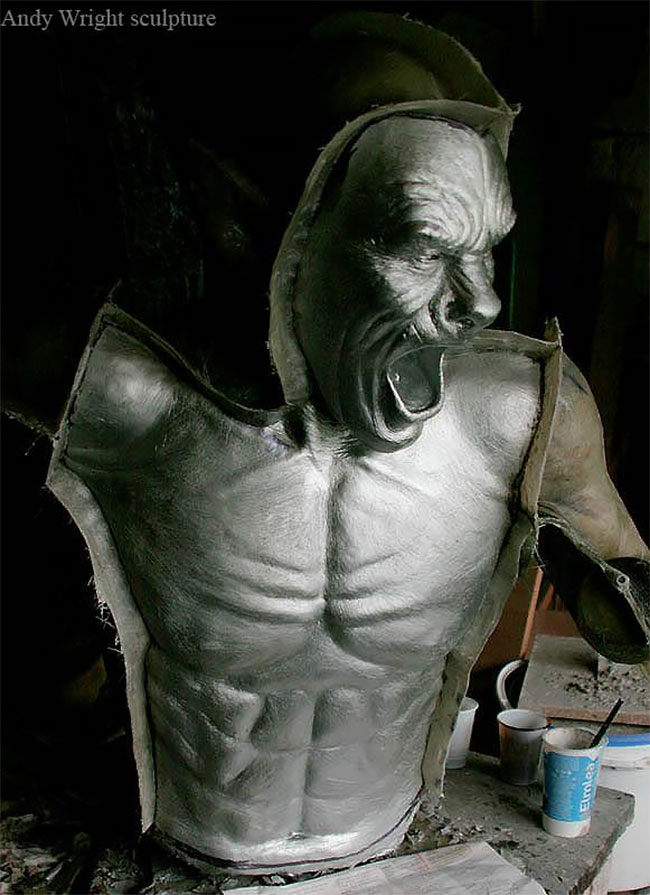
The pictures also reveal the making process. Several sculptures sit on benches, plinths, or makeshift supports, with tools, containers, newspapers, and workshop clutter visible around them. In one image, Wright is at work beside a dark winged figure; in another, a sculpted female torso rises from a stand in a room with a window and shelves behind it. These images place the sculptures between studio process and finished object, showing both the build and the result.
Across the set, surfaces vary from dark, almost black finishes to warmer bronze tones and painted flesh colours. Some pieces look polished and complete; others appear partly in progress, with rougher textures and unfinished edges still visible. The overall range matches the existing description of Wright’s work as moving from hyper-realism to surreal and classical sculpture, while the images specifically emphasise movement, unusual bodies, and the shift from human likeness into invented forms.
More in
Sculpture
All Sculpture


More in
Art
All Art


More like this

Helga Stentzel Creates Surreal Forms From Household Items

Stereogramos: Marija Tiurina's New Series of Surreal and Eerie Works

Bisected Bronze Sculptures by Romain Langlois

Brilliantly Hued Canvas Sculptures by Artist Duo ‘Stallman’

Artist Creates Toadstool Sculptures Crafted From Vintage Textiles
