
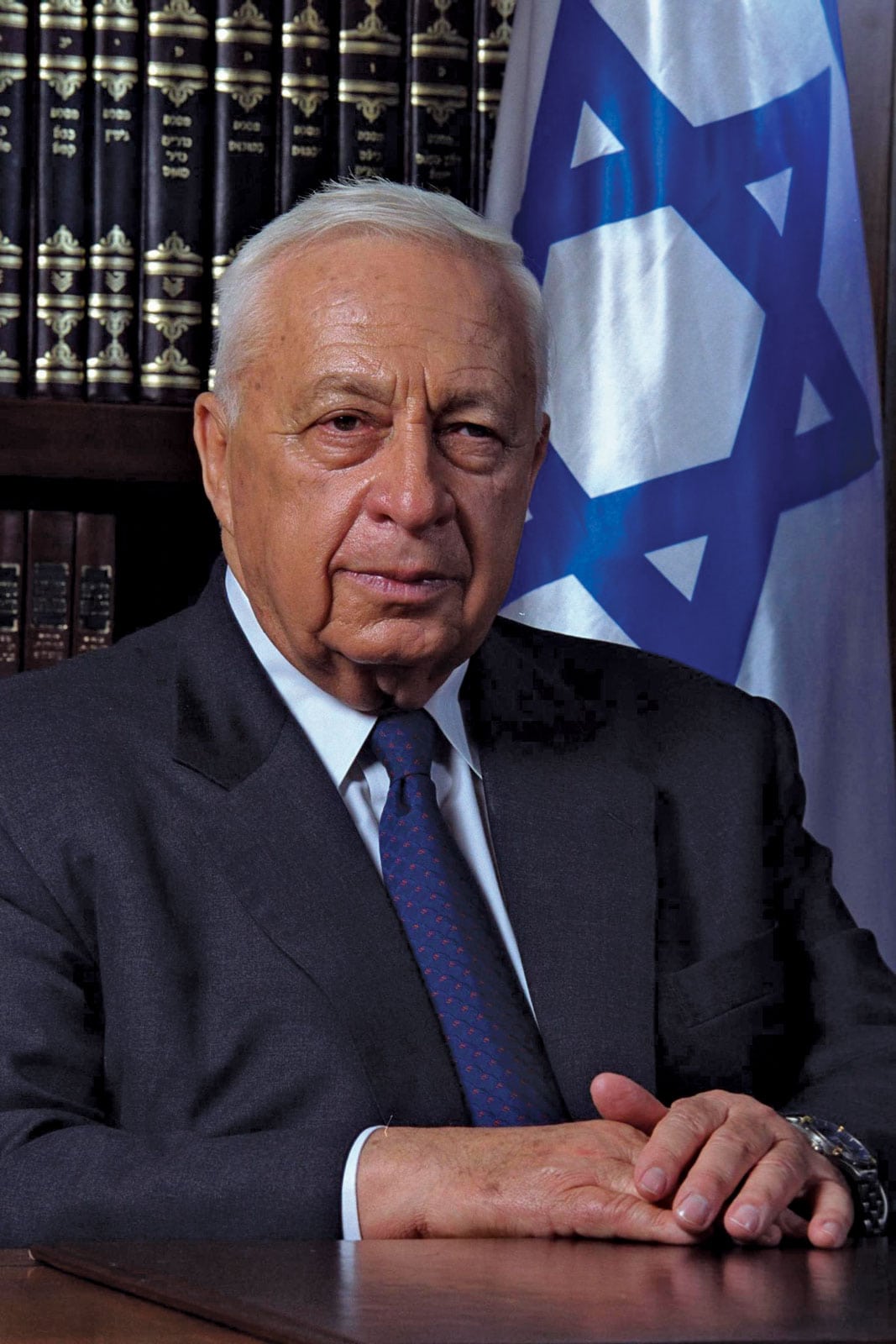
Ariel Sharon was an Israeli statesman and military commander who became Israel’s 11th prime minister, serving from 2001 to 2006. Before entering top-level politics, he built a long career in the Israeli Defense Forces, where he became known as a bold and often controversial field commander. His public life bridged war, settlement policy, and statecraft, and his political choices reshaped both Israeli politics and the geography of the occupied territories.
- Sharon rose from army commander to prime minister, a path that made military reputation central to his political identity.
- He was associated with aggressive battlefield tactics, especially during the 1950s, 1967 war, and 1973 Yom Kippur War.
- As prime minister, he oversaw the disengagement from Gaza in 2005, a major break from his earlier support for settlement expansion.
- He suffered a stroke in January 2006 and remained in a permanent vegetative state until his death in 2014.
- His career remains disputed: praised by supporters as a decisive leader, criticized by opponents for violence and hardline policy.
How did Ariel Sharon rise to power?
Sharon was born in 1928 in British Mandatory Palestine and joined Jewish defense forces as a teenager. When Israel was founded in 1948, he entered the new army and remained in uniform for decades, eventually becoming one of its most recognizable commanders. He gained prominence through a reputation for initiative, speed, and a willingness to act outside conventional military caution.
That reputation carried into politics. Sharon served as agriculture minister and later as housing minister, where he pushed settlement construction in the occupied West Bank and Gaza Strip. He moved through several political factions before becoming prime minister in 2001, after years of public life marked by military achievement and political controversy.
What made Sharon such a divisive figure?
Sharon’s name is tied to some of the most contentious episodes in modern Israeli history. As a commander, he was involved in operations that drew criticism for heavy civilian costs and for the degree of force he used. As a politician, he backed settlement growth and strong security policies that made him a hero to some nationalists and a symbol of occupation to many Palestinians and critics abroad.
His public image was shaped by that tension. Supporters saw a pragmatic leader who understood force and state power. Critics saw a man whose career normalized permanent conflict. Both readings are part of his legacy, and both help explain why his image has remained politically charged long after he left office.
Why does his later career matter?
Sharon’s most consequential political move came late in his career. In 2005 he ordered the unilateral withdrawal of Israeli settlements and military forces from the Gaza Strip. That decision shocked many of his former allies because it reversed part of the settlement project he had earlier championed. It also helped split the Israeli right and led to the creation of Kadima, the centrist party he founded.
The Gaza disengagement showed that Sharon could still act as a force of disruption, not just continuity. It also made him harder to classify: he was neither simply a hardliner nor a peacemaker. In practice, he often treated politics as an extension of strategic calculation, where territorial control, security, and public legitimacy all had to be managed together.
What happened after his stroke?
Sharon suffered a major stroke on 4 January 2006 and never returned to active political life. He remained in a permanent vegetative state for years, kept under long-term medical care. In 2013, doctors reported signs of brain activity in response to family photographs and his son’s voice, but this did not change his condition.
His long incapacity gave his career a final, uneasy shape: a dominant public figure rendered absent while his policies and reputation continued to matter. Sharon died in 2014, but debates over his military record, his responsibility for past violence, and his role in changing Israeli politics still follow his name.
Frequently Asked Questions
Was Ariel Sharon always a hardliner?
For much of his career, Sharon was identified with forceful military and settlement policies. That is why many Israelis and observers treated him as an icon of the right. His later decision to evacuate Gaza complicated that image, showing that his politics could shift when he believed strategy demanded it.
Why is Ariel Sharon important in Israeli history?
Sharon mattered because he influenced both war and government. He helped shape Israeli military doctrine in the state’s early decades and later used political power to advance and then partially reverse settlement policy. Few Israeli leaders left such a visible mark on both the battlefield and the cabinet table.
What was Kadima?
Kadima was the centrist party Sharon founded after leaving Likud. It was created around the Gaza disengagement and his broader break with parts of the Israeli right. The party’s existence showed how Sharon’s later career produced new political alignments, not just policy changes.
Articles mentioning Ariel Sharon
