
Bolzano is a city in northern Italy and the capital of South Tyrol, the autonomous province on the edge of the Alps. It is a bilingual urban centre where Italian and German are both part of daily life, with English also present in the university and design world. For architecture and visual culture, Bolzano matters because it sits between alpine craft traditions, Italian civic culture, and a strong contemporary design scene.
Stories from Bolzano
2 stories
About Bolzano
| Fact | Detail |
|---|---|
| Country | Italy |
| Region | South Tyrol, northern Italy |
| Administrative role | Capital of the province of South Tyrol |
| Languages in public life | Italian and German, with English widely used in higher education |
| Notable institution | Free University of Bozen-Bolzano |
Read the full overviewWhy Bolzano stands out, What kind of city is it?, How does Bolzano appear in architecture and design?, What does Bolzano mean for the wider region?
Why Bolzano stands out
Bolzano is not just a provincial capital. It is a place where languages, administrations, and building traditions overlap, which gives the city a distinct character. That mix shapes everything from street signs and civic institutions to the way architects work with local materials and landscape.
The city’s position in South Tyrol also gives it a strong alpine identity. Timber, stone, glass, and careful attention to climate are common in the region’s buildings, and Bolzano often serves as a reference point for contemporary Alpine design. It is a city where modern architecture has to answer to mountains, weather, and a layered cultural history at the same time.
What kind of city is it?
Bolzano is a compact, prosperous city with a reputation for good public services and a high quality of life. Its urban life is shaped by commerce, education, administration, and tourism, but it does not feel like a generic tourist centre. The city still operates as a working provincial capital, with a clear role in governance and regional identity.
The city also has a strong institutional presence. The Free University of Bozen-Bolzano brings an international academic dimension, and the multilingual environment makes it a useful site for research, exchange, and design education. That combination of local rootedness and cross-border outlook helps explain why architects and cultural producers continue to work there.
How does Bolzano appear in architecture and design?
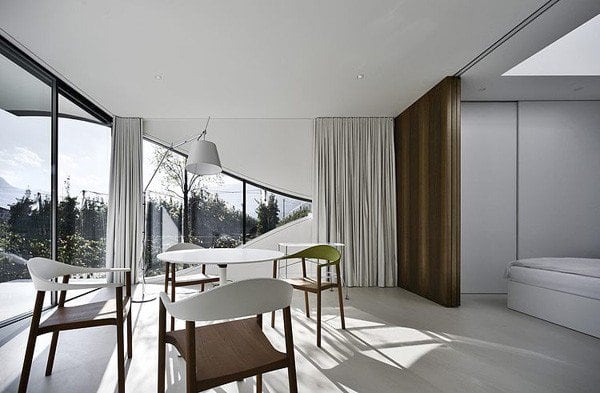
Bolzano appears in architecture as a place where new buildings must relate to a dense set of expectations: alpine climate, bilingual culture, civic formality, and a strong sense of landscape. Projects often use restrained volumes, precise detailing, and material choices that sit comfortably with the surrounding mountains and older urban fabric. Glass, pale plaster, concrete, and timber are all common, but the point is usually clarity rather than display.
That atmosphere helps explain why Bolzano is associated with contemporary architectural work that is calm, disciplined, and sharply aware of context. In the case of housing or public projects, the city invites designs that negotiate privacy, light, and views without breaking the scale of the place. Bolzano is therefore useful as a setting for buildings that are meant to be both modern and locally grounded.
What does Bolzano mean for the wider region?
As the capital of South Tyrol, Bolzano acts as an administrative and cultural hinge between Italy and the German-speaking Alpine world. Its institutions, schools, and public life reflect that position. The city is part of a region where identity is often negotiated through language, landscape, and architecture rather than through a single dominant tradition.
That makes Bolzano more than a backdrop. It is a place where built form has to perform diplomacy as well as function. For designers and makers, it offers a clear example of how urban identity can be produced through materials, climate response, and civic structure, not just through monuments or historic landmarks.
Frequently Asked Questions
Is Bolzano Italian or German-speaking?
Bolzano is in Italy, but German and Italian are both widely used there. South Tyrol has a long multilingual history, and that continues to shape public life, education, and signage. English is also present, especially in academic settings.
Why do architects pay attention to Bolzano?
Bolzano sits in a region where architecture must respond to alpine conditions and a mixed cultural context. That creates pressure for careful material choices, modest massing, and strong environmental performance. The city has become a useful reference for work that balances contemporary design with local identity.
What makes Bolzano different from other Italian cities?
Its bilingual character sets it apart from most Italian provincial capitals. The city also feels more closely tied to the Alps than to the Mediterranean urban tradition associated with much of Italy. That combination gives it a distinct civic and architectural tone.