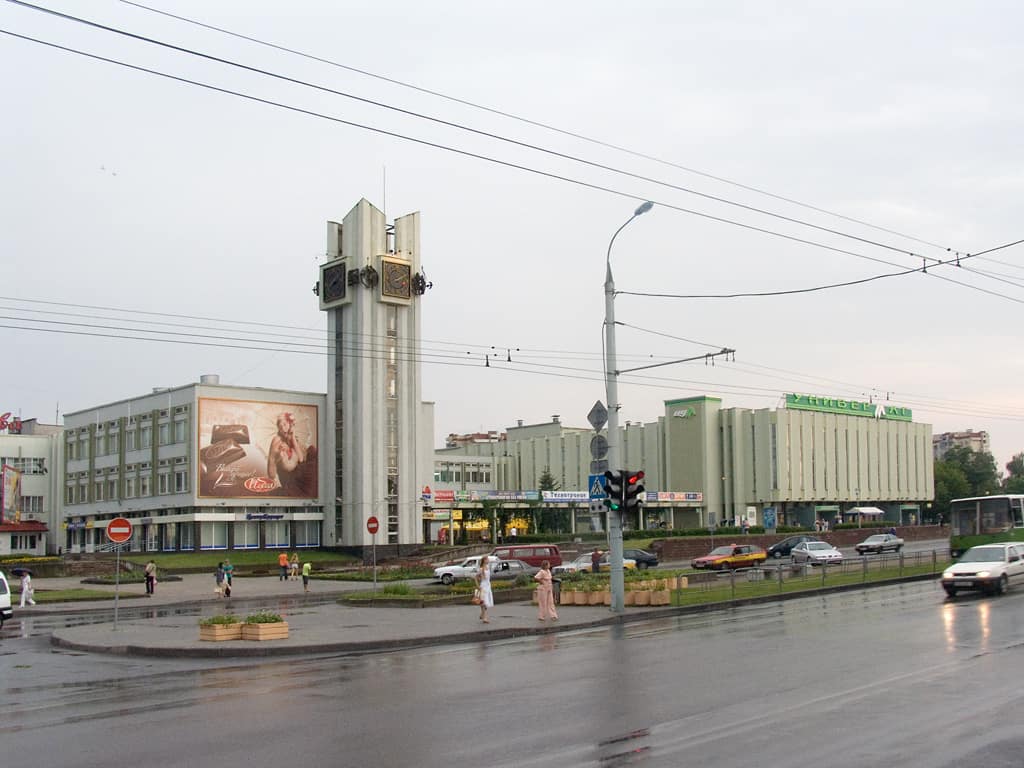
Brest is a city in southwestern Belarus at the confluence of the Bug and Mukhavets rivers, directly opposite Terespol in Poland. It is a border city with a long layered history, known in different languages and periods as Brest, Brest-Litovsk, Brześć, Brześć nad Bugiem, and other variants. Its location has made it a military, administrative, and trade center rather than a major industrial capital.
- It sits on the Belarus–Poland border, which has shaped its identity for centuries.
- The city’s older names reflect shifting Polish, Lithuanian, Russian, and Belarusian rule.
- It is best known historically for its fortress, treaties, and frontier position.
- Brest combines river geography, imperial borderland history, and Soviet-era rebuilding.
Where is Brest, and why does its location matter?
Brest lies in the southwest corner of Belarus, where the Bug and Mukhavets meet. That position gave it control over crossings, trade routes, and military movement between central Europe and the lands farther east. Border cities often change hands often, and Brest did. Its history records repeated shifts between the Grand Duchy of Lithuania, the Polish–Lithuanian Commonwealth, the Russian Empire, interwar Poland, the Soviet Union, and modern Belarus.
The city’s frontier setting is not just a matter of politics. It also shaped the built environment. Fortifications, barracks, customs infrastructure, rail links, and later Soviet housing all grew from Brest’s role as a border post and transport node. The city is less a picturesque capital than a place formed by defense, administration, and passage.
What is Brest known for historically?
Brest appears frequently in European history because of the treaties signed there and the fortress built beside it. Brest Fortress, developed in the 19th century under the Russian Empire, became one of the best-known military sites in the region. It later gained symbolic weight during the Second World War, when its defenders resisted the German invasion in 1941. The fortress remains central to the city’s public memory and visitor landscape.
The city is also tied to diplomacy. The name Brest-Litovsk is associated with the Treaty of Brest-Litovsk, signed in 1918, when Soviet Russia withdrew from the First World War. That treaty made the city’s name familiar far beyond Eastern Europe. For many readers, Brest is less an everyday place than a historical reference point for war, borders, and state power.
What does Brest look like in practice?
Modern Brest combines riverbank geography with broad Soviet streets, commemorative spaces, and remnants of older urban layers. Much of the city was damaged or rebuilt during the 20th century, so its center does not read as a preserved medieval core. Instead it presents a cleaner, more planned civic landscape: apartment blocks, public squares, rail infrastructure, and monumental memorials.
The fortress area is the most visually distinctive part of the city. It preserves earthworks, gates, ruins, and large-scale memorial architecture that turn military history into physical space. Elsewhere, Brest functions as a working regional city, with schools, administrative buildings, housing estates, and cross-border transport. Its visual identity is shaped by the tension between memorialized past and ordinary border-city life.
Why does Brest have so many names?
Brest’s many names reflect the different languages and states that have governed the city. “Brest-Litovsk” distinguished it from other places called Brest and linked it to the wider Lithuanian-Polish historical geography of the region. “Brześć” is the Polish form, while Belarusian and Russian forms preserve related Slavic roots. The suffixes attached to the name often mark political belonging as much as pronunciation.
This name history matters because it shows how cities on shifting frontiers are described differently by competing states. The name used in a document can signal which empire, republic, or national narrative is in force. Brest is a good example of a place whose identity has been negotiated in maps, treaties, and official language, not only in streets and buildings.
Frequently Asked Questions
Is Brest the same city as Brest-Litovsk?
Yes. Brest-Litovsk is an older historical name for Brest, used especially in Polish and Russian imperial contexts. The shorter name Brest is the current official form in Belarus. The older name survives mainly in historical references, especially the Treaty of Brest-Litovsk.
Why is Brest Fortress important?
Brest Fortress matters because it became a powerful symbol of resistance during the opening of the German invasion of the Soviet Union in 1941. It was originally an imperial military fortification, but its meaning later expanded through wartime memory and Soviet commemoration. Today it anchors the city’s historical identity and visitor interest.
Is Brest primarily a tourist city?
No. Brest is first a functioning regional and border city, with transport, administration, housing, and cross-border movement at its core. Tourism exists, especially around the fortress and memorial sites, but it is not the city’s main purpose. Its importance comes more from geography and history than from leisure travel.