
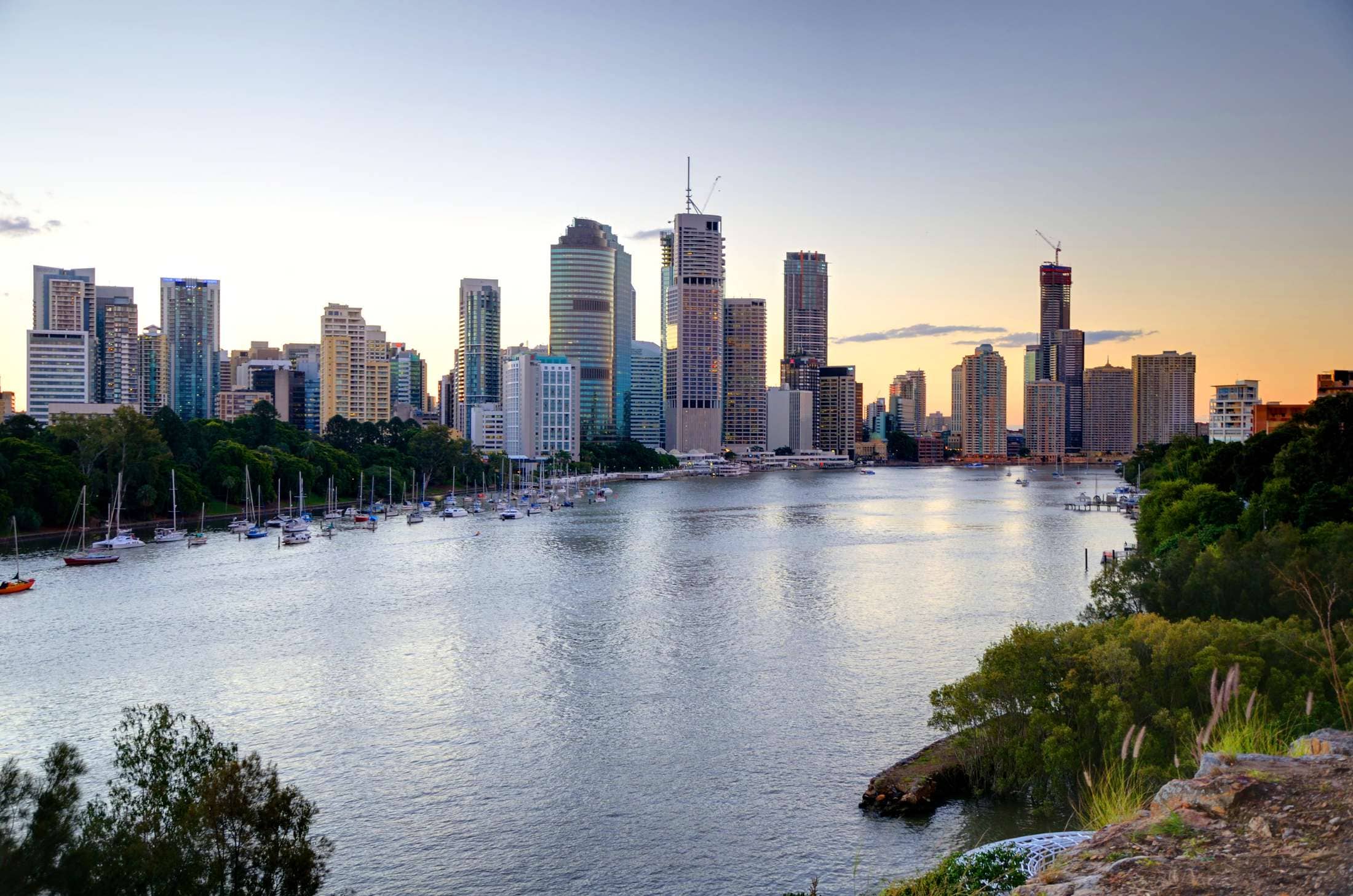
Brisbane is the capital of Queensland and Australia’s third-most populous city. Built on the Brisbane River in the state’s south-east, it serves as the main urban centre for South East Queensland, a fast-growing metropolitan region shaped by subtropical climate, river crossings, and spread-out suburban development.
| Fact | Detail |
|---|---|
| Country | Australia |
| State | Queensland |
| Role | State capital and major commercial centre |
| Population | About 2.15 million in the metropolitan area |
| Region | South East Queensland |
| Setting | River city with a warm, humid climate |
What makes Brisbane a distinct city?
Brisbane differs from Australia’s larger southern capitals in scale, climate, and urban texture. It grew as a river port and administrative centre, then expanded through low-rise residential growth, freeway corridors, and newer mixed-use precincts. The city’s built form often feels less dense than Sydney or Melbourne, with detached houses, Queenslanders on stumps, and a strong suburban footprint.
The river shapes both movement and identity. Bridges, ferries, riverfront parks, and flood management infrastructure are part of everyday city life, not just scenery. Brisbane’s subtropical weather also matters: shade, ventilation, verandas, and weather-resistant materials play a larger role in architecture and public space than they do in cooler Australian cities.
How did Brisbane grow?
Brisbane began as a colonial settlement and later became the centre of Queensland government and commerce. Its growth accelerated in the twentieth century as transport networks, housing subdivisions, and civic projects pushed development outward along the river and into surrounding districts. Like many Australian cities, it has been shaped by postwar car dependence and later by efforts to rebuild inner-city areas into more walkable, mixed-use neighbourhoods.
That growth has also brought major civic and architectural projects. Cultural venues, transport upgrades, universities, and medical precincts have helped define Brisbane beyond administration alone. The city now combines older timber houses, mid-rise apartment clusters, and a newer layer of engineered buildings that respond to heat, storms, and flood risk.
Why does Brisbane matter in design and architecture?
Brisbane appears often in stories about design because it is a city where climate and construction meet directly. Warm weather encourages open plans, deep eaves, screened outdoor rooms, and materials that can handle humidity and strong sun. Timber, glass, concrete, and lightweight steel are used with an eye toward shading, airflow, and resilience.
The city also has an active contemporary architecture scene, from civic buildings to experimental housing and workplace design. Projects in Brisbane often respond to a practical brief: how to create comfort without over-reliance on mechanical cooling, how to build for floods and storms, and how to make outdoor space feel usable for much of the year. That gives the city a clear design identity rooted in performance, not just appearance.
What does Brisbane look and feel like on the ground?
Brisbane is a city of contrasts between riverfront towers, leafy inner suburbs, and broad residential districts. In older neighbourhoods, timber houses with raised floors and wide verandas remain common, reflecting a vernacular adapted to heat and airflow. In newer areas, glass, aluminium, and engineered timber often appear in office buildings, cultural institutions, and compact housing projects.
The city centre is smaller than those of Sydney or Melbourne, but its edges are active and spread out. Major roads, rail lines, shopping centres, and institutional campuses create a geography of nodes rather than a single dominant core. As a result, Brisbane often feels more horizontal than vertical, more climatic than monumental.
Frequently Asked Questions
Is Brisbane a coastal city?
Brisbane sits inland on the Brisbane River rather than directly on the coast. Its metropolitan area extends toward Moreton Bay and the ocean-facing suburbs beyond the central city. That location gives it access to both river and coastal environments without placing the downtown area on the shoreline.
Why is Brisbane often mentioned in architecture stories?
Brisbane’s climate makes building design especially visible. Architects and designers have to account for sun, humidity, flooding, and airflow, which leads to distinctive choices in form and material. The city is also growing quickly, so housing, civic, and commercial projects often become examples of how Australian cities adapt.
Is Brisbane larger than Sydney or Melbourne?
No. Brisbane is Australia’s third-most populous city, behind Sydney and Melbourne. Its metropolitan population is large and still growing, but it remains smaller and less dense than those two eastern capitals.